Thousands Protest Trump’s Visit in Dublin and Doonbeg Over Middle East Wars
Thousands of demonstrators gathered in Dublin and the coastal town of Doonbeg on Sunday to protest President Donald Trump’s visit to Ireland and to denounc
Thousands of demonstrators gathered in Dublin and the coastal town of Doonbeg on Sunday to protest President Donald Trump’s visit to Ireland and to denounce his involvement in the wars in Iran and Gaza. The march in Dublin began at the City Hall square and moved through the streets toward the presidential residence, while a smaller but vocal crowd assembled on the cliffs of Doonbeg to block a convoy of Trump’s aides. Police reported that the protests were largely peaceful, though a handful of clashes with security forces were noted near the waterfront. Trump, who is scheduled to speak at a charity event in Dublin later that week, was greeted by a crowd of roughly 8,000 people at the National Stadium, where he delivered a brief speech before leaving the country the following day.
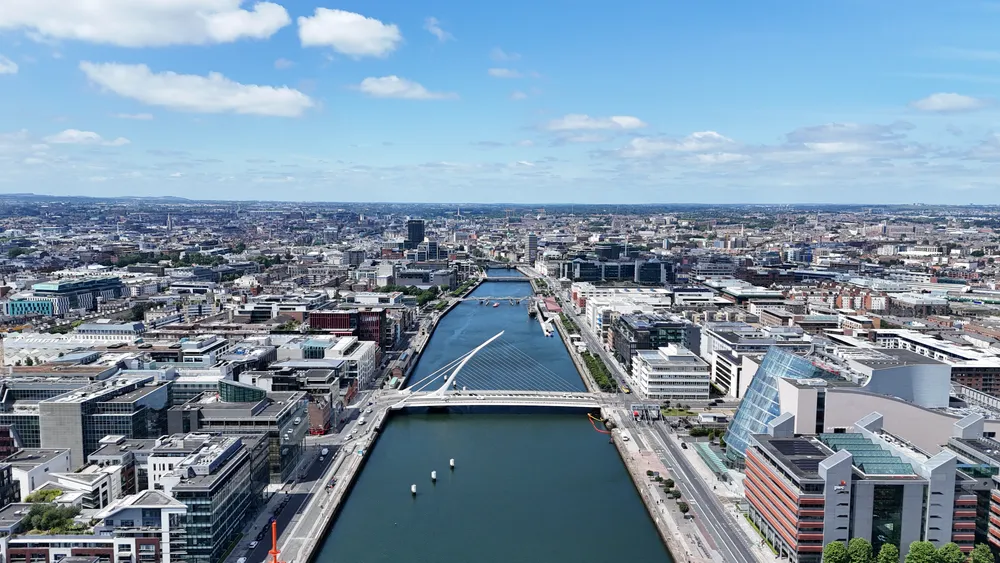
Dublin, Ireland’s capital and largest city, has long been a focal point for political activism. With a population of over 1.2 million in the greater metropolitan area, the city’s history as a hub of trade, culture and governance dates back to the early medieval period when it was first established by the Gaels and later expanded under Viking and Norman influence. Following the Anglo‑Norman conquest and subsequent growth, Dublin became one of the largest cities in the British Empire before gaining its independence in 1922. Today, the city’s strategic position on Dublin Bay and its role as the seat of the Irish government make it an important venue for international diplomacy and public demonstrations.
The protests in Ireland reflect a broader European critique of Trump’s foreign‑policy record. Activists cited his administration’s support for Israeli military operations in Gaza and his perceived interference in Iran’s political affairs as key grievances. In the Irish context, the demonstrations underscore the country’s long‑standing commitment to multilateralism and human‑rights advocacy. Irish officials have repeatedly called for a diplomatic approach to Middle‑Eastern conflicts, and the protests were seen by many as a reminder of Ireland’s willingness to hold global leaders accountable.
While the protests were largely symbolic, they also carried practical implications for Ireland’s international standing. By providing a platform for opposition voices, the Irish government reinforced its image as a proponent of free speech and civil engagement. The presence of a sizeable protest at the presidential residence sent a message to the U.S. administration about the sensitivity of its foreign‑policy positions in Europe. Moreover, the demonstrations highlighted the interconnectedness of global politics, where decisions made in Washington can ripple through the European Union and beyond, affecting trade, security, and diplomatic relations.
For the wider region, the protests in Dublin and Doonbeg illustrate how European public opinion can influence U.S. foreign policy and, by extension, regional stability. Ireland’s role as a neutral actor with a history of diplomatic mediation positions it uniquely to shape discourse on Middle‑Eastern conflicts. The demonstrations also serve as a reminder that European nations continue to monitor and respond to U.S. actions that bear on global security, human rights, and international law. In a time when geopolitical tensions are high, the Irish public’s engagement in these issues signals a continued commitment to influencing the trajectory of international affairs from a place of principled advocacy.
Produced by our editorial team, with AI assistance in editing.