
Student protests turn violent outside Albania's Ministry of Education in Tirana
TIRANA — Demonstrations outside Albania’s Ministry of Education in the capital turned violent on Thursday as groups of students threw bricks and stones at
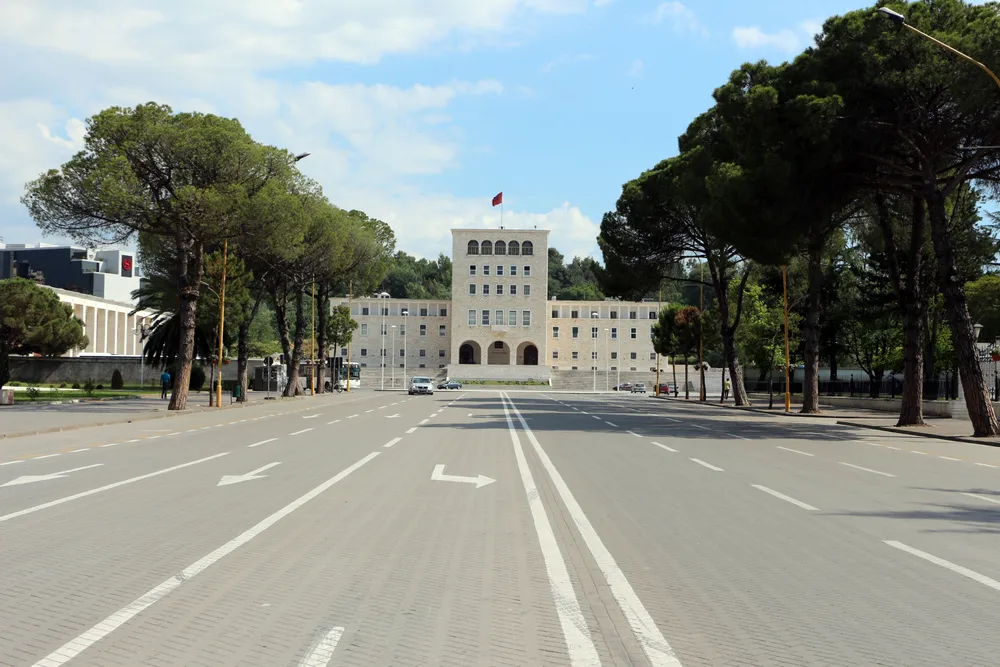
TIRANA — Demonstrations outside Albania’s Ministry of Education in the capital turned violent on Thursday as groups of students threw bricks and stones at the ministry headquarters, prompting a heavy response from riot police deployed to secure the compound. The clashes broke out during a student-led protest over grievances related to academic standards and institutional transparency, disrupting traffic in the city center and leaving a tense standoff between demonstrators and law enforcement officers.
The unrest highlights persistent friction within Albania’s heavily state-supported education network, which encompasses around 5,000 institutions catering to students from primary through tertiary levels. While the country boasts high literacy rates, hovering near 98.7% according to past national data, and a school life expectancy averaging 16 years, structural challenges remain deeply entrenched. The public system operates on a mandatory nine-year elementary cycle followed by optional secondary tracks, with students required to clear standardized national graduation exams at both the ninth and twelfth-grade marks to progress.
Despite quantitative improvements in academic enrollment over recent decades, qualitative concerns have steadily mounted among students and civil society groups. Independent assessments, including findings from the Human Rights Measurement Initiative, indicate that Albania currently fulfills only about 87.4% of its benchmarked obligations regarding economic and social rights, a metric that encompasses adequate state investment in public services like schooling. Critics and student organizations argue that underfunding, inadequate campus infrastructure, and a lack of meaningful consultation in educational policy reforms have created an environment of frustration.
Official responses from the Ministry of Education have historically emphasized ongoing modernization efforts, pointing to alignment with broader European academic standards and the standard two-semester calendar utilized across public schools. However, dialogue between student bodies and ministry officials has frequently faltered, with youth advocates asserting that administrative measures fail to address the rising cost of living affecting student welfare, housing, and instructional resources at the tertiary level. Authorities have urged restraint following Thursday's escalation, while student leaders have signaled that further mobilizations could follow if their core demands regarding governance and funding are not addressed.
While the protests remain an internal domestic issue for Albania, civil unrest in candidate countries for European Union accession often draws scrutiny from international observers monitoring governance, human rights, and the rule of law in the Western Balkans. Stability in the region remains a key priority for European security and institutional integration, making the government's handling of public dissent a closely watched indicator of democratic health and civic engagement in the wider southeastern European neighborhood.
Produced by our editorial team, with AI assistance in editing.