
SpaceX Launches Starship Flight 14, Executing Preemptive Splashdown for Data Collection
SpaceX successfully launched Starship Flight 14 from its Starbase facility in Boca Chica, Texas, achieving another major milestone in its ambitious deep-sp
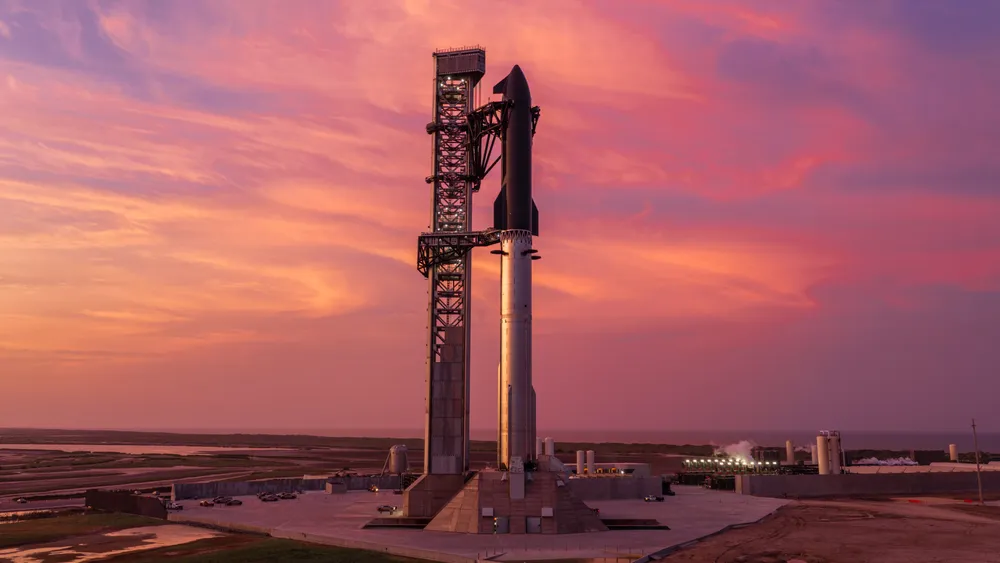
SpaceX successfully launched Starship Flight 14 from its Starbase facility in Boca Chica, Texas, achieving another major milestone in its ambitious deep-space transportation program. During the latest orbital test, the spacecraft completed its primary ascent phases before executing a controlled return to Earth earlier than initially scheduled. According to mission controllers, the preemptive splashdown was conducted out of an abundance of caution following routine telemetry reviews during the flight profile, ensuring that engineering teams can gather valuable flight data while safeguarding future hardware iterations.
Headquartered at the Starbase development site, SpaceX has rapidly evolved into a dominant force in global aerospace, operating extensive portfolios across space transportation, satellite connectivity, and advanced technology. The privately held manufacturer leads the world in annual orbital launches, outpacing both commercial competitors and national space programs with its reliable Falcon vehicle family and the next-generation Starship system. Major institutional clients, including NASA, the United States Space Force, and the National Reconnaissance Office, rely heavily on the company's reusable launch architecture to deploy critical payloads and secure national security assets in orbit.
The ongoing development of Starship represents a fundamental shift in aerospace economics, centered entirely on full and rapid reusability. By designing a heavy-lift vehicle capable of carrying both crew and massive cargo loads to Earth orbit, the Moon, and eventually Mars, SpaceX aims to drastically reduce the cost per kilogram of payload delivered to space. Flight 14 serves as a critical stepping stone in this iterative testing philosophy, where anomalies and early terminations are treated as vital learning opportunities to refine thermal protection systems, aerodynamics, and propulsion dynamics before crewed missions commence.
Beyond its core launch operations, SpaceX continues to expand its commercial and technological footprint through its Starlink satellite constellation, which delivers high-speed broadband internet to remote and underserved regions worldwide. The corporation's broadening scope now also encompasses artificial intelligence infrastructure through specialized subsidiaries, positioning the firm at the intersection of heavy manufacturing, global telecommunications, and high-performance computing. With major stakeholders and founder Elon Musk driving an aggressive innovation schedule, the company’s operational tempo directly shapes the modern commercial space economy.
For the Indo-Pacific region and Taiwan, the rapid maturation of reusable heavy-lift launch systems and low-Earth-orbit satellite constellations holds profound implications for regional telecommunications resilience and national security architecture. As governments and commercial entities across the globe increasingly rely on distributed satellite networks like Starlink to maintain uninterrupted communications during crises or natural disasters, the underlying technology pioneered by SpaceX is redefining modern strategic infrastructure. Furthermore, the commercialization of near-Earth space influences global supply chains for advanced materials, precision electronics, and aerospace manufacturing, directly impacting high-tech economies throughout East Asia.
Produced by our editorial team, with AI assistance in editing.