
RSF Drone Strike in El Obeid Kills Two Civilians, Raises UAV Use Concerns
A drone strike carried out by the Rapid Support Forces (RSF) on Thursday night killed two civilians in the eastern Sudanese town of El Obeid. The attack, r
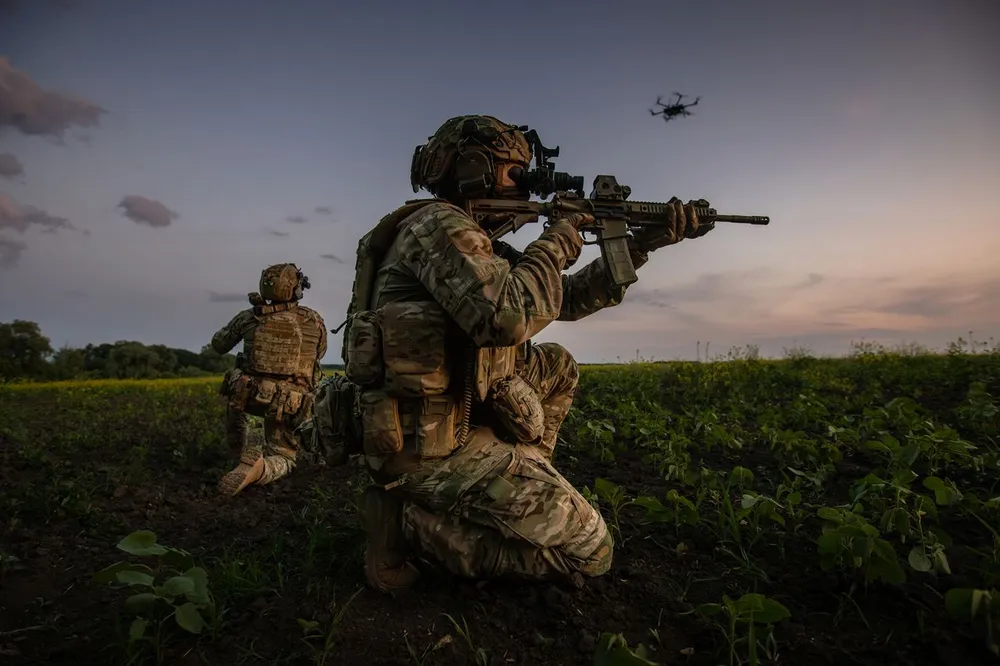
A drone strike carried out by the Rapid Support Forces (RSF) on Thursday night killed two civilians in the eastern Sudanese town of El Obeid. The attack, reportedly launched from a low‑altitude unmanned aerial vehicle, struck a residential area that had been used by local families to store food and water supplies. RSF spokesman Mohamed Ahmed stated that the drone had been targeting “military positions” in the vicinity, but independent observers confirmed that the strike hit a civilian compound, raising new concerns about the use of unmanned systems in the ongoing Sudanese civil war.
The RSF, a former mercenary group that has been integrated into Sudan’s security apparatus, has increasingly turned to drones as a force multiplier in its clashes with the Sudanese Armed Forces (SAF). Drones offer the RSF the ability to conduct reconnaissance, deliver precision strikes, and maintain pressure on enemy positions while reducing the risk to its own personnel. Unmanned combat aerial vehicles (UCAVs) and low‑altitude weaponised unmanned aerial vehicles (UAVs) have become common tools in modern conflicts, and their use in Sudan reflects a broader global trend toward autonomous and semi‑autonomous strike platforms.
Both sides in the Sudanese conflict have claimed that they are using drones to target the other’s military assets. The RSF has justified its use of unmanned systems as a means to counter the SAF’s superior artillery and air power, while the SAF has accused the RSF of violating international humanitarian law by striking civilian infrastructure. The recent civilian casualties underscore the challenges of ensuring compliance with the principles of distinction and proportionality when employing autonomous or remotely‑piloted weapons, especially in densely populated urban settings.
Countries across the world—ranging from the United States and Russia to China, Iran, and Turkey—have deployed operational UCAVs, and the proliferation of drone technology has raised concerns about the diffusion of advanced weapon systems. The RSF’s use of drones is reportedly supported by foreign actors who supply both the hardware and the technical expertise required to operate and maintain these platforms. International arms regulators and human rights groups are monitoring the situation, urging stricter controls on the sale and use of unmanned weapons to prevent further escalation and civilian harm.
The incident in El Obeid highlights the wider implications of drone warfare for regional security and global supply chains. As nations increasingly rely on unmanned systems for both military and civilian applications, the potential for misidentification and unintended casualties rises, prompting calls for clearer international norms and verification mechanisms. For Taiwan, which has been expanding its own drone capabilities and is a major hub for semiconductor manufacturing, the conflict underscores the need for robust cybersecurity measures and diplomatic engagement to safeguard critical supply chains that could be disrupted by regional instability. The broader trend toward autonomous weapons also signals a shift in the strategic balance, reminding all states—including Taiwan—of the importance of maintaining technological resilience and international cooperation in the face of evolving warfare modalities.
Produced by our editorial team, with AI assistance in editing.
