Police Rescue Eight Forced Recruits from CJNG Clinic, Seize Drugs, Weapons
Law enforcement agents in the Mexican state of Jalisco rescued eight people who authorities say were forcibly recruited by the Jalisco New Generation Carte
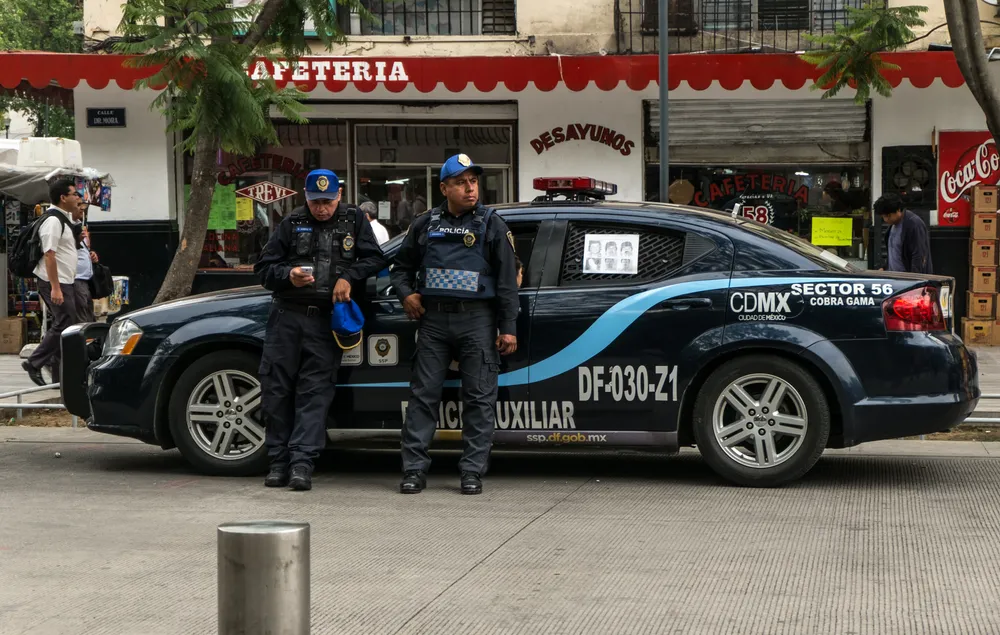
Law enforcement agents in the Mexican state of Jalisco rescued eight people who authorities say were forcibly recruited by the Jalisco New Generation Cartel (CJNG) from a clandestine clinic in Tecalitlán on Thursday, 12 September 2024. Police arrested six suspected guards and seized an arsenal of drugs, weapons and ammunition during the operation, which was conducted by the state police in cooperation with the newly formed Mexican National Guard.
The incident comes amid a broader crackdown on the CJNG, which has emerged as one of the country’s most violent and sophisticated cartels. The group, based in Jalisco, has expanded its reach into drug trafficking, extortion, kidnapping and the illicit trade in medical supplies. Reports indicate that the clinic had been used to indoctrinate and forcibly conscript young men into the cartel’s ranks, a tactic the authorities say is part of a broader strategy to secure a steady supply of recruits and maintain control over local communities. The rescue operation followed weeks of intelligence gathering and surveillance, and was carried out at a time when the CJNG is reportedly facing pressure from rival cartels and a heightened federal counter‑drug campaign.
Mexico’s law‑enforcement framework is divided into three tiers of authority: federal, state and municipal. The Federal Police, which had historically overseen nationwide police operations, was dissolved in 2019 by President Andrés Manuel López Obrador after a series of corruption scandals and allegations of collusion with organized crime. The Mexican National Guard was established as its successor, tasked with providing a more professional, well‑trained force capable of addressing both internal security challenges and the escalating drug‑related violence. In Jalisco, the National Guard has worked in tandem with state and local police units to conduct joint operations against cartel strongholds, a cooperation that proved decisive in the Tecalitlán rescue.
From the perspective of the cartel, the forced recruitment of individuals through clandestine clinics is a method to ensure loyalty and secrecy. The CJNG’s leaders have publicly denied any direct involvement in such practices, arguing that their organization relies on voluntary participation and the promise of financial gain. However, independent investigations by anti‑crime NGOs have highlighted a pattern of coercion and intimidation, especially in rural communities where law‑enforcement presence is weaker. The seizure of weapons and ammunition at the clinic underscores the cartel’s intent to arm its recruits for both internal discipline and external conflicts with rival groups.
The operation also highlights the growing role of the National Guard in counter‑cartel operations. Since its formation, the Guard has been deployed to high‑risk areas, including Jalisco, to support local police forces that often lack the resources and training to confront heavily armed criminal organizations. The successful raid in Tecalitlán demonstrates a coordinated approach that blends intelligence gathering, rapid deployment and inter‑agency cooperation. Analysts suggest that this model could become a template for future operations across Mexico’s 32 states, potentially curbing the CJNG’s influence and reducing the cartel’s capacity to manipulate vulnerable populations.
For the wider region, the crackdown on the CJNG carries implications beyond Mexico’s borders. The cartel is a major player in the international drug trade, supplying cocaine and methamphetamine to the United States, Canada and Europe. Disrupting its recruitment pipeline could weaken the organization’s ability to maintain supply routes and reduce violence that spills over into neighboring countries. Moreover, the operation underscores the importance of robust, corruption‑free security institutions—a lesson that resonates with other Latin American nations grappling with organized crime. While the event itself may not directly affect Taiwan’s domestic affairs, it reflects global trends in security cooperation and the ongoing struggle to secure supply chains and ensure regional stability in the face of transnational criminal networks.
Produced by our editorial team, with AI assistance in editing.