
Major Landslide in Chongqing's Pengshui Buries Homes, Rescue Efforts Underway
A severe landslide recently occurred in Pengshui Miao and Tujia Autonomous County, Chongqing, China, burying multiple residential buildings under vast amou
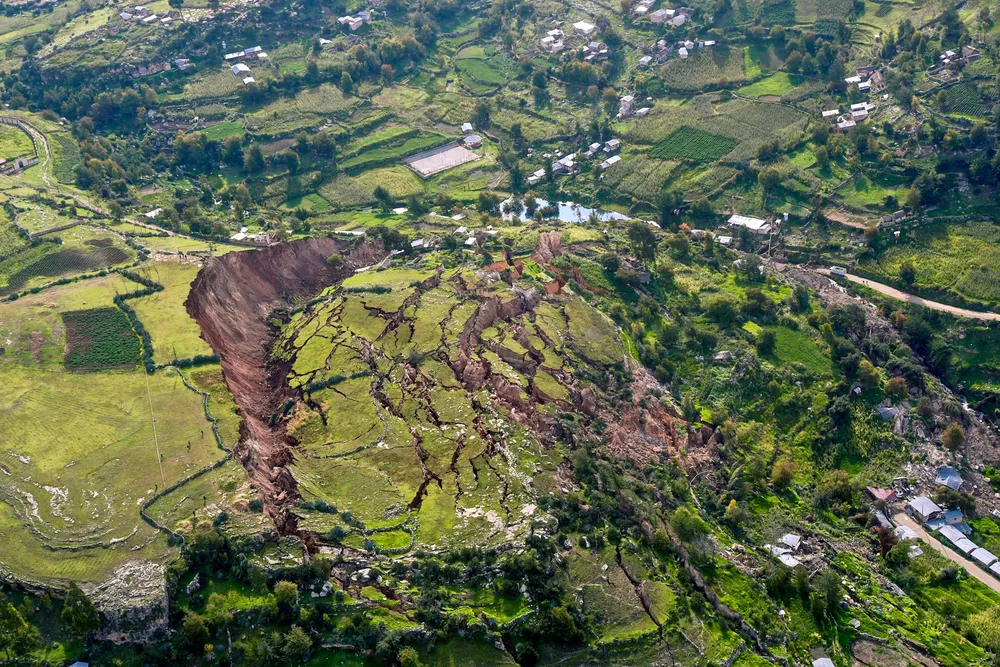
A severe landslide recently occurred in Pengshui Miao and Tujia Autonomous County, Chongqing, China, burying multiple residential buildings under vast amounts of earth and rock. Upon receiving the reports, the local government immediately activated emergency response protocols, dispatching firefighting and rescue teams to the scene to conduct search and rescue operations. According to the latest updates, nine trapped individuals have been rescued, though several others remain missing. The exact number of casualties and the status of those unaccounted for are pending further updates as the rescue efforts progress. The operation is facing significant challenges due to the fractured terrain and unstable soil conditions, and authorities are continuing to expand the search area.
A landslide, a type of geological disaster, is the movement of rock, earth, or debris down a slope under the influence of gravity. Such disasters have complex causes, typically involving slope gradients, geological structures, and hydrological conditions. While gravity is the primary driver of geological activity, extreme weather-induced heavy rainfall, earthquakes, or human activities—such as mountain excavation for road construction, mineral exploration, and deforestation—can significantly reduce slope stability. In recent years, as global climate change has intensified, frequent extreme precipitation events have made once-stable slopes more prone to collapse, creating a major public safety concern for mountainous communities worldwide.
The Chongqing region, where the incident occurred, is inherently a high-risk area for landslides due to its unique topography and mountainous environment. As urbanization accelerates, some buildings and infrastructure have extended onto sloping land. Without comprehensive slope monitoring and geological assessments, these areas are highly susceptible to devastating consequences when triggered by factors such as heavy rainfall. Following numerous similar disasters, Chinese authorities have strengthened geological hazard early warning systems in recent years. However, given the vast mountainous geography, effectively implementing grassroots early warning systems and reinforcing the structural safety of vulnerable zones remain significant challenges for local governance.
For Taiwan, which shares similar mountainous geography and faces comparable challenges from extreme rainfall due to climate change, this disaster serves as a vital point of reference. Slope disaster prevention systems for mountainous settlements and public works have long been central to Taiwan’s disaster prevention and mitigation policies. Through the analysis of monitoring data, the precise delineation of debris flow potential streams, and the rigorous implementation of environmental impact assessments for slope development, Taiwan has accumulated substantial experience in disaster prevention technology and the construction of resilient communities. This incident serves as a reminder to the Taiwanese public and engineering sectors that, in the face of increasingly frequent extreme weather, striking a balance between urban development and geological safety—while strengthening real-time monitoring and emergency evacuation mechanisms for high-risk mountainous areas—remains a critical task in ensuring national safety and minimizing disaster losses.
Produced by our editorial team, with AI assistance in editing.