
Hurricane Isaias weakens after hitting Florida, prompting warnings for secondary disasters.
The National Hurricane Center (NHC) officially released its latest weather report this week, stating that Hurricane Isaias, which had drawn significant att
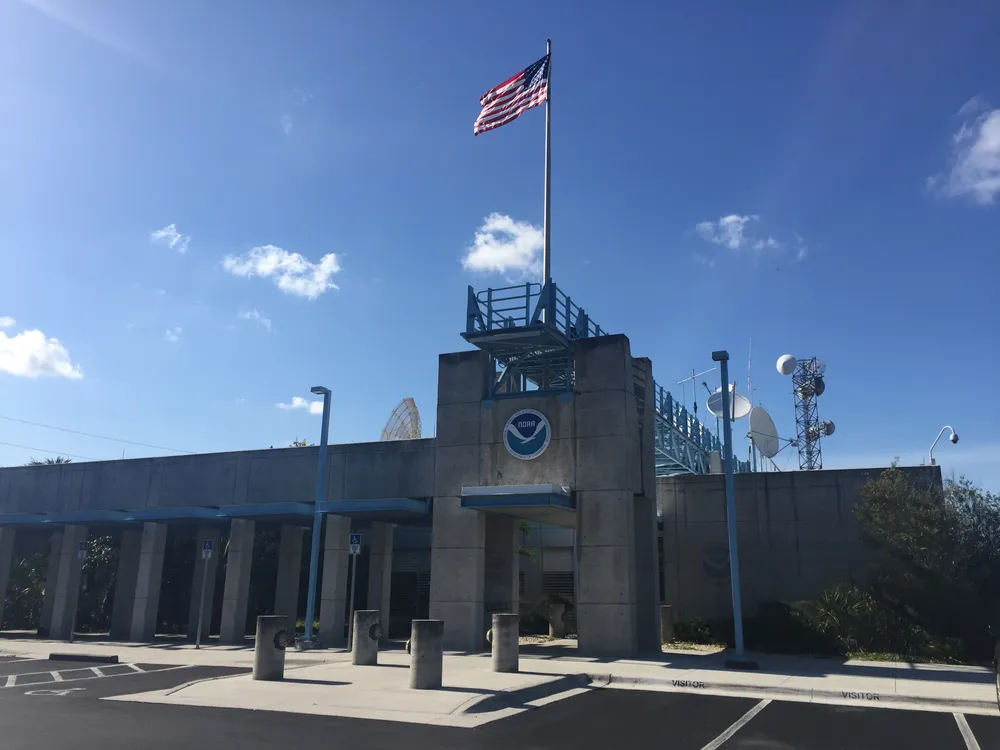
The National Hurricane Center (NHC) officially released its latest weather report this week, stating that Hurricane Isaias, which had drawn significant attention, has significantly weakened in intensity after making landfall near the Florida resort town of Destin, and has now been downgraded to a post-tropical cyclone. Although the storm's power has diminished, relevant meteorological units continue to closely monitor its residual circulation and remind local residents to be on high alert for secondary disasters that may be caused by strong winds and heavy rainfall.
The National Hurricane Center, which issued real-time warnings and tracking for this storm's trajectory, is a vital agency under the National Oceanic and Atmospheric Administration (NOAA) and the National Weather Service. Headquartered on the campus of Florida International University in Miami, the center's primary responsibilities are to monitor, track, and forecast tropical weather systems in the North Atlantic and northeast Pacific basins. Operating year-round through its Technical Support Branch and Tropical Analysis and Forecast Branch, the agency issues various marine and meteorological forecasts, providing critical disaster prevention and warning information for the Americas and the Caribbean region.
When responding to such extreme weather events, the National Hurricane Center often plays a pivotal role. In addition to ground-based and satellite observations, the agency's Aircraft Reconnaissance Coordination Hurricanes (CARCAH) unit dispatches specialized aircraft directly into the cores of storms during hurricane season to collect firsthand scientific data such as atmospheric pressure and wind speed. This precise on-site observational data not only helps meteorologists more accurately predict landfall locations and times, but also significantly improves the accuracy of hurricane track forecasts, buying precious time for local governments to conduct evacuations and prepare for disaster prevention.
As global climate change intensifies, the intensity and frequency of the Atlantic hurricane season often have profound impacts on the infrastructure, insurance industry, and supply chains of the American continent. Although Isaias rapidly weakened after landfall, the heavy rainfall and gusty winds it brought still caused localized disruptions to power supplies and transportation in Florida and surrounding areas. Meteorological experts note that while post-tropical cyclones lose the characteristics of tropical systems when moving deep inland or over colder waters, the moisture they carry can still trigger flooding along their paths and must not be taken lightly.
For Taiwan, although hurricane disasters in Florida have no direct geopolitical or trade supply chain connection to Taiwan, both face highly similar challenges in the face of the threat of extreme climate. Taiwan is likewise situated in a Pacific weather belt frequently battered by typhoons. The operational models of the National Hurricane Center in weather observation, aerial reconnaissance, inter-agency disaster prevention coordination, and public warning mechanisms provide a highly valuable modern governance reference for Taiwan to strengthen climate resilience, enhance disaster prevention, and improve real-time emergency response capabilities.
Produced by our editorial team, with AI assistance in editing.


