
First adult T. rex trackway found in North Dakota’s Hell Creek Formation
Scientists from the Denver Museum of Nature and Science and Liverpool John Moores University have announced the discovery of the first known adult Tyrannos
Scientists from the Denver Museum of Nature and Science and Liverpool John Moores University have announced the discovery of the first known adult Tyrannosaurus rex trackway in the Hell Creek Formation of North Dakota. The find, detailed in a paper published this week in the Journal of Vertebrate Paleontology, consists of a series of well‑preserved footprints that record a single individual moving across a flood‑plain about 66 million years ago, shortly before the mass extinction that ended the Cretaceous period.
The Hell Creek Formation, which spans parts of Montana, North Dakota and South Dakota, is one of the world’s most extensively studied Late Cretaceous deposits, yielding a rich assemblage of dinosaurs, mammals and plant fossils. Until now, T. rex evidence from the formation has been limited to skeletal remains and isolated footprints that could not be confidently assigned to an adult. The new trackway, measuring roughly 30 metres in length, shows a consistent stride and footprint depth that indicate a mature predator weighing over six tonnes. Its orientation suggests the animal was walking rather than running, providing rare insight into the locomotor mechanics of the iconic theropod in a natural setting.
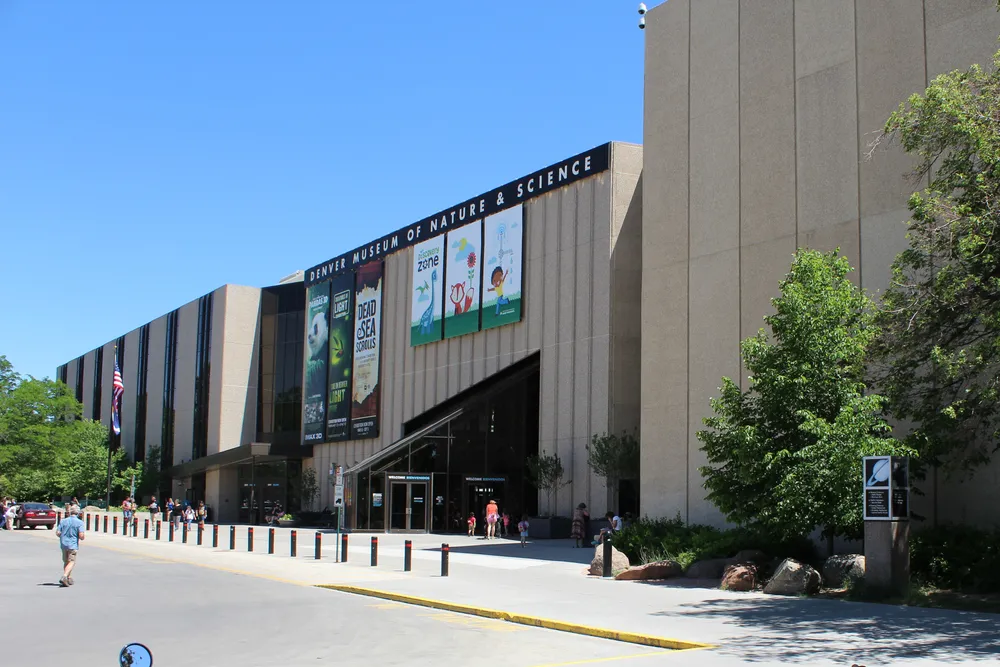
The Denver Museum of Nature and Science, a municipal institution in Colorado, played a pivotal role in the discovery and analysis. With a collection of more than one million objects and a staff of roughly 450 professionals and volunteers, the museum serves as a regional hub for informal science education and research. Its affiliation with the Smithsonian Institution and accreditation by the American Alliance of Museums underscore its capacity to support high‑profile scientific investigations. The museum’s field teams have long been active in North American paleontological sites, and its laboratory facilities enabled detailed measurements and 3D modelling of the footprints.
Liverpool John Moores University (LJMU) contributed complementary expertise in vertebrate ichnology, the study of fossilized tracks and traces. LJMU’s School of Science and Engineering maintains a strong research program in dinosaur biomechanics, and its scholars have previously collaborated on trackway projects in Europe and North America. The joint effort combined the museum’s on‑site fieldwork capabilities with the university’s analytical tools, such as high‑resolution photogrammetry and biomechanical simulation, to reconstruct the gait and speed of the animal with unprecedented precision.
The discovery fills a notable gap in the fossil record of T. rex, whose massive size has made adult trackways exceptionally rare. Earlier finds have largely consisted of juvenile or sub‑adult prints, leading to uncertainties about how fully grown individuals moved across varied terrain. By confirming that an adult could sustain a steady, relatively slow walk, the trackway challenges earlier assumptions that mature tyrannosaurs were primarily ambush predators reliant on short bursts of speed. Moreover, the sedimentary context suggests the dinosaur traversed a moist, vegetated floodplain, hinting at possible foraging behavior and ecological interactions within the Hell Creek ecosystem.
While the find is rooted in North American prehistory, its implications resonate globally, including for Taiwan’s scientific and educational communities. The collaborative model—linking a U.S. museum with a U.K. university—demonstrates the value of trans‑national research networks that Taiwanese institutions can emulate to enhance their own paleontological initiatives. Additionally, a deeper understanding of ancient megafauna and their environments contributes to broader studies of climate change and ecosystem dynamics, topics of particular relevance to Taiwan’s coastal and agricultural planning. By illuminating a previously unknown facet of Earth’s distant past, the trackway underscores how international cooperation in basic science can generate knowledge that informs contemporary environmental and educational priorities.
Produced by our editorial team, with AI assistance in editing.
