
Far-right activist Jake Lang arrested during Minnesota Capitol protest
American far‑right activist Jake Lang was taken into custody on July 14, 2026, during a protest outside the Minnesota State Capitol in Minneapolis. Police
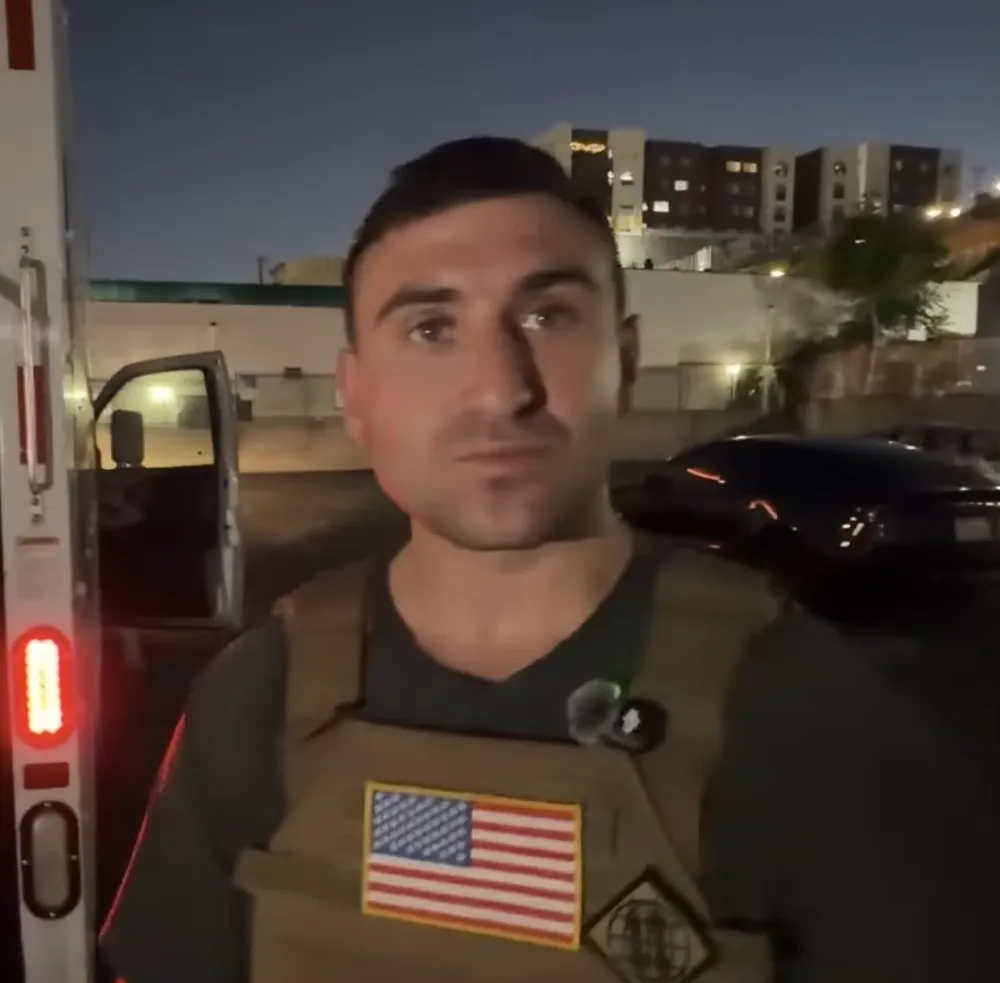
American far‑right activist Jake Lang was taken into custody on July 14, 2026, during a protest outside the Minnesota State Capitol in Minneapolis. Police said the arrest followed a disturbance in which Lang allegedly attempted to breach a police perimeter and resisted officers. He was booked on a misdemeanor charge of disorderly conduct and transferred to the Hennepin County jail pending a hearing. The incident unfolded as a crowd gathered to protest immigration enforcement policies, a cause that has repeatedly drawn Lang’s attention in recent months.
Lang, whose full name is Edward Jacob Lang, first entered the national spotlight as a participant in the January 6, 2021, attack on the U.S. Capitol. He was convicted of assaulting law‑enforcement officers and served four years in federal prison before being granted a full pardon by former President Donald Trump on the first day of his second term in 2025. The pardon erased his criminal record for the Capitol breach, allowing Lang to re‑enter public life and briefly launch a campaign for local office in Minnesota. His supporters have framed the pardon as a correction of what they describe as politically motivated prosecutions, while critics argue it signaled a dangerous leniency toward political violence.
Since his release, Lang has faced a series of new legal challenges. In March 2026, a Washington, D.C., court issued a summons after he allegedly threatened a Capitol Police officer at a fifth‑anniversary commemoration of the Jan. 6 riot. He failed to appear, prompting a warrant for his arrest. In June 2026, Lang was detained in Dallas County, Texas, on a charge of making a terroristic threat, initially set at a $1 million bond that was later reduced to $250,000. Moreover, a Minneapolis trial scheduled for July 27, 2026, will address a felony accusation that he defaced a $6,000 anti‑ICE ice sculpture displayed in front of the state capitol, an act prosecutors say was intended to intimidate immigration officials. These overlapping cases illustrate the broader pattern of legal scrutiny that has followed Lang since his pardon.
Law‑enforcement officials have stressed that the recent arrest was routine, emphasizing that public safety protocols must be enforced regardless of an individual’s political affiliations. The Hennepin County Attorney’s Office has indicated that the disorderly‑conduct charge will be processed alongside the pending felony case, and that any additional offenses uncovered during the Minneapolis protest could be added. Civil‑rights advocates, however, have warned that heightened police presence at demonstrations could suppress lawful dissent, urging that Lang’s rights be protected while investigations proceed. Lang’s own legal team argues that the arrests constitute a campaign of political retaliation, contending that the charges are disproportionate to his conduct and that the state is targeting him for his prior pardon and outspoken activism.
The episode underscores the broader implications of domestic political extremism for U.S. foreign policy, particularly in the Indo‑Pacific region where America’s strategic commitments are closely watched. Persistent unrest and high‑profile prosecutions of far‑right figures can strain the credibility of U.S. institutions, potentially affecting Washington’s ability to present a united front on issues such as Taiwan’s security, supply‑chain resilience, and regional stability. If domestic divisions distract or divert resources from diplomatic and defense initiatives, allies may question the reliability of American support. Consequently, the handling of Lang’s case, and similar incidents, carries weight beyond Minnesota, informing perceptions of the United States’ internal cohesion and its capacity to uphold international obligations.
Produced by our editorial team, with AI assistance in editing.