Breakthroughs in Black Hole and Red Dot Research Boost Space Exploration Efforts
Breakthrough in Space Exploration: Scientists Discover First Black Hole Star Research published in the latest issue of the journal Nature reveals that scie
Breakthrough in Space Exploration: Scientists Discover First Black Hole Star
Research published in the latest issue of the journal Nature reveals that scientists have discovered the first black hole star, dubbed MoM-BH*-1, located in the constellation Cetus, several hundred million light-years away from Earth. The celestial body has a size similar to that of the solar system and emits a brightness far exceeding its host galaxy.
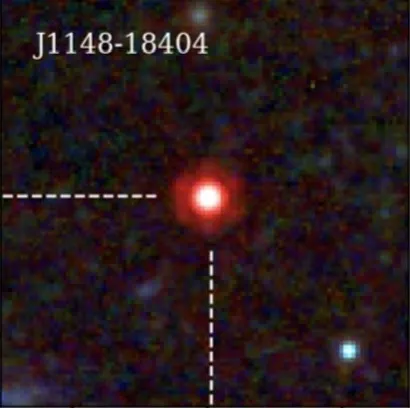
In the context of black hole star research, scientists have long been fascinated by a class of objects known as "Little Red Dots" (LRDs). These small, red celestial bodies were discovered by the James Webb Space Telescope (JWST) and are believed to have appeared 600 million to 1.6 billion years after the Big Bang. As of 2025, JWST has identified 341 LRDs. According to leading theories, LRDs are thought to be primitive galaxies and may contain supermassive black holes, as suggested by early reports. However, LRDs lack certain characteristics of known active galactic nuclei (AGNs), such as X-ray emission and a steep infrared spectrum, leading to numerous questions.
As research progressed, another theory emerged, suggesting that LRDs could be primitive supermassive non-metallic stars, known as Supermassive Primordial Stars (SMPs). According to this theory, the red color and spectrum of LRDs are the result of light scattering from an extremely dense ionized gas. While this theory explains the existence and formation of LRDs, it also raises new questions.
What is the connection between the discovery of black hole stars and the study of LRDs? Although the two appear to be separate entities, they are, in fact, interconnected. Research on LRDs explores the process of early galaxy formation, while the existence of black hole stars serves as an important indicator of early galaxy evolution. This discovery further supports the validity of the LRDs as primitive galaxy theory and offers a deeper understanding of early universe evolution.
In Taiwan, this discovery has no direct implications, but it highlights scientists' in-depth research on the early universe, shedding further light on galaxy formation and evolution. This research promotes collaboration and progress within the scientific community, opening new horizons for future space exploration.
Produced by our editorial team, with AI assistance in editing.