
Boeing 767 Freighter Overshoots Miami Runway, Killing Five and Injuring Five
A Boeing 767‑300 freighter operated by 21 Air on behalf of Amazon Air overshot the runway while landing at Miami International Airport on Tuesday afternoon
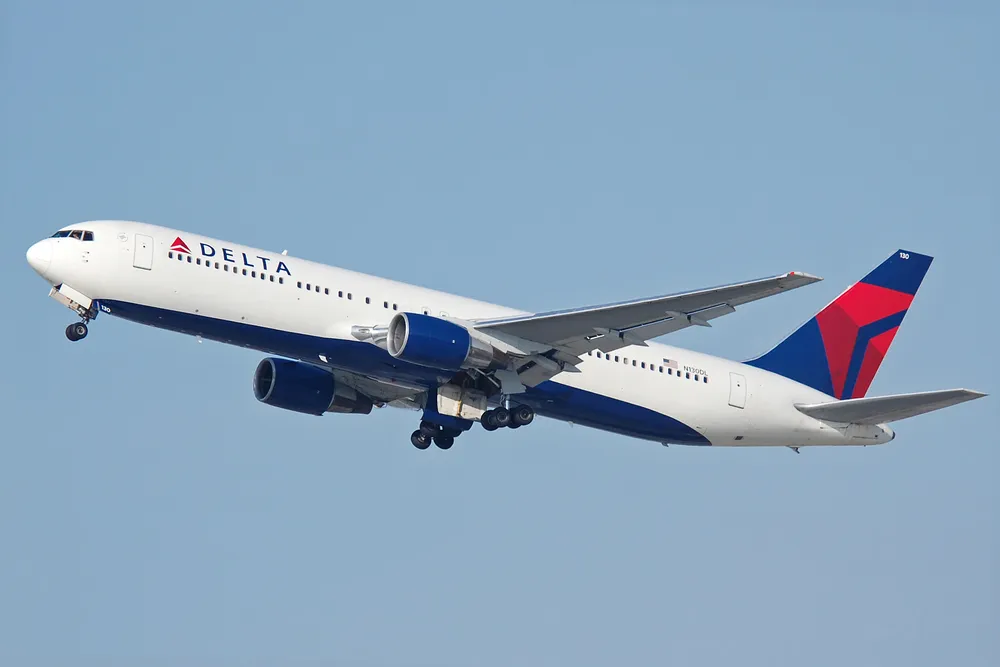
A Boeing 767‑300 freighter operated by 21 Air on behalf of Amazon Air overshot the runway while landing at Miami International Airport on Tuesday afternoon, striking several vehicles on a service road. The crash killed five people, including two airport employees and three motorists, and injured five others before the aircraft came to rest near the terminal’s cargo apron. Emergency crews worked through the night to extinguish a fuel fire and clear the wreckage, while the Federal Aviation Administration (FAA) and the National Transportation Safety Board (NTSB) opened parallel investigations into the accident.
The 767‑300F involved in the incident is part of Boeing’s long‑standing 767 family, the company’s first wide‑body twinjet introduced in the early 1980s to complement the larger 747. The original 767‑200 entered service in 1982, and the stretched 767‑300 variant was launched in 1986, followed by the extended‑range 767‑300ER in 1988. The freighter version, the 767‑300F, began production in 1995 and has become a workhorse for cargo operators worldwide because of its capacity for LD2 unit load devices and its relatively low operating cost compared with larger freighters. Its design incorporates a conventional tail, a supercritical wing for reduced drag, and a two‑crew glass cockpit that shares commonality with the Boeing 757, simplifying pilot training for airlines that operate both types.
21 Air, a U.S.‑based charter carrier, has been contracted by Amazon Air to move high‑volume e‑commerce shipments across the country. Amazon’s cargo network relies heavily on the 767‑300F, which can carry up to 115,000 pounds of freight, making it a critical link in the company’s promise of rapid delivery. In the wake of the crash, Amazon released a statement expressing “deep sorrow” for the victims and confirming that the flight was operating under normal conditions before the approach. Boeing has pledged full cooperation with investigators and noted that the aircraft’s maintenance records are being reviewed, while the FAA has temporarily suspended all 767‑300F operations at Miami pending a safety assessment.
The NTSB’s preliminary report indicates that the aircraft touched down beyond the intended touchdown zone and failed to decelerate adequately, leading to the runway overrun. Investigators are examining a range of factors, including pilot decision‑making, runway surface conditions, possible mechanical anomalies, and any communications with air traffic control. The FAA has also ordered a review of runway safety areas at Miami International, which has seen a surge in cargo traffic in recent years as e‑commerce demand has grown. Representatives of the families of the deceased have called for a transparent inquiry and for measures that prevent similar tragedies in the future.
While the accident occurred on U.S. soil, its repercussions reverberate through the global supply chain that underpins much of Taiwan’s export‑driven economy. The 767‑300F is a common platform for moving electronics, components and finished goods between North America and Asian markets, including Taiwan’s high‑tech sector. Disruptions to the aircraft’s operations can delay shipments of semiconductors and other critical parts that Taiwanese manufacturers rely on to meet international demand. Moreover, the incident adds pressure on Boeing, a major supplier of commercial aircraft to Taiwanese airlines and a partner in the island’s aerospace supply network, to address safety concerns that could affect future orders and joint ventures. The outcome of the investigations will therefore be watched closely by industry stakeholders across the Pacific, where air cargo remains a linchpin of trade and economic resilience.
Produced by our editorial team, with AI assistance in editing.