At Least 8 Dead and 34 Missing After Major Landslide in Chongqing
A severe landslide occurred recently in Pengshui Miao and Tujia Autonomous County, Chongqing, China, as a massive volume of earth and rock cascaded down, i
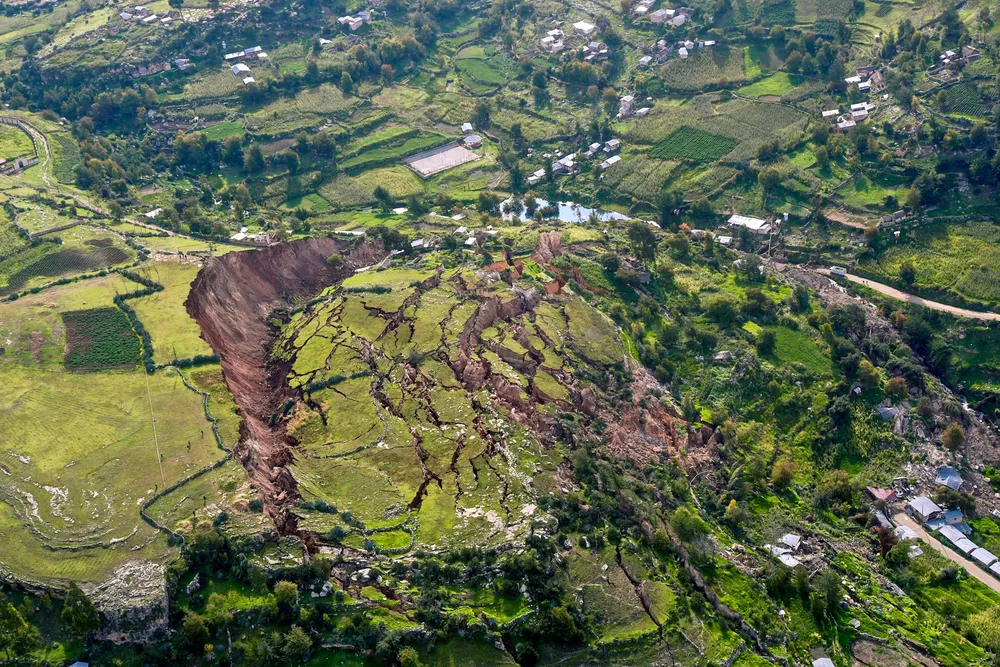
A severe landslide occurred recently in Pengshui Miao and Tujia Autonomous County, Chongqing, China, as a massive volume of earth and rock cascaded down, instantly burying multiple residential buildings. According to the latest official report, the disaster has claimed at least 8 lives, while 10 people have been rescued. However, 34 individuals remain missing. The local government has activated emergency response mechanisms, mobilizing fire departments, public security forces, and professional search-and-rescue teams to launch a race-against-time operation in the disaster zone, despite the challenging terrain and persistent geological instability.
Landslides are complex, large-scale geological events often involving a combination of gravity, geological structure, vegetation cover, and external triggers. From a scientific perspective, while slope gradient is a key factor in stability, factors such as heavy rainfall, earthquakes, or anthropogenic landscape changes—including road construction and resource extraction—can abruptly disrupt the equilibrium of a slope, leading to collapse. In recent years, as global climate change intensifies and extreme weather events become more frequent, the incidence of such geological disasters in mountainous regions worldwide has shown an upward trend.
The Chongqing region in southwestern China has historically been a high-risk area for landslides and mudslides due to its unique mountainous topography and river-cut landscapes. Beyond natural geographical conditions, the rapid expansion of human activity in mountainous areas—such as improper land development, slope excavation for urban growth, and long-term deforestation—has, to a certain extent, weakened the soil-retention capacity of the land, making it more vulnerable to sudden, intense rainfall. The catastrophe in Pengshui County underscores the severe challenges that persist in balancing regional development with residential safety, particularly regarding geological disaster prevention and early warning systems.
Search-and-rescue operations are currently in a race against time. The loose, massive accumulation of debris and the potential for secondary collapses have made the rescue process extremely difficult. The local government has directed relevant agencies to strengthen geological monitoring in the surrounding areas and conduct comprehensive inspections of the disaster site to prevent the expansion of secondary hazards. As the rescue efforts continue, this incident has once again drawn public attention to the importance of residential safety in mountainous regions and environmental protection policies. Establishing effective disaster resilience in high-risk areas has become the primary task for the local government.
For Taiwan, which is also characterized by a mountainous landscape, fractured geological structures, steep gradients, frequent earthquakes, and heavy rainfall brought by summer typhoons, landslides and mudslides have always been core issues in disaster prevention. The tragedy in Pengshui County serves as a reminder that in the face of extreme weather driven by climate change, slope management, land-use planning, and precise mudslide early-warning systems are vital. Having experienced numerous large-scale mountain disasters in the past, Taiwan has established a relatively robust monitoring network and prevention mechanism. Nevertheless, continuously updating disaster prevention technology, strengthening geological risk assessments for older residential areas, and strictly enforcing appropriate land development management in mountainous regions remain essential long-term efforts to ensure national security and protect the lives and property of the public.
Produced by our editorial team, with AI assistance in editing.