
7.3 Magnitude Earthquake Strikes Off Southern Mexico, Triggering Tsunami Alert and Rescue
A magnitude 7.3 earthquake struck off the coast of the southern Mexican state of Chiapas on Wednesday, local time. According to preliminary data from the U
A magnitude 7.3 earthquake struck off the coast of the southern Mexican state of Chiapas on Wednesday, local time. According to preliminary data from the United States Geological Survey (USGS), the earthquake originated at a shallow depth. The intense tremors were felt across several cities in southern Mexico, with strong shaking also reported in neighboring Guatemala. Authorities have issued a tsunami warning for the Pacific coast, urging residents in coastal areas to evacuate immediately to higher ground. Mexico’s civil protection agency has dispatched emergency search and rescue teams to the vicinity of the epicenter to assess structural damage and potential casualties. As of now, there have been no confirmed reports of large-scale disasters or casualties.
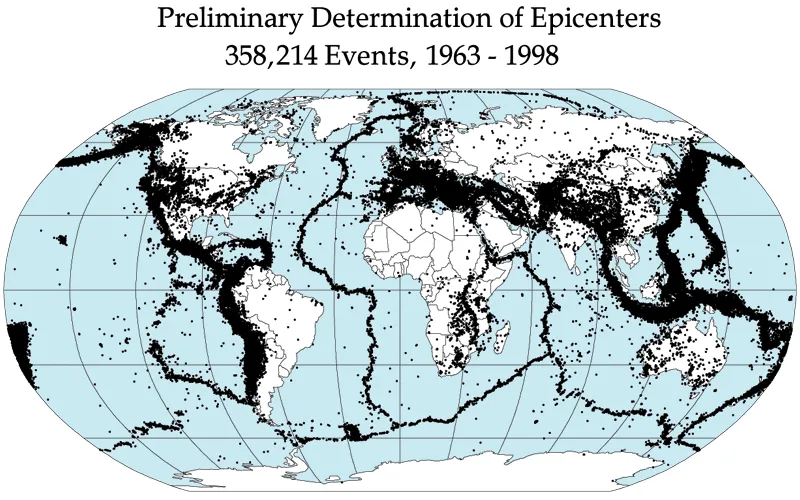
Mexico is situated along the Ring of Fire, a geographic position that makes it one of the most seismically active countries in the world. Chiapas is located at the intersection of the North American, Caribbean, and Cocos plates; this complex geological environment frequently results in seismic activity. When rock layers deep within the Earth's crust fracture, the massive energy released propagates to the surface as seismic waves, posing a long-term challenge to local infrastructure and public safety. While the Mexican government has developed a relatively sophisticated earthquake early warning system over the years and conducts regular disaster prevention drills in densely populated cities, the sudden destruction caused by powerful quakes continues to test the response capabilities of remote mountainous and coastal regions.
In response to the earthquake, the Pacific Tsunami Warning Center has issued a tsunami advisory for the surrounding waters based on the location and intensity of the quake. Tsunamis are often triggered by the vertical displacement of the seafloor, which causes a massive, instantaneous movement of seawater, resulting in highly destructive waves. Although modern seismic technology can accurately detect earthquake waves, predicting the actual wave height and arrival time of a tsunami remains extremely difficult due to complex factors such as bathymetry and coastline geometry. The current priority for Mexican authorities, alongside inspecting collapsed buildings near the epicenter, is to monitor sea level changes to ensure coastal residents can evacuate in time and to prevent the escalation of secondary disasters.
For Taiwan, this powerful earthquake on the other side of the Pacific serves as a renewed reminder of the importance of seismic preparedness and geological resilience. Like Mexico, Taiwan is situated along the Pacific Ring of Fire, where active plate tectonics present similar geological risks. Mexico’s national early warning system and rapid disaster response protocols offer valuable insights for Taiwan. Furthermore, in an era of highly integrated global supply chains, while the epicenter of this earthquake is not a hub for Taiwan’s core technology industries, the potential impact of extreme climate events and geological disasters on global logistics and energy distribution remains a risk factor that must be considered when formulating international economic and trade strategies. Enhancing the monitoring of and information gathering on overseas disasters will help Taiwan strengthen its overall social resilience in an increasingly volatile international landscape.
Produced by our editorial team, with AI assistance in editing.
