
6.3 Earthquake Hits Qinghai Province's Haixi Prefecture, Killing One and Injuring Eight.
Recently, a 6.3 magnitude earthquake occurred in the Daqaideng region of the Haixi Prefecture in Qinghai Province, China, resulting in one fatality and eig
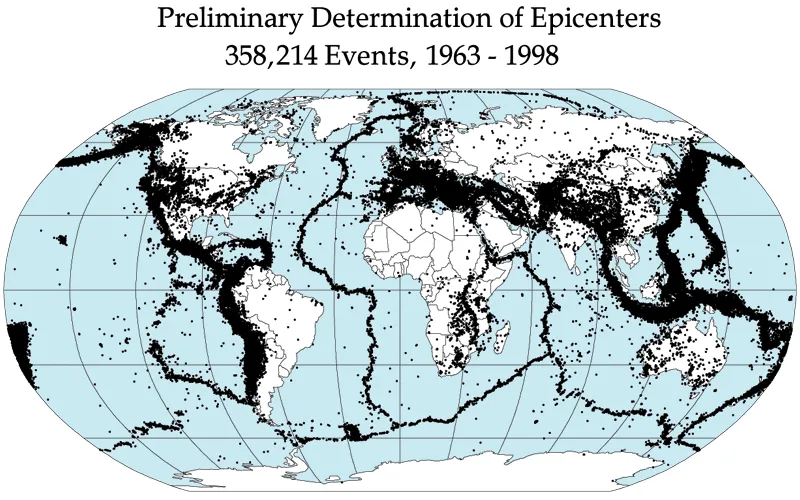
Recently, a 6.3 magnitude earthquake occurred in the Daqaideng region of the Haixi Prefecture in Qinghai Province, China, resulting in one fatality and eight injuries. Following the earthquake, local emergency responders quickly arrived at the scene to rescue the injured and conduct a search operation.
Earthquakes are a type of seismic activity that occurs when the Earth's surface suddenly releases energy, typically due to movement along fault lines or volcanic activity. The intensity of earthquakes can range from weak to strong and can even cause objects and people to be thrown into the air, destroy critical infrastructure, and lead to the devastation of entire cities. The frequency, type, and scale of earthquakes can be used to describe the seismic activity in a particular area and also assess the earthquake risk in that region.
China is a country prone to earthquakes, particularly in the western regions. A notable example is the 1976 Tangshan earthquake, which resulted in the deaths of over 240,000 people. Earthquakes are often caused by movement along fault lines or volcanic activity, and can also be triggered by human activities such as mining, hydraulic fracturing, and nuclear testing. The origin of an earthquake is referred to as the epicenter or focal point, while the point on the surface directly above the epicenter is known as the earthquake's hypocenter. Understanding the causes and characteristics of earthquakes is crucial for preventing and responding to earthquake disasters.
Following the earthquake, the Chinese government and relevant departments quickly launched a rescue effort, while also conducting an urgent assessment of the affected area and engaging in reconstruction work. The earthquake has had a significant impact on the lives and industries of local residents, and has also had an impact on China's economy and social stability.
In terms of earthquake prevention and response, the Chinese government and relevant departments have been working to improve and refine related policies and measures, including strengthening earthquake monitoring and forecasting, improving emergency response and disaster relief capabilities. China has also been actively promoting earthquake science research and technological development, aimed at better understanding the causes and characteristics of earthquakes, thereby enabling more effective earthquake prevention and response.
For Taiwan, earthquakes are also a pressing issue, given the island's location in the Pacific Ring of Fire, where seismic activity is frequent. In recent years, Taiwan has experienced several major earthquakes, resulting in significant losses and casualties. Therefore, the Taiwanese government and relevant departments also need to strengthen earthquake monitoring and forecasting, improve emergency response and disaster relief capabilities, and promote earthquake science research and technological development, in order to more effectively prevent and respond to earthquake disasters.
Produced by our editorial team, with AI assistance in editing.