
Discover the Hidden Gem of Southeast Asias Ancient Lao Kingdom Heritage
Located in the heart of Southeastern Asia, Laos is a country nestled northeast of Thailand and west of Vietnam, boasting a rich history that spans centurie
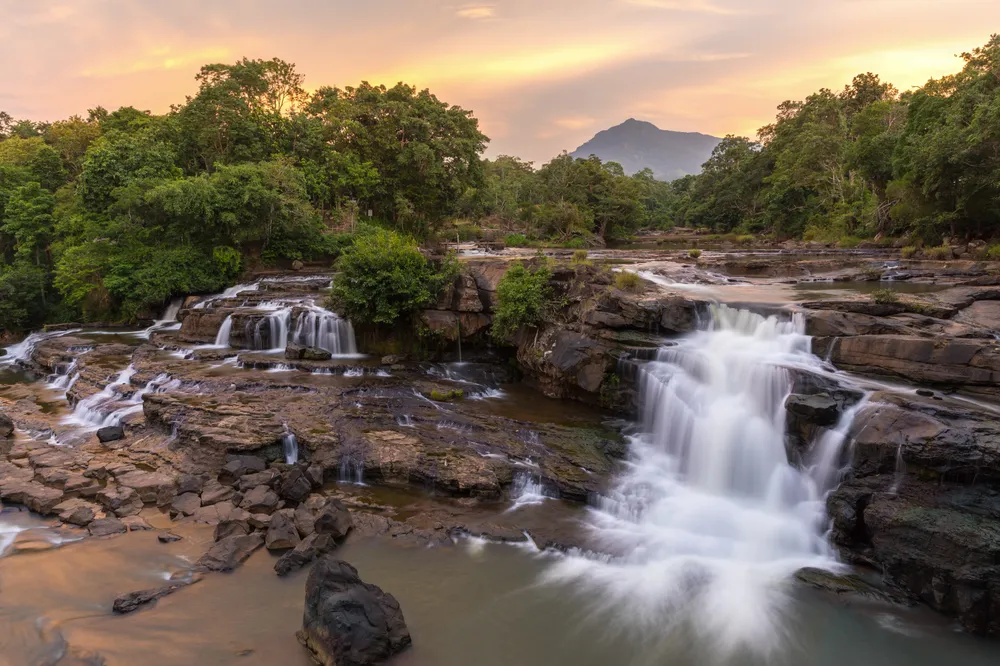
Located in the heart of Southeastern Asia, Laos is a country nestled northeast of Thailand and west of Vietnam, boasting a rich history that spans centuries. With a population of approximately 6,858,160 people, Laos covers an area of 236,800 square kilometers, offering a diverse landscape of mostly rugged mountains, as well as some plains and plateaus. The country's tropical monsoon climate is characterized by a rainy season that lasts from May to November, followed by a dry season that spans from December to April. This unique climate, combined with its stunning natural beauty, makes Laos a fascinating destination for those interested in exploring the region.
The people of Laos are a vibrant and diverse group, with the Lao ethnic group making up 53.2% of the population, followed by the Khmou at 11%, and the Hmong at 9.2%. The remaining population is comprised of various other ethnic groups, including the Phouthay, Tai, Makong, Katong, Lue, and Akha, among others. This diversity is also reflected in the country's languages, with Lao being the primary language spoken. In terms of religion, the majority of the population, approximately 64.7%, practices Buddhism, while a small percentage, 1.7%, identifies as Christian, and 31.4% reports having no religious affiliation. This blend of cultures and traditions has given rise to a unique and captivating cultural identity that is distinctly Laotian.
Laos has a long and storied history, with its roots in the ancient Lao kingdom of Lan Xang, established in the 14th century under King FA NGUM. For 300 years, Lan Xang wielded significant influence over the region, extending into present-day Cambodia and Thailand. However, the kingdom's power gradually declined, and Laos eventually came under the domination of Siam, now known as Thailand, from the late 18th century until the late 19th century. The country then became part of French Indochina, with the Franco-Siamese Treaty of 1907 defining the current border with Thailand. After a prolonged civil war, the communist Pathet Lao took control of the government in 1975, marking the end of a six-century-old monarchy and the establishment of a one-party system.
The economy of Laos is classified as a lower middle-income, industrial Southeast Asian economy, with a mix of natural resources, including timber, hydropower, gypsum, tin, gold, and gemstones. However, the country has faced significant challenges in recent years, including high inflation due to currency depreciation and persistently high debt. Despite these obstacles, Laos has made significant strides in developing its infrastructure, with the introduction of a new Laos-China railway and dry port. These advancements are expected to have a positive impact on the country's economy, although ongoing labor shortages and rising inequities remain pressing concerns. As the country continues to navigate these challenges, it is likely that Laos will remain a fascinating and dynamic nation, with a great deal to offer in terms of natural beauty, cultural richness, and economic potential.
One of the most remarkable aspects of Laos is its stunning natural beauty, with its rugged mountains, scenic valleys, and picturesque villages. The country's unique cultural heritage, shaped by its complex history and diverse ethnic groups, is also a significant draw for visitors. From the vibrant streets of the capital, Vientiane, to the tranquil countryside, Laos offers a wealth of experiences and opportunities for exploration. Whether it is the stunning scenery, the rich cultural traditions, or the warm hospitality of the Laotian people, there is no doubt that Laos is a country that is worth getting to know. As the country continues to develop and grow, it is likely that Laos will become an increasingly popular destination for travelers and investors alike, drawn by its unique blend of natural beauty, cultural richness, and economic potential.
In conclusion, Laos is a country that is full of surprises, from its stunning natural beauty to its rich cultural heritage. With its diverse population, unique traditions, and complex history, Laos offers a fascinating glimpse into a world that is both familiar and unknown. As the country continues to navigate the challenges of the 21st century, it is likely that Laos will remain a captivating and dynamic nation, with a great deal to offer in terms of natural beauty, cultural richness, and economic potential. Whether you are interested in history, culture, or simply exploring a new and exciting destination, Laos is a country that is definitely worth discovering. With its warm and welcoming people, stunning landscapes, and unique cultural traditions, Laos is a country that is sure to leave a lasting impression on all who visit.
Produced by our editorial team, with AI assistance in editing.


.jpg%3Fwidth%3D1000)