
Academy of San Carlos
Mexico · Americas
About
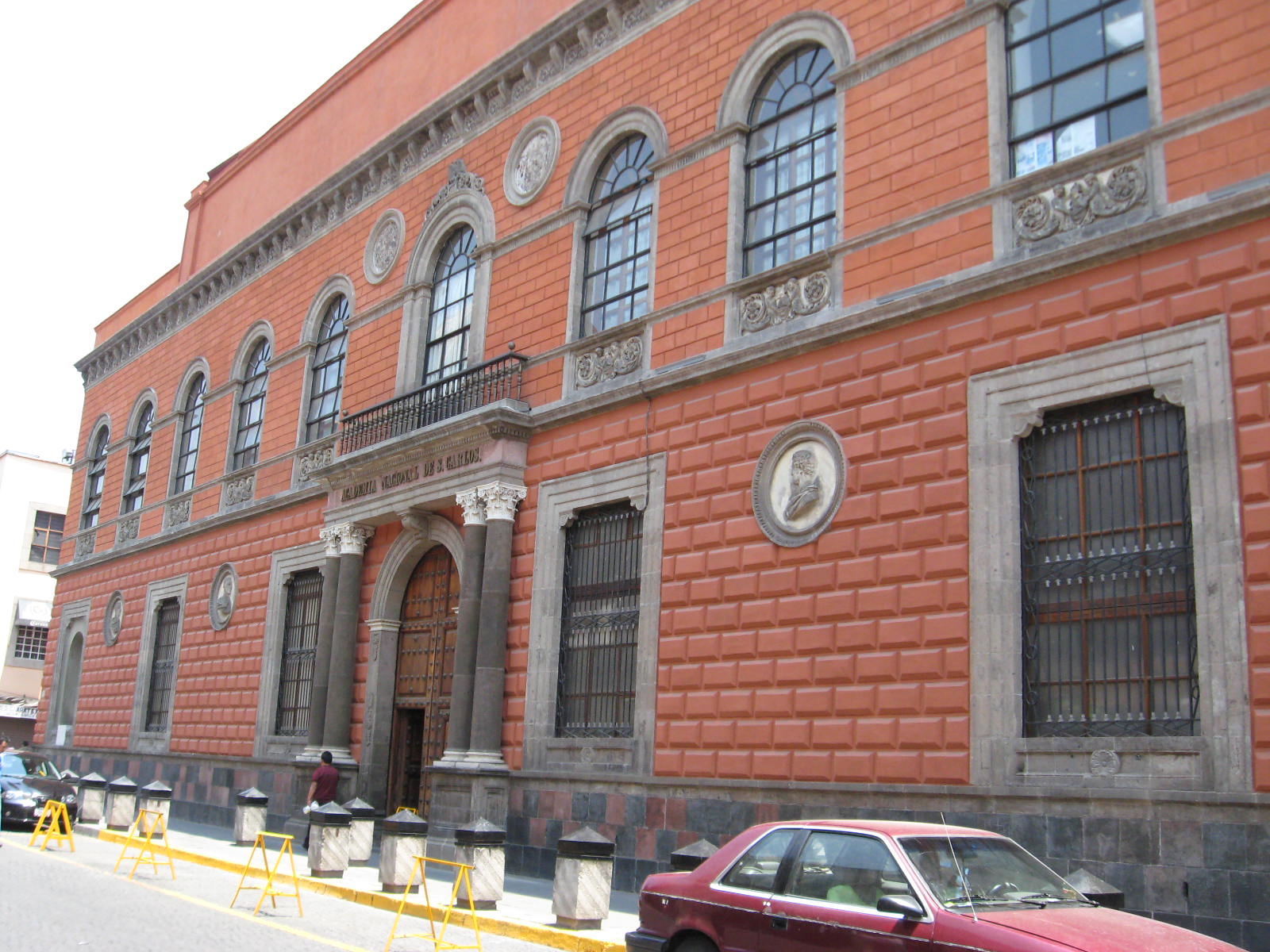
The Academy of San Carlos (Spanish: Academia de San Carlos), formerly also known as the National School of Fine Arts (Spanish: Escuela Nacional de Bellas Artes), is an art academy in Mexico City that historically played an important role in the development of Mexican art and architecture. Founded in 1781 as the School of Engraving, it was the first major art school and the first art museum in the Americas. The school was moved to the Academia Street location about 10 years after its founding and is located at 22 Academia Street, just northeast of the Zócalo of Mexico City. It emphasized the European classical tradition in training until the early 20th century, when it shifted to a more modern perspective. The Academy of San Carlos was integrated with the National Autonomous University of Mexico, eventually becoming the Faculty of Arts and Design, which is based in Xochimilco. Currently, only graduate courses of the modern school are given in the original academy building.
The Academy of San Carlos was founded in 1783, being the first arts academy established in America in 1783, with European teachers, and bright students. In 1540 the building was built in order to create the first hospital for people with syphilis. Its name was "Hospital del Amor de Dios", and was closed in 1783 in order to fuse itself with the hospital of San Andrés in the old college of Jesuits on Tacuba street. Jerónimo Antonio Gil, a famous engraver, established in 1778 an engraving school by the order of the Spanish King. Gil and his partner Fernando José Mangino decided to create a new academy to teach painting, sculpture and architecture. Finally, in 1781 classes started on the Real Casa de Moneda thanks to the donations of rich people, churches, the Tribunal of Trade and the states of Veracruz, Querétaro, Guanajuato, Córdoba Veracruz, and Orizaba. Jeronimo Antonio Gil was appointed the school's first director by Charles III of Spain and gathered prominent artists of the day including José de Alcíbar, Santiago Sandoval, Juan Sáenz, Manuel Tolsá, and Rafael Ximeno y Planes. Tolsá and Ximeno would later stay on to become directors of the school. The new school began to promote Neoclassicism, focusing on Greek and Roman art and architecture, advocating European-style training of its artists. To this end, plaster casts of classic Greek and Roman statues were brought to Mexico from Europe for students to study. The Royal Card of establishment was issued on December 25, 1783. It was asked by the viceroy Martín de Mayorga to the King Carlos III. They choose San Carlos as patron saint.
On November 4 of 1785, courses were officially started in the Academy of the Noble Arts of San Carlos of the New Spain. In 1788, the Academy of San Fernando in Spain sent some teachers like the famous Manuel Tolsá who was in charge of architecture and sculpture. Aspirations of growing were massive. So the institution tried to finance a building that Tolsá was designing on Nilpantongo Street, but it was way too expensive and it was paid by the Royal Seminar of Mining. Without a building of their own, the academy asked for the forsaken one of the Hospital Amor de Dios and finally in 1787 they started classes there. Since its founding, it attracted the country's best artists, and was a force behind the abandonment of the Baroque style in Mexico, which had already gone out-of-fashion in Europe. In the early 19th century, the academy was closed for a short time due to the Mexican War of Independence as well as losing funding from the Spanish royal house. When it fully reopened in the 1820s, it was renamed the National Academy of San Carlos and enjoyed the new government's preference for Neoclassicism, as it considered the Baroque reminiscent of colonialism. In 1844, the national lottery was put under the Academy's administration so that a third of the collected funds could go to the purchase of the building that the Academy rented, as well as its renovation. This lasted until 1861, when Benito Juárez removed the lottery and the Academy suffered from a lack of funds. During the Second Mexican Empire, the school was known as the Imperial Academy of San Carlos and it received financial support from Emperor Maximilian I, who was a patron of the arts. After the restoration of the republic, Benito Juárez passed a public education law that turned the Academy into the National School of Fine Arts under the Secretarait of Justice and Public Instruction.
Adapted from Wikipedia (CC BY-SA). Photography via Wikimedia Commons.