
Cerro Rico
Bolivia · Americas
About
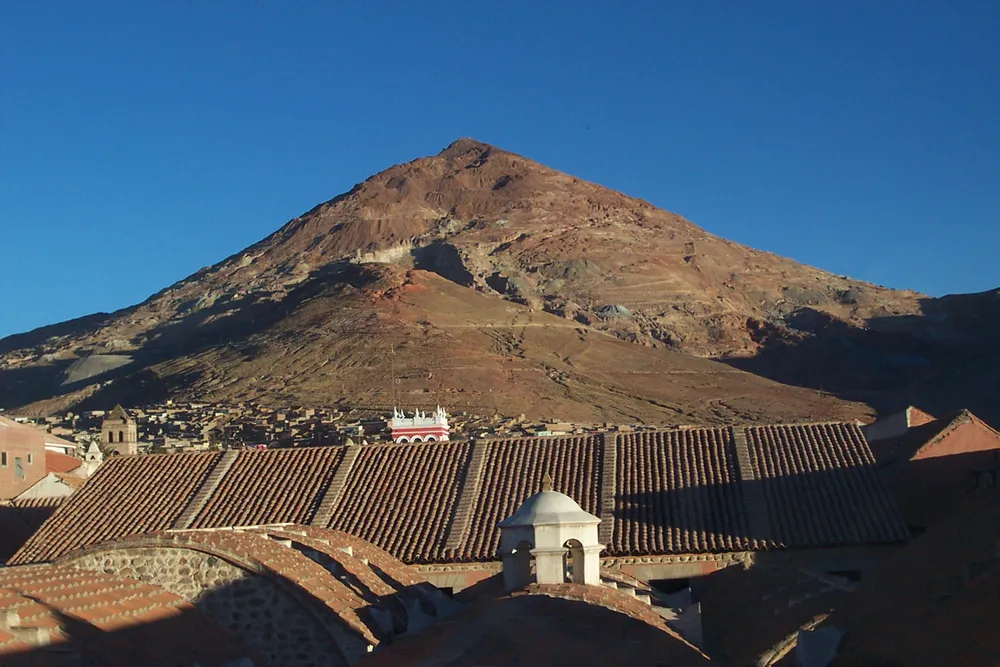
Cerro Rico (Spanish for "Rich Mountain"), also known as Cerro Potosí ("Potosí Mountain") or Sumaq Urqu (Quechua sumaq "beautiful, good, pleasant", and urqu "mountain"); is a mountain in the Andes near the Bolivian city of Potosí. Cerro Rico—popularly conceived as being "made of" silver ore—is famous for having provided vast quantities of silver to the Spanish Empire, most of which was shipped to metropolitan Spain. It is estimated that approximately 85 percent of the silver produced in the central Andes during this period came from Cerro Rico.
As a result of mining operations, the city of Potosí became one of the largest cities in the New World. According to tradition, revolutionary leader Simón Bolívar once waved a flag from the summit of the mountain in a symbolic act associated with the founding of a new nation. One year later, Congress decided to change the flag's colors to yellow, red, and green and to include a coat of arms featuring a condor, an alpaca, and Cerro Rico.
Today mining in Cerro Rico remains an important economic activity, and is carried out by various mining cooperatives that work in underground mines as well as in the larger open-pit San Bartolomé mine operated by Empresa Minera Manquiri.
The mountain is largely barren, although a small number of plant species have colonized it, and vizcachas inhabit its slopes.
Adapted from Wikipedia (CC BY-SA). Photography via Wikimedia Commons.