
Temple of Apollo Epicurius in Bassae
Greece · Europe
About
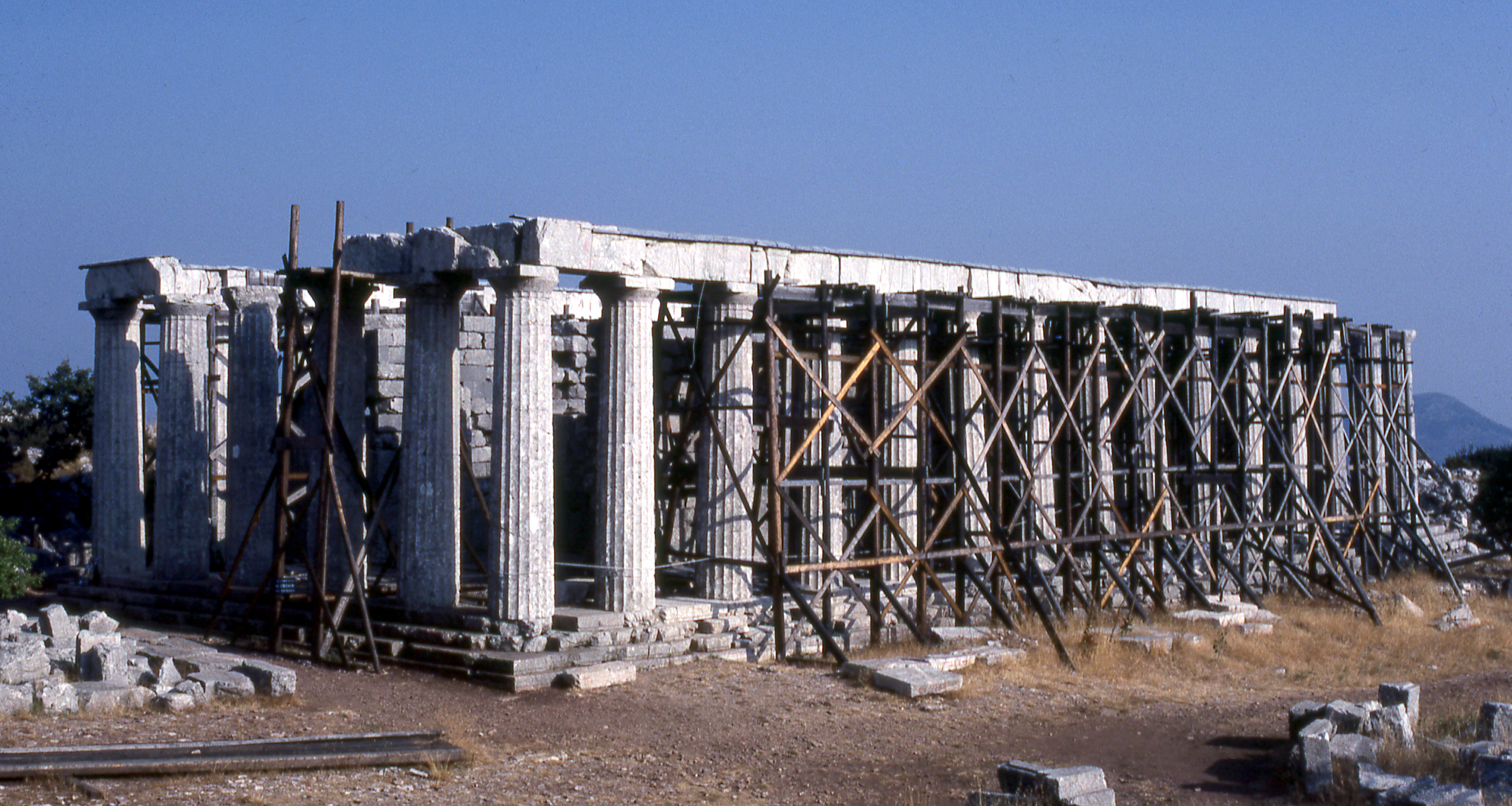
Bassae (Latin: Bassae, Ancient Greek: Βάσσαι – Bassai, meaning "little vale in the rocks") is an archaeological site in Oichalia, a municipality in the northeastern part of Messenia, Greece. In classical antiquity, it was part of Arcadia. Bassae lies at an elevation of 1,131 m above sea level on the slopes of Cotylion Mountain. near the village of Skliros, northeast of Figaleia, south of Andritsaina and west of Megalopolis. It is famous for the well-preserved mid- to late-5th century BC Temple of Apollo Epicurius.
Although this temple is geographically remote from major polities of ancient Greece, it is one of the most studied ancient Greek temples because of its multitude of unusual features, and because it has remained almost complete to the present day
and, next to the Theseum at Athens, the best preserved of the temples of Greece or elsewhere. The architecture of the temple is strikingly unusual for the period, departing significantly from the norms of Doric and Ionic practice and including what is perhaps the first use of the Corinthian order, and the first temple to have a continuous frieze around the interior of the naos.
The 19th-century British scholar William Mure who visited the site wrote that “there is certainly no remnant of the architectural splendour of Greece more calculated to fascinate the imagination than this temple; whether by its own size and beauty, by the contrast it offers to the wild desolation of the surrounding scenery, or the extent and variety of the prospect from its site.”
Bassae was the first Greek site to be inscribed on the World Heritage List, in 1986.
Adapted from Wikipedia (CC BY-SA). Photography via Wikimedia Commons.