
Mystras
Greece · Europe
About
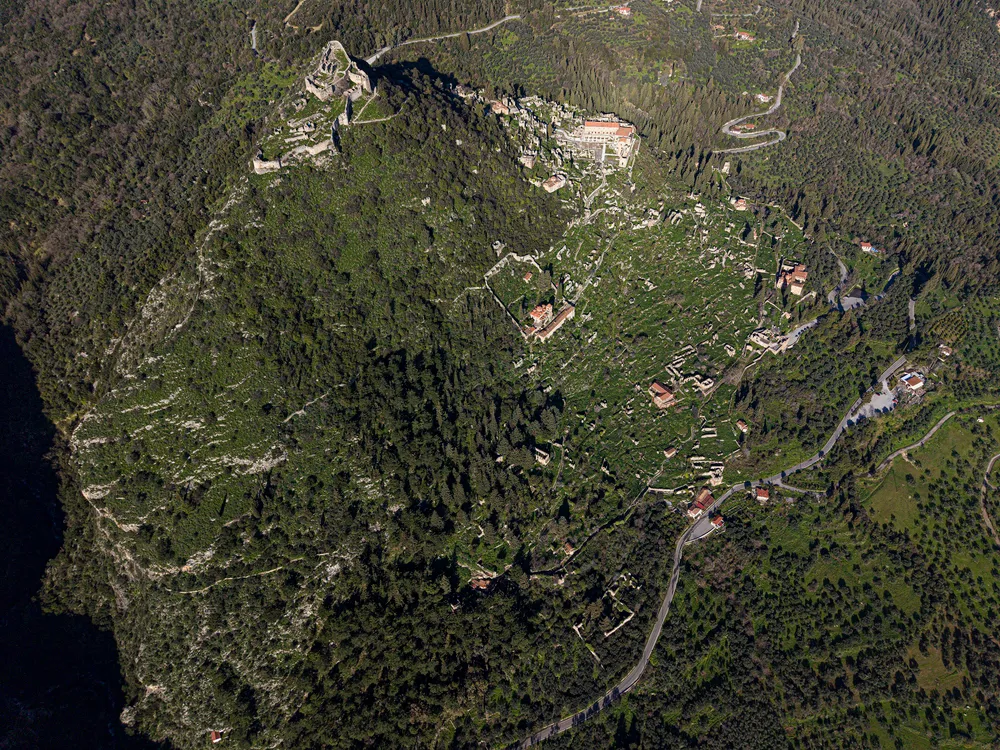
Mystras or Mistras (Greek: Μυστρᾶς/Μιστρᾶς), also known in the Chronicle of the Morea as Myzethras or Myzithras (Μυζηθρᾶς), is a fortified town and a former municipality in Laconia, Peloponnese, Greece. Situated in the Taygetus range, above ancient Sparta, and below a "Frankish" castle, it served as the capital of the Byzantine Despotate of the Morea in the 14th and 15th centuries, experiencing a period of prosperity and cultural flowering during the Palaeologan Renaissance, attracting artists, architects, and intellectuals such as Gemistos Plethon. The last Byzantine emperor, Constantine XI Palaiologos, was despot of Mystras before coming to the throne of Constantinople.
Mystras remained inhabited throughout the Ottoman period, when foreign travellers mistook it for ancient Sparta. In the 1830s, it was abandoned and the new town of Sparta was built, approximately eight kilometres to the east. The 2011 local government reform attached it to the municipality of Sparta.
As an exceptionally well-preserved example of a Byzantine city and because of its testimony to the development of Late Byzantine and Post-byzantine art, Mystras was inscribed on the UNESCO World Heritage List in 1989.
Adapted from Wikipedia (CC BY-SA). Photography via Wikimedia Commons.