
Çatalhöyük
Turkey · Asia
About
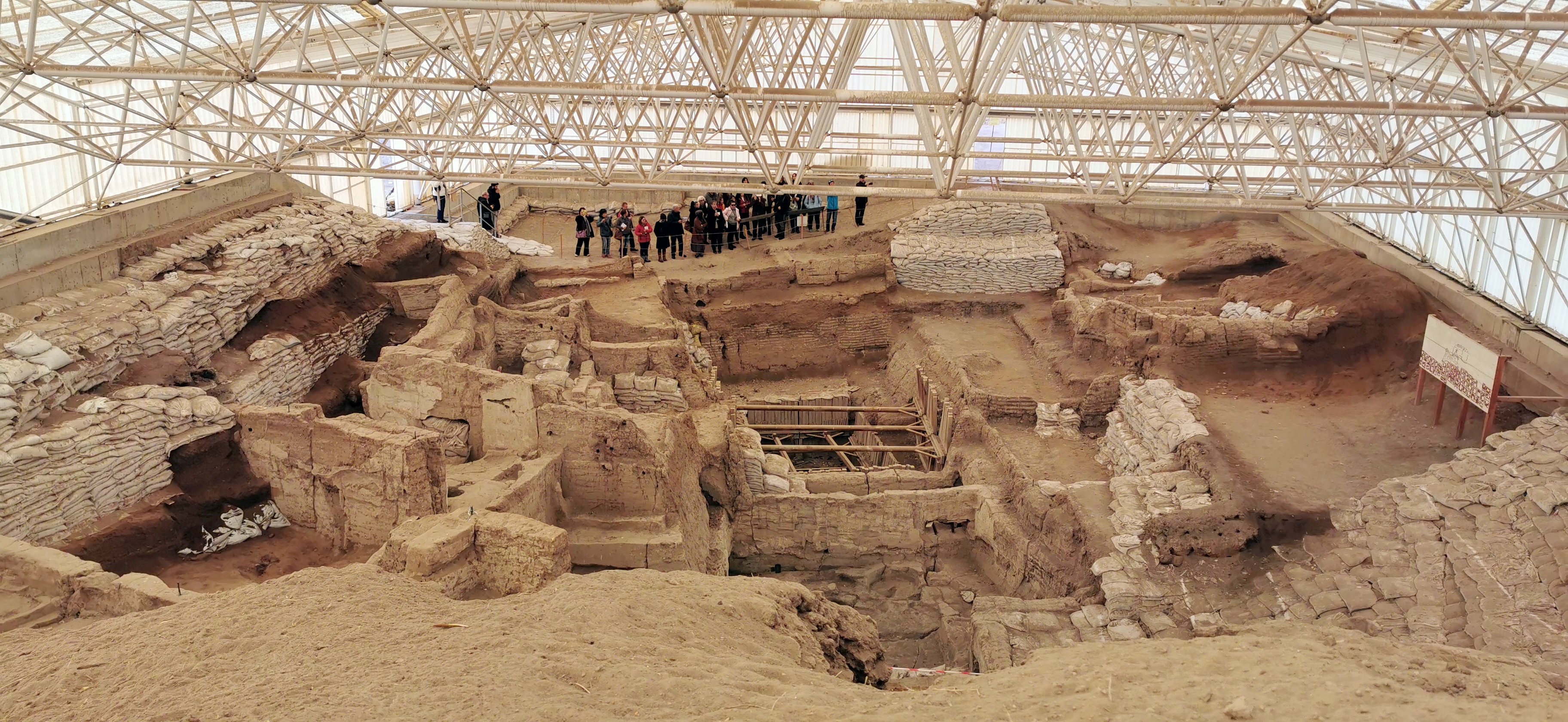
Çatalhöyük (English: Chatalhoyuk; , cha-tal-HOO-yuhk; Turkish pronunciation: [tʃaˈtaɫhœjyc]; also Çatal Höyük and Çatal Hüyük; from Turkish çatal "fork" + höyük "tumulus") is a tell (a mounded accretion resulting from long-term human settlement) of a very large Neolithic and Chalcolithic proto-city settlement in southern Anatolia, which existed from approximately 7500 BC to 5600 BC and flourished around 7000 BC. Çatalhöyük overlooks the Konya Plain, southeast of the present-day city of Konya (ancient Iconium) in Turkey, approximately 140 km (87 mi) from the twin-coned volcano of Mount Hasan. It is notable for its large size, apparent egalitarian social structure, and value as a well-preserved example of early Neolithic-era permanent human settlements.
In July 2012, it was inscribed as a UNESCO World Heritage Site.
Adapted from Wikipedia (CC BY-SA). Photography via Wikimedia Commons.