
Visby
Sweden · Europe
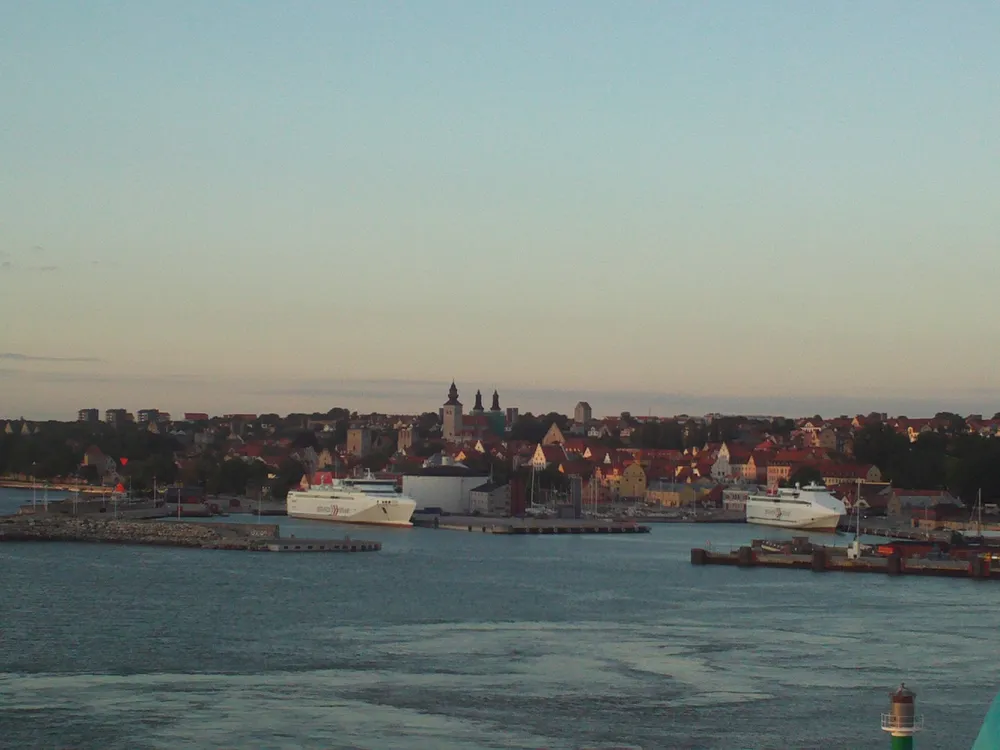
About Visby
Visby is one of the most remarkable towns in the Nordic countries, with 24,000 inhabitants. It is on the west coast of Sweden's largest island Gotland in the Baltic Sea. Visby is known for its city wall, its cathedral and many church ruins. In 1995, the old city was declared a UNESCO World Heritage Site.
Visby travel guide
Understand
Visby is on the western shore of Gotland, and is the only city on the island. The old city centre is encircled by a medieval city wall. The old city has an oblong shape along the shore, measuring some 2 km in length and half a km in breadth. It is often called "the city of roses and ruins": roses thrive on the limestone island, and the city is filled with medieval ruins. During the Swedish summer school break (from mid-June to mid-Aug) Visby is busy and most establishments are open daily. It is one of the best party cities in Sweden in the summer. Many Visby residents leave during these hectic months and let their apartments to visitors. During the rest of the year, the atmosphere is quite different and difficult for tourists as many restaurants, shops, etc. reduce their days and hours of operation. Some establishments will be completely closed, only operating for 2 months in the summer. As the Pippi Longstocking movies were shot in Visby, and the original Villa Villekulla can be visited in Kneippbyn in the city outskirts, it is a great destination for Astrid Lindgren tourism. The city was also the model for the fictional setting of the Japanese movie "Kiki's Delivery Service".
History Around 900 AD, Visby became a hub for trading in the Baltic Sea, and it eventually became a member of the Hanseatic League. During the 12th, 13th and 14th centuries the city prospered, and several churches as well as a major defensive wall were constructed. Visby's long period of decline began in 1361, when the Danish king Valdemar IV conquered Gotland and held Visby for ransom, threatening to pillage the city if he did not get three beer barrels filled with gold and silver. In the latter part of the 14th century, Visby became a nest of a pirate organisation called "The Victual Brothers". The Danes regained control over the island in 1409 and construction of the major fortification Wisborg started two years later. In 1525 the city was burnt by occupying Hanseatic troops. Much of th
Getting there
By plane 1 Visby Airport (VBY IATA) (is located some 4 km north of central Visby). There are flights all year to Visby from Stockholm (Stockholm-Bromma Airport and Stockholm-Arlanda Airport), Gothenburg, Ängelholm and Nyköping. During the summer you can usually fly to Visby from various other cities, such as Oslo, Hamburg, Riga, Helsinki and Örebro.
By boat From the Swedish mainland, Destination Gotland runs ferries from Nynäshamn and Oskarshamn to Visby. You can bring your car. Hansa Destinations operates a weekly ferry from Rostock. In the summer some Baltic Sea cruises also include Visby.
2 Visby port (Visby hamn) (south-western part of central Visby.). (updated Oct 2021) There is a lively marina in Visby centre.
3 Visby Marina, ☏ +46 498-215-190, [email protected]. Reception 08:00–21:00. 170–460 kr for normal yachts depending on length and width, 300 kr for yachts 11–14m (36–46 ft) < 4m; electricity 54 kr for 10A. (updated Oct 2017) Visby is some 35 nautical miles from Öland or the Swedish coast, some 60 from the Stockholm archipelago (Landsort), so a full day of sailing. There is little shelter except from the mainland and Gotland itself. The coast of Gotland is exposed, with only some harbours. The port of Visby is tight and busy in the summer. Check the ferry timetables, listen on VHF 16, and adjust arrival and departure accordingly. Be alert and apply good seamanship. The 250 berths are distributed between the inner harbour, the north breakwater and the fishing harbour to the right of the entrance. There is often a boat meeting visitors to assist in finding a berth. There are quays also for big vessels. A few berths can be booked, but mostly you just show up and will find or be showed a berth. At the big events, check the situation beforehand.
Getting around
On foot The inner town, within the city walls, is small enough to be covered by foot.
By bicycle Outside the walls it is easy to get around by bike and there are plenty of good bike paths. During the summer there are usually plenty of bike rentals, but they can be expensive; if you're staying for a longer period, purchasing a used bike might be a cheaper option.
By bus There are several bus lines going out to the rest of the island, check the timetable before heading out though.
By car During the summer, cars are not allowed within the city walls. There are parking options free of charge, though a small parking fee is usually required in the centre.
By taxi Like the rest of Sweden, taxis can be expensive, and are best for short trips when you are unable to get around otherwise.
Taxi Gotland, ☏ +46 498 200 200. Taxi Kurir Gotland, ☏ +46 498 50 000. Din Taxi Gotland, ☏ +46 498 20 70 70.
By sightseeing train There are a few sightseeing "trains" – practically a couple of trailers with seats and roofs pulled by a vehicle making tours around the old town with an audio guide playing through the speakers. Tours take about 30 minutes and tickets typically cost 65 kr/person.
See
Many of the town's attractions are only open during the summer months, usually until 30 August.
1 City wall (Visby stadsmur; Ringmuren). Built during the 13th and 14th centuries, Visby's city wall stretches almost 3.5 km and stands 11 m high. Today, 36 towers and three main gates remain. free. 2 DBW's Botanical Gardens. 24hrs. Enter through the "Door of Love" to this picturesque garden of trees and ruins. Free. (updated Aug 2024) 3 Klinten. Once the workers' quarter and now a popular spot to take in the view over the lower town, Klinten is an attractive maze of small, rose-covered homes. free. 4 Visborg Castle Ruins, Södra Slottsgränd 4. 24hrs. A major fortress built in the early 15th century. It was demolished by Danish forces in 1679 when it became clear that Gotland would fall into Swedish hands. free. 5 Visby Cathedral (St. Maria church), Västra Kyrkogatan. Built in the early 13th century. 6 Gotlands Museum, Strandgatan 14, ☏ +46 498 29 27 00. May–Sep: 10:00–18:00, Oct–Apr: 11:00–16:00. Museum of local history (Fornsalen), plus a science museum for children (Fenomenalen). May–Sep: 180 kr/adult, 140 kr/student. Oct-Apr: 130 kr/adult, 100 kr/student. (updated Aug 2024) 7 Gotlands Konstmuseum (Gotland Art Museum), S:t Hansgatan 21. varies. A former art museum, now used as a gallery space with various temporary exhibits. varies. (updated Aug 2024)
Visby once had many more churches, but most of them were destroyed in a major fire in 1525. Today the ruins of these remain as attractions:
8 St. Clemens ruins, Smedjegatan 3. summer: 10:00–18:00, non-summer: limited. Free. 9 St. Gerturde ruins, S:ta Gertruds gränd 6. 10 St. Hans and St. Per ruins. The ruins of two connected churches 11 St. Katarina ruins (S:ta Karin ruin), Stora Torget 2. summer: 10:00–18:00, non-summer: limited. Free. 12 St. Nicolaus ruins, Smedjegatan 19. 13 St. Olof ruins (in the Botanical Gardens). Drottens ruins. summer: 10:00–18:00, non-summer: limited. Free. (updated Aug 2024
Overview adapted from Wikipedia, travel guide fromWikivoyage (CC BY-SA). Photography via Wikimedia Commons.