
Tuva
Russia · Europe
About Tuva
Tuva or Tyva (Russian and Tuvan: Тыва́ tyh-VAH) is a region in Eastern Siberia, bordering Altai to the west, Khakassia to the northwest, Krasnoyarsk (region) to the north, Irkutsk Oblast to the northeast, Buryatia to the east, and Mongolia to the south.
Tuva travel guide
Understand
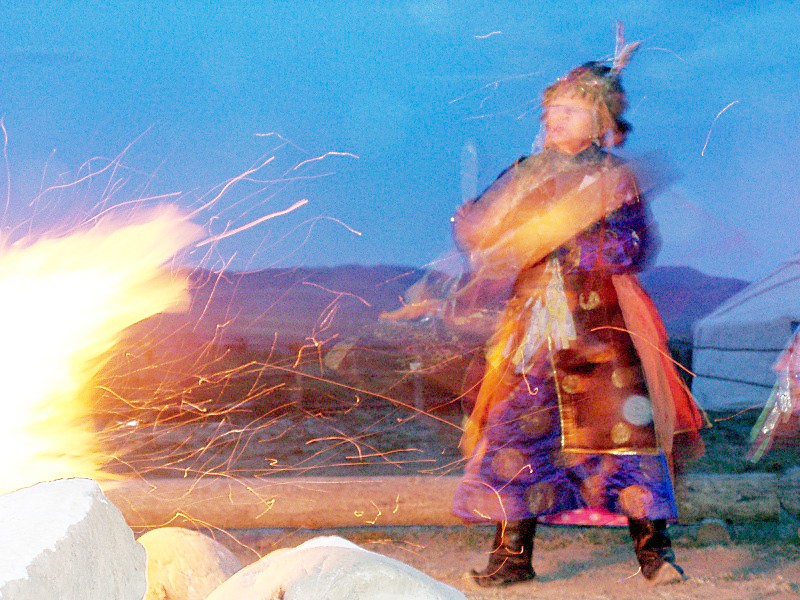
Tuva has a long and rich history. For centuries, Tuva was a part of the Qing dynasty, the last imperial dynasty of China. In 1911, Tuva seceded from the Qing dynasty, and was, for more than two decades, an independent communist state known as the Tuvan People's Republic. In the 1940s, the Soviet Union annexed Tuva under questionable pretenses. Tuva has a distinctive culture that sets it apart from the rest of Russia; Tuvans don't have Russianized surnames, most Tuvans are adherents of Buddhism, and Tuvan and Mongolian culture share a number of similarities and commonalities. Tuva is on the border with Mongolia and shares much in common with the adjacent Mongolian regions. Tuvans, a Turkic people, comprise the largest ethnic group (over 60%) in the region and Tibetan Buddhism, mixed with indigenous Shamanism, is the predominant religion. Perhaps Tuva's greatest offering for the visitor is its musical treasure: Khoomei, also known as throat-singing or overtone-singing, is a method in which the singer simultaneously produces a low drone and a series of higher melodies over the drone note. There are throat-singing traditions elsewhere — notably among the Inuit (Eskimo) in Canada and Alaska — but the Tuvan music is utterly unique and a performance is a powerful experience. There is a fine film Genghis Blues about a blind American blues singer's trip to Tuva. Tuva is also of interest for its diverse and impressive wild landscapes. Tuva's topography spans desert, grassy steppe, lakes, and snow-covered mountains, many of which are dotted with cultural monuments of the Tuvan and Scythian herdsman who have roamed across the region for millennia. Tuvans suffered greatly under Soviet repression of their culture and religion, particularly at the incidents of 1929, in which shamans and Buddhist monks were ruthlessly arrested and killed in a large-scale act of cultural vandalism against the Tuvan minority. As a result, foreign tourists are likely to be greeted with an even warm
Getting there
Tuva is largely well cut off from the rest of Russia by its mountainous borders and as a result, there is no rail service to Kyzyl. The best option is to take the train from Moscow to Abakan (76 hours), with one-way fares varying from approximately 4000 руб to 9500 руб. The price changes according to peak tourist seasons in Russia: by far the cheapest day to travel is 1 January, while July is the most expensive. It is possible to take a bus from Abakan in neighbouring Khakassia, but is not advisable. The route meanders through the gorgeous Sayan mountain landscapes of the Ergaki region, which would be foolish to miss. The train from Moscow arrives in Abakan at 6AM, and apart from the bus, there will be plenty of taxi drivers offering to take you to Kyzyl (approximately 420 km (260 mi) from Abakan) for 1000-1500 руб. There is a possibility that you may have to register at the Russian-Tuvan border — just hand over your passport to the police officer, there is no fee for the service. Kyzyl Airport is small and offers flights to and from the Siberian center of Krasnoyarsk as well as Raduzhny, Khantia-Mansia because of the number of people who work in the oil industry there. There are direct flights from Moscow to Kyzyl twice a week via Ufa, Bashkiria's capital, departing from Moscow on Sunday and Wednesday. A new railway to Kyzyl is supposedly under construction, but as of 2022, only a symbolic stretch of track was laid, and the announced date for the opening of the line, 2026, seems very optimistic.
Getting around
There are buses to the regional centres from the central bus station in Kyzyl. Nearby is a piece of waste land on a corner where cars and minibusses wait to fill up before departing to anywhere you want. If not a popular destination, it can take a while. It is of course possible to pay enough to take the car without filling it up, although less fun and less likely to provide you with local knowledge and even hospitality at your destination. This could also be important in making sure you can also get a ride back to Kyzyl. Remember to dress extremely warmly if travelling in winter, heaters do break down and there can be a long way between stops.
See
The capital, Kyzyl, offers the "Centre of Asia" monument, museums, markets and some nightlife.
Outside of Kyzyl Going in a clockwise direction from Kyzyl (you can use Google Maps to find some of these places):
For informal winter sports take the M54 north, then the left fork back road through Seserlig to Taiga — bring your own gear and refreshments Near Arzhan in the north can be seen the huge scythian burial mounds in the Valley of the Kings, whose treasure is in the National Museum Take the ferry to Toora-Khem in Todzha to see Lake Azas and the nature reserve — this remote forested region is the home of the world's southernmost reindeer-herding nomads To the east of Kyzyl is another 'new' bridge that has good picnic, swimming and camping places around it with pleasant views, many wild flowers and good climbing. This bridge has made it easier to visit, discretely, the simple-life villages such as Buren-Baigak, home of Russian 'Old Believers' further to the south-east of Kyzyl, along the Lesser Yenisei (Kaa-Khem). They rejected mid-17th century Russian Orthodox religious reforms, and two centuries later some settled as refugees in Tuva when it was part of China (of course not knowing that Stalin would later make it part of Russia) In the remote south-east of Tuva is Lake Tere-Khol, with the mysterious 'Por Bazhyn' Uyghur fortress on an island near its centre To the south of Kyzyl lies Lake Chagytay, popular for swimming (beware broken bottles) and picnics (mind the rusty tin cans), and spectacular Lake Sut-Khol is off the road to the west of Kyzyl The village of Samagaltai was the old capital and centre for trade with Mongolia when Tuva was Chinese, and has a lovely temple. Further to the south, through Erzin, is the track to Tsagan-Tolgoy, closest settlement to the little-used border-crossing with Mongolia To the west of the border-crossing lies the remote Uvsnuur Basin cross-border World Heritage Site (largest on Earth) where the world's southernmost taiga mee
Do
Listen to famed Tuvan throat-singing, in which a singer produces a fundamental drone with multiple harmonic notes creating distinct and layered melodies and sound mimesis. Attend a Tuvan wrestling match, Khuresh, in which one loses by touching the ground with a hand, knee or any other part of the body besides the feet. The victor does the 'eagle dance' around the winning post. If it's a big contest, the overall winner may go home with a new 'jeep'! Horseback riding Attend horse and camel races Enjoy 'shagaa', the oriental lunar new year festival Appreciate views unobscured by tourist kiosks Ask other foreigners where the least worst WCs are, and share your own discoveries and warnings Join the Tuvans on their summer holiday, camping by an 'arzhaan' — restorative spring-water often near lakes where people take mud-
Overview adapted from Wikipedia, travel guide fromWikivoyage (CC BY-SA). Photography via Wikimedia Commons.