
Transnistria
Moldova · Europe
About Transnistria
Transnistria (occasionally, in English, Trans-Dniester) is a country in eastern Europe. It seceded from but is still claimed by Moldova, and is only recognised by the other breakaway states of the former Soviet Union: Abkhazia, and South Ossetia. It roughly corresponds to the territory between the Dniester River and Ukraine.
The official name is the Pridnestrovian Moldavian Republic or Pridnestrovie. The name "Transnistria" is perceived by some ethnically Russian residents as an insult, therefore the government very strongly prefers this Slavic/Russian name to the Romanian term "Transnistria", and have made using the latter illegal; locals can be fined or even jailed for using it. According to the government web site these penalties do not apply to visitors, but it is sensible to avoid using the name.
While the territory is not a popular tourist destination, it does offer a certain Soviet-era charm and is one of the few "countries that don't exist". You can boast of having been in a country that the rest of the world does not recognise, and banknotes in your wallet that are essentially invalid. And if it isn't for bragging rights alone that you come visit, there are some other attractions as well.
Transnistria travel guide
Understand
Transnistria/Pridnestrovie is a product of the messy breakup of the Soviet Union, when the region located on the left bank of the Dniester River fought a 2-year-long war against the government of Moldova that ended in a bittersweet Russian victory. While the country is not officially recognised by any other sovereign nation, the government does effectively control the territory it claims to rule, although its actual control is perhaps a bit limited by the will of Russia, its biggest benefactor and political ally. It maintains its functional autonomy with military and other support from Russia. Russia even operates a consular office in Tiraspol, the capital and largest city in Transnistria. Transnistria/Pridnestrovie is divided into five administrative regions and two city regions.
Tourist information centre, Bendery, Petr Panin str., 2 (Bendery Fortress entrance on your left), ☏ +373 552 40148. Tu–F 10:30–17:00, Sa Su 10:00–17:30. The State Agency for Tourism of the Pridnestrovian Moldavian Republic provides information about sites, tours and excursions, upcoming events, accommodations, and restaurants. (updated Sep 2024)
Getting there
Entering Transnistria/Pridnestrovie is fairly straightforward by bus, train or car from the west (Moldova; usually Chișinău). Upon entering Transnistria, you present your passport and they'll enter your info on their computer and print out a card in Russian and English. Upon clearing immigration, this card, not your passport, is stamped – half the card stays at the crossing you entered, and half stays with you until you leave Transnistria. As of October 2018, this card was not stamped or checked during the entire visit. From Chișinău to the crossing in Bendery, a taxi costs 100-150 Moldovan lei. A marshrutka (minibus) costs around 60 lei. Marshrutkas between Odesa and the Kuchurgan border (on the main road to Tiraspol) are fairly frequent and cheap. Mashrutkas run frequently across the Dniester from Rezina in Moldova to Rîbnița, which has a stop for buses between Tiraspol and Camenca. When crossing the border between Moldova and Transnistria/Pridnestrovie, you will be checked only by Transnistrian officials. There are also peacekeeping Russian and Ukrainian soldiers who may stop and search vehicles.
If you encounter problems, complaints can be made to Pridnestrovien Customs [email protected]. There is also a complaint hotline: (☏ +373 533 94578 or 92568). If you complain you should also state the time, the date and the name of the border crossing. You should also give your phone number. There is an English speaking officer responsible for complaints. You can reach him at ☏ +373 778 50986 or [email protected]. It is no longer necessary to register with the police (as of July 2018): you get a permit for up to 45 days at the entrance, depending on how long you say you want to stay. You need to provide an address or sponsor, so if you have reserved accommodation this is enough. They may ask to see the reservation. Once in Transnistria/Pridnestrovie, you can extend your stay permit at the Immigration Office, and you'll need a local address. Passports are not stamped,
Getting around
There are hardly any train connections within the country, so the bus—if available—will be your only choice. Marshrutkas (minibuses) zip between cities much faster (and often more frequently) than buses. They cost a little more, but travel much faster and can be hailed anywhere along their route. If you flag down a marshrutka, it's customary to pay on leaving.
By taxi Taxis in Tiraspol are very common and are quite cheap. Be wary of scams however—make sure to negotiate a price before you get in the taxi. If you miss the last bus to Chișinău at 18:35, you can take a taxi from Tiraspol to Chișinău, which should not cost more than US$30. As of August 2018, taxis booked through a local guide for this route could be negotiated as low as US$15.
See
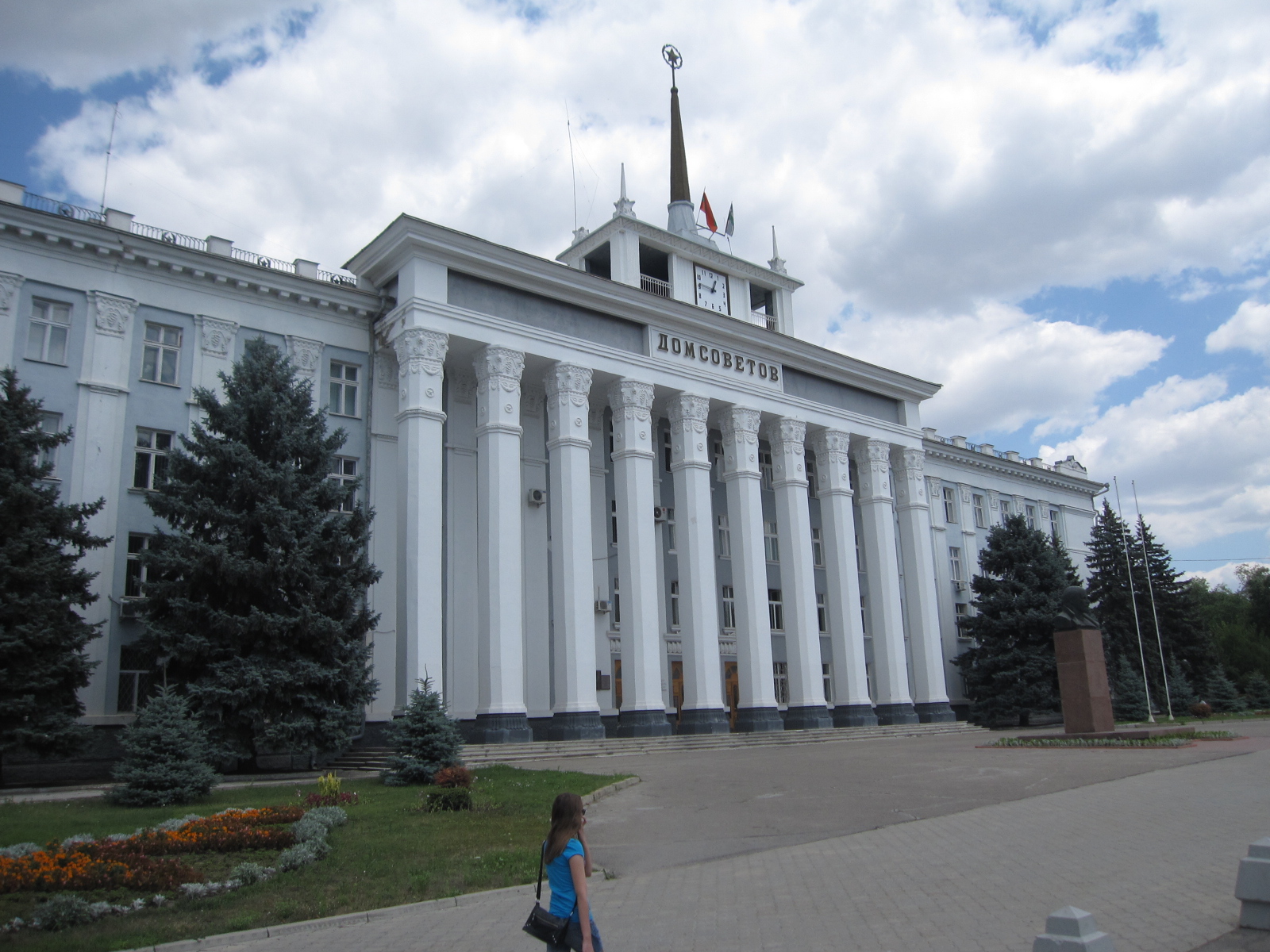
Most visitors come to Transnistria to visit the Soviet-era buildings, monuments, and sculptures of the capital, Tiraspol. Noul Neamț Monastery is a beautiful monastery complex just south of Tiraspol with a number of sizeable churches to explore. Bendery Fortress is a 16th-century Ottoman fortification with a terrifying collection of torture devices from the period. Outside is the newer Alexander Nevsky Church which is well worth a visit.
Buy
Money
The national currency is the Pridnestrovian ruble. There is no ISO currency code from Transnistria, but banks may use either "PRB" or "RUP" to denote the currency. Wikivoyage articles use rubles to denote the currency. 1 Transnistrian ruble is equal to 100 kopecks. Coins come in denominations of 5, 10, 25 and 50 kopecks and coins made from composite materials come in denominations of 1, 3, 5 and 10 rubles. Banknotes come in denominations of 1, 5, 10, 25, 50, 100, 200 and 500 rubles. Exchange offices are common and will happily give you Pridnestrovian rubles in return for just about any tradeable currency. Don't change more money than you need as trying to turn Pridnestrovian rubles into other currencies may turn out to be difficult, even if exchange booths advertise rates to sell euros, lei, US dollars, etc., they may not be willing to relinquish their stocks of hard currency. Don't bother trying to change Pridnestrovian rubles outside the territory. MasterCard is not accepted anywhere, but you can pay by international Visa card in several private places that frequent foreign visitors, although Visa cards from the United States are not accepted as often as European ones. Your card is charged in Pridnestrovian rubles locally, but your bank statement will document the transfer in Russian rubles. There are several international ATMs around that dispense Russian rubles and US dollars. Due to international sanctions against the Russian banking system your western cards will likely not work with ATMs in Transnistria, as of June 2025, so bring enough cash to exchange.
Shopping Tiraspol has a post-communist "cubicle style" shopping mall on ground floor of the corner of 25th October St and Shevchenko St, the location of the most "luxurious" apartments of Tiraspol are. Furthermore, a short walk from these apartments you will find the outdoor markets of Tiraspol, where you can find outdoor areas selling fruit and vegetables, and indoor areas selling eggs, cheeses a
Eat
The most typical tourist restaurants are the "Back to the USSR" and the Soviet-themed restaurants. One of these restaurants is located in Bendery, near the Green Market. The others are in Tiraspol. The most typical restaurant food will be a mixture of Moldovan, Russian and Western style food such as pizzas and a selection of sushi. You will find that many restaurants may share staff, kitchen or even a menu. Sheriff supermarkets also sell genuine Beluga or Russian caviar, it is a local product and you will not find a cheaper caviar sold outside of the borders, so if you're inclined to try it, this is the place to do it. Restaurants:
Toscana La Vida (this chai
Overview adapted from Wikipedia, travel guide fromWikivoyage (CC BY-SA). Photography via Wikimedia Commons.