
Stonehenge
United Kingdom · Europe
About Stonehenge
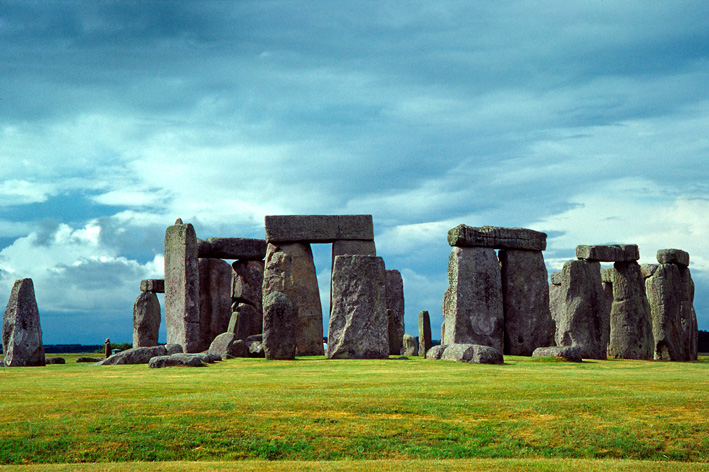
Stonehenge is a Neolithic and Bronze Age stone monument in a UNESCO World Heritage Site on Salisbury Plain in Wiltshire, England. The WHS is quite large and contains many other structures from the Neolithic and Bronze Ages.
Stonehenge travel guide
Understand
Stonehenge is in a World Heritage Site of over 2000 hectares that is considered one of the most archaeologically rich megalithic structures in Europe. It is home to some of the most important Neolithic and Bronze Age finds and structures in the UK, and contains some 200 scheduled monuments. It is also the site of one of the biggest Chalk grassland reversion projects in the world. Stonehenge is owned by the nation and is administered by English Heritage. Much of the World Heritage Site land is owned by local farms, but a third is owned and managed by the National Trust who are spearheading the grass regeneration scheme. A new visitor facilities is now open, part of a new joint approach by English Heritage with the Salisbury Museum and the Wiltshire Heritage Museum in Devizes.
History Evidence indicates that the area around Stonehenge has been occupied since around 8000 BC, but it was during the Neolithic and Bronze Age periods that the vast majority of the monuments around it came to be built. Early work at Stonehenge itself began in 3000 BC when an outer ditch and embankment was constructed, and standing timbers erected. From about 2500 BC, Neolithic and Bronze Age man started to bring bluestones and Sarsen stones from Wales and the Marlborough Downs. It was not until 1600 BC that Stonehenge was completed. Most of the other monuments in the area such as Durrington Walls and Woodhenge date from the same period. A nearby hill fort was built during the Iron Age, and there is evidence to suggest that the area was extensively settled by the Romans. The nearby town of Amesbury was later settled during the Saxon reign in 979 AD. Stonehenge and the land immediately around it was bought for the nation in 1918. Being on the edge of the military training area Salisbury Plain, a large number of military facilities have also been constructed in the area, including military barracks, a light railway and an aerodrome built within a stone's throw of Stonehenge (most of
Getting there
Visitors should first go to the visitors' centre then take the bus or walk from there to Stonehenge. If you are carrying heavy luggage, you may have to carry it around the entire landscape. So plan wisely.
By car From London take the M3 and A303 to Amesbury. At the A303 Countess roundabout go south to visit Amesbury for food and accommodation, north to visit Woodhenge and Durrington Walls, or continue west to reach Stonehenge at the centre of the UNESCO site. A mile past the roundabout you can see Stonehenge from Kings Barrow Ridge, at the A360 roundabout go north to the visitor centre car park. From Salisbury and the South, take the A360, and from the north just follow the A360 south from Devizes. Stonehenge and Woodhenge are well signposted from Amesbury on the A345.
By train The nearest practical stations are Andover and Salisbury which can be reached from London Waterloo on a direct service. From here you can catch a bus (below), or if there are several in a group (or you are travelling with luggage), the easiest thing to do is hire a taxi at the train station. The going rate for a round-trip with an hour stop at Stonehenge is £35. An hour is enough time to see the main Stonehenge circle (but not the other nearby sites). There are no luggage drop facilities at the Salisbury station. It may be a good idea to talk to a hotel beforehand to help you drop off heavy luggage, if you are carrying any.
By bus Local bus service is provided by Salisbury Reds. Routes begin or end in Salisbury. However, no "regular" bus routes serve the main entrance to Stonehenge.
The main "bus" option is "The Stonehenge Tour" (see next section). It's essentially an expensive bus that only serves Stonehenge. The town of Amesbury is served by three routes - "x5" from Swindon, "activ8" from Andover, and "x4". From Amesbury, it's a 2 mi (3.2 km) walk across the countryside to Stonehenge. Along the route are some other prehistoric structures. Route 2 stops at Shrewton, from which
Getting around
The stones themselves can be reached by bus (cost covered by entrance fee) from the visitors centre along the old course of the A344, but for those wishing to explore, the local landscape is best enjoyed on foot or by bicycle. Several bridleways and footpaths criss-cross the area, and the National Trust allows access to a large amount of its land that is being reverted to chalk grassland. The path around the stones is wheelchair-accessible.
Walking The National Trust has opened some 260 hectares of its land to walkers so that they can access some of the monuments around the area. Several recommended walking tours are available on their website, and dogs are welcome on some of the paths as long as they are kept under control. Visitors have the option of parking at Stonehenge, Woodhenge, or Amesbury, and touring some of the ancient monuments from there. Care should be taken around the A303. OpenStreetMap, and apps that use it such as OsmAnd or Mapy.cz, have reasonably good coverage of the walking paths in the Stonehenge Landscape. Google Maps does not.
Bicycle Several quiet back roads and bridleways make access to the monuments quite easy, and for the hardy cyclist, Stonehenge can be combined with a larger tour around Amesbury and the Woodford Valley on the way to Salisbury. It is not advisable to cycle on the A303, but it can be avoided for most of its route anyway.
See
Aside from the plentiful wildlife and nature available, the UNESCO site is considered one of the most impressive archaeological sites in Britain. The landscape boasts several outstanding Neolithic and Bronze Age monuments that can be reached on foot a short distance from the famous Stonehenge. See interactive map.
Stonehenge
Unlike the other monuments in the area, there is an entrance charge (when entering from the 1 main entrance). Entry fees start at £25 for adults and £16 for children (2025) but dynamic pricing is in force so for a short notice visit these can rise to £40 for adults. The fee includes an audio guide. Tickets are cheapest on Mondays to Fridays and when purchased on-line before visiting. You need to specify a time for your visit, but except at peak times there is some flexibility once you arrive. There is no access to the stone circle itself - visitors are guided around the monument by roped pathways and on-site attendants. The audio guide is available in several languages, and if you listened to all available material it would take an estimated 30–60 minutes. It is not usually possible to walk among 1 the stones themselves, but English Heritage and some tour operators from Salisbury can arrange early morning or evening visits allowing you to do this. If you'd rather avoid the entry fee, the stones can be seen from public access land very close by – you won't get quite as close as the paying visitors, but you can still see the stone circle clearly.
Other sites The Stonehenge Landscape is dotted with other ancient monuments, which are almost deserted
Overview adapted from Wikipedia, travel guide fromWikivoyage (CC BY-SA). Photography via Wikimedia Commons.