
Slyudyanka
Russia · Europe
About Slyudyanka
Slyudyanka (Russian: Слюд'янка, slyu-DYAN-kah) is a town in Irkutsk Oblast 110 km away from Irkutsk with a population of 18,000 people (2018). Coming from Irkutsk, it's where the Trans-Siberian Railway and Trans-Siberian Highway descend by hairpins down the mountain to Lake Baikal, at the lower tip of this halfmoon-shaped lake.
Slyudyanka travel guide
Understand
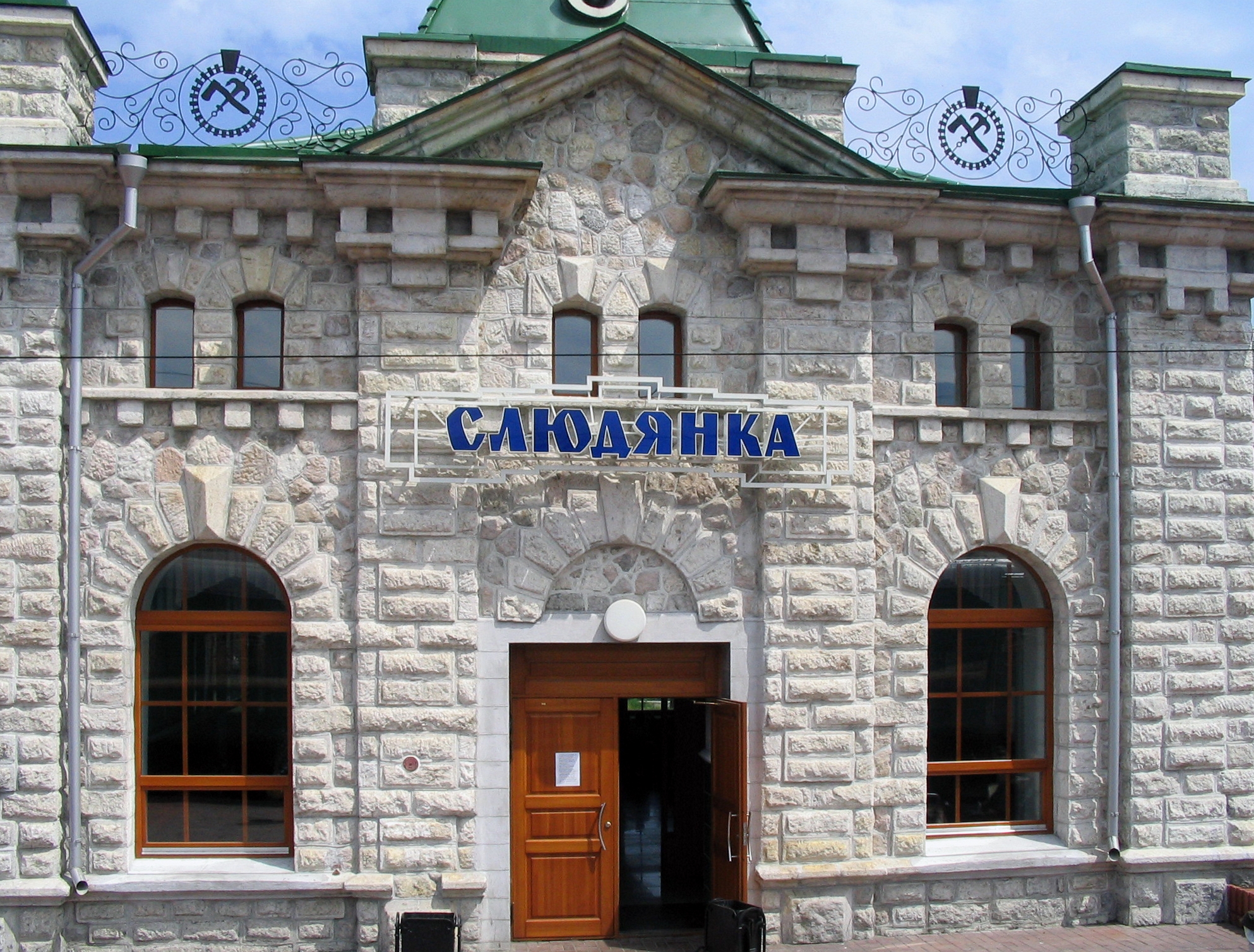
Whenever you ride Trans-Siberian railway and the train moves slightly south to curve the Baikal, it stops and the passengers pitched by the fish-sellers always get out to buy some smoked Omul then you have arrived in Slyudyanka station. When fish is bought and carriage is oozing with the smell, give a look to the station building. White plates are the same as the gravel under the rails. It's marble. The name Slyudyanka stands for another mineral found here - the mica (slyuda in Russian). In 1647, at the heyday of the Russian conquest of Siberia, a prison was built at the site of present day Slyudyanka. Shortly after it was moved northwest to where Kultuk is now. The next building to appear, about a century and a half later, was a winter hut built in 1802 to provide shelter for voyagers along the Irkutsk-Kyakhta postal route. Going south up the mountains, the route was part of the Great Tea Road, also known as the Siberian route, along which tea arrived from China to Russia overland. In the middle of the 19th century a road to Ulan Ude (Verkhneudinsk back then) was built. However the arrival of the Trans-Siberian railway in 1905 was what turned the outpost into a settlement and eventually a town. It got the status as a regional center in 1930 and city status six years later. The railway, and marble mining are the main sources of income; mica mining has stopped and the large fishing and fish processing industries didn't survive the collapse of the Soviet Union. Fishing is still ongoing on a smaller scale but the town is no longer the one and only omul capital it still was at the turn of the millenium. The older buildings of Slyudyanka is on the strip between the highway (Lenin street) and the lake, southwest of the highway you can find Soviet buildings. A few kilometers to the north is the town of Kultuk - also handled in this article - which has almost grown together with Slyudyanka. From Kultuk the serpentine road and railway rises up the Olkhinsky Plateau towards I
Getting there
There's boat traffic on the lake, but not to Slyudyanka. The nearest passenger airport is in Irkutsk. As such the ways in are by train, bus or car.
By train
Trains on the Trans-Siberian stop at Slyudyanka and they're almost certainly the most common way in. Normal passenger trains usually just stop for a few minutes (as opposed to half an hour back in the day) so to visit even the station you need to continue on a later train. The journey time by long-distance trains from Irkutsk is 2.5 hours, from Ulan Ude 5.5 hours. From the former you can opt for local trains - elektrishkas - that take three hours but tickets are much cheaper. Both include some of the most beautiful sections on the Trans-Siberian; from Irkutsk the descent from the high plateau to Lake Baikal, from Ulan Ude the southern shore of the lake. Slyudyanka is also the western terminus of the Circum-Baikal railway.
1 Slyudyanka-1 (Слюдянка I), ул. Тонконога, 18. The main station, doubling as one of the town's landmarks. It's more "touristy" than average Russian railway stations as it has a small museum but not a proper waiting room. It's also on the Baikal side of the railway; to reach the commercial side of the city you need to cross the long pedestrian bridge across the tracks. There are several kiosks on the platform. (updated Oct 2021) 2 Slyudyanka-2 (Слюдянка II). Mostly a goods station, though local trains stop here. Use this station to access the beach and Shamanka rock. (updated Oct 2021) 3 Kultuk station (Култук). Wooden station on the CBR. (updated Oct 2021)
By bus You can take marshrutka #543 from Irkutsk railway station (158 руб; 2 hours). They depart hourly or even more frequently, in addition there are marshrutki from Irkutsk bus station. Marshrutka #103 connects from Baikalsk, and there are also marshrutki from Tunkinskaya Dolina (near the Mongolian border), and Arshan. Finally there are lines passing through Slyudyanka such as Ulan Ude-Irkutsk, though the latter don't have official
Getting around
There are local marshrutka minibuses, but since the town is small there is little use for them. Marshrutka 101 goes from the south of town across Slyudyanka and all the way to Kultuk and runs every 20 minutes. The walk from Rudo district in the SW of the town to the centre takes about 20 min. Anyway you can see the bus stops on map on this website.
See
Downtown 1 V.A. Zhigalov mineral museum (Минералогический музей В.А. Жигалова), Ulitsa Slydyanaya 36 (3 km from downtown), ☏ +7 39544 5-34-40. A private collection of stones from the Baikal region, all of them collected by Valeri Zhigalov (1943-2018). His widow operates the museum nowadays and is open on prior appointment but you may also drop by at random and she may open the museum if she's in the mood for it. 300 ₽. (updated Oct 2021) 2 Historical mineral museum (Историко-минералогический музей), Ulitsa Babushkina 20. Tu-S 10-17. This stone museum too is the result of a private collector, who conducts tours. It's housed in one of the former railway buildings in the city. (updated Oct 2021) 3 Railway station Slyudyanka-1 (Вокзал станции Слюдянка). Slyudyanka boasts the world's only railway station entirely built out of marble (mined in the region). The station was designed by Italians working on the CBR (at the time part of the Trans-Siberian) in 1903-04. There are also other details from that time; a bust of Mikhail Khilkov, minister of railways back then, and the imperial-era emblem of the ministry can be seen here and there on the station (restored after the fall of communism). There is also a small exhibit inside the station building showcasing the region's railway history. (updated Oct 2021)
4 St Nicholas church (Никольская церковь), Ulitsa 40 let Oktyabrya 40 (between the railway station and the lake). A wooden church built in 2008 where an earlier church had been destroyed by an earthquake. Interestingly, it has railway-themed decorations in the form of carvings. On Vkontakte. (updated Oct 2021) 5 Water tower (Водонапорная башня), Zentralnaya ploshad (central square). Neo-Gothic red brick water tower, used by the railway and next to it an old locomotive. Interestingly these are two blocks southwest of the railway and on the other side of it seen from the station. The tower was built by Poles exiled to Siberia for their opposition to the czar, and at one
Do
Hike: Slyudyanka may serve as a base and starting point for walks into nearby mountains. Beach life: The waters of Lake Baikal are too cold to swim in even on the hottest summer days (still many tourists try it), but locals do tan on the beach northeast of the city.
Buy
A shop in Russian is "магазин", so look for this sign.
1 Kurbatovski (Гастроном «Курбатовский»), Ulitsa Parizhskoy Kommuny 5 (central square). 9-21. Supermarket with deli and bakery section. Nearby there are also has shops selling clothing, electronics and household appliances. (updated Oct 2021) 2 Market (at the serpentine). Roadside market where you can also buy fish and souveni
Overview adapted from Wikipedia, travel guide fromWikivoyage (CC BY-SA). Photography via Wikimedia Commons.