
Sliven
Bulgaria · Europe
About Sliven
Sliven (Сливен) is a city in Central Eastern Bulgaria, under the southern slopes of the Balkan Mountains. A rocky ridge, the Blue Stones (Sinite kamani), provides a scenic backdrop for the city. Historically, Sliven is known for the Bulgarian outlaws/guerilla fighters (hayduti) who fought against the Ottoman Empire in the 19th century. It's also considered one of the windiest cities in Bulgaria.
Sliven travel guide
Understand
With a population of about 80,000 people (2021), Sliven is the administrative centre of Sliven Province, which encompasses pieces of the Balkan Mountains, the Sredna Gora range, and the Upper Thracian Plain. The only other settlement in the province with more than 20,000 inhabitants is Nova Zagora; the mountain towns Kotel and Tvarditsa have populations of less than 10,000.
History The town first sprang up in the between the 7th - 11th centuries. Idriss, an Arabian geographer, was the first to write about the town around 1153, calling it Intilifounos. Its name changed from Silimno to Slivno. In 1388, the Turks conquered the city and completely destroyed it. The Turks occupied the region until 1878 when Sliven was liberated during the Russian-Turkish war. In modern times, Sliven grew as a town of crafts and trade, making use of the water power of its three rivers. It was an important center of the Bulgarian national revival after the defeat of the Turks. Indeed, many famous Bulgarians were born in Sliven, including Hadzi Dimitar, Dobri Chintulov and Ivan Seliminski. In 1836, the first woolen textile factor in Bulgaria was built in Sliven. Much of its rich history is still preserved for tourist to see today.
Climate and geography Three small rivers - Asenokvska, Novoselska, and Manastirska - converge in the city, flowing into the Tundzha south of Sliven. Sliven is situated in the sub-Balkan region and is approximately 100km from the Black Sea. The climate is mild with relatively warm summers, a long autumn, wet spring and mild winters. Temperatures average 23.2°C in the summer and 1.2°C in the winter. The "bora" wind blows almost 50% of the time in Sliven.
Getting there
By rail Sliven is on the Sofia-Burgas railway, with regular trains throughout Bulgaria. Traveling by train offers amazing views of the Bulgarian countryside. Daily trains run to Sofia, Burgas, Stara Zagora, Ruse, Plovdiv, Kazanlak and Varna. The train station is located near the Nadezhda (надежда) neighborhood in the southern end of the city. The National Train's website is: http://bdz.bg/index-en.php
1 Sliven railway station. (updated Nov 2020)
By bus Sliven's small bus station offers regular service to all major cities and most regional villages. Several buses per day leave to Sofia (4½ hours), Plovdiv (3 hours) and Veliko Tarnovo (2 - 2½ hours). Hourly buses depart for Burgas (1½ hours) and Stara Zagora (1 hour). The bus station is a few blocks south of the big Bila grocery store.
Getting around
When traveling around Sliven, there are many ways of public transportation. They include: buses, trolleys and minibuses. They cover the main streets of the city. There are different bus lines running along different main boulevards. The main lines are: No. 116, No. 1, No. 20, No. 7, No. 4 and No. 12. Line No. 1 reaches the railway station and the bus station. The price of a single ticket is 0.8 лв. Taxis are another convenient way to get around town. Fairs are generally cheap. Most people either call for a taxi or pick them up at the many taxi stands around the city. Sliven is a small city and most places are easy to walk to. It is a flat city with wide sidewalks along the main streets. The city center is closed to cars and has a beautiful tree-line pedestrian street, with many cafes and shops. Some of the sidewalks are uneven and have holes in them, so it's important to pay attention. Pedestrians are usually respected by drivers, but it's important to watch out for the few crazy drivers.
See
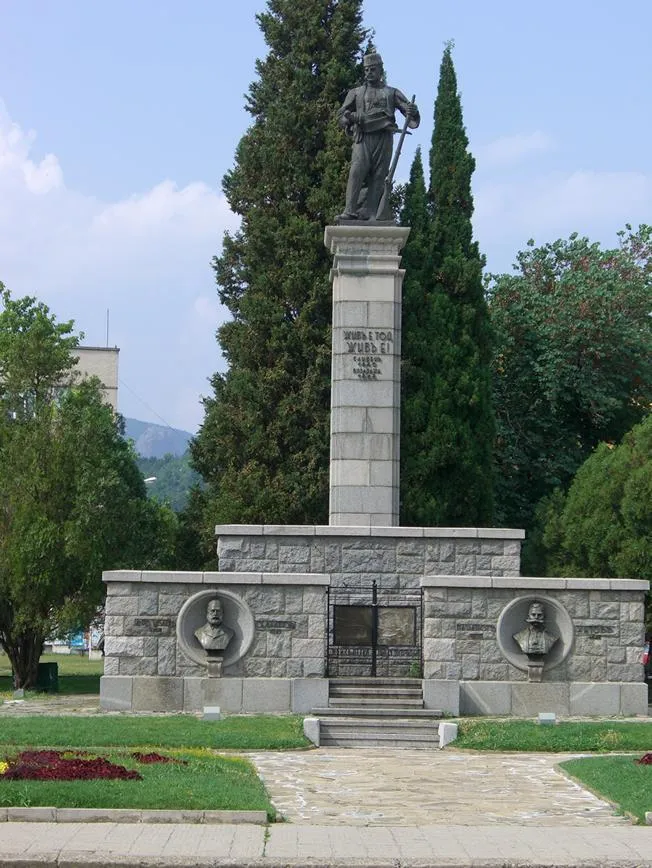
Hadji Dimitar, in the central square, is one of the unique symbols of the town, a testimony to his glorious heroism. Inaugurated in 1935 and restored in the early 1990s. Historical Museum Sliven The museum in the center of the city and has signs directing tourists to it. The museum features exhibits from modern history, archaeology and ethnography. The foundation work for the museum began as early as the Bulgarian National Revival when patriotic Bulgarians collected relics from the middle ages. Work began on the museum immediately following the liberation of the town from Ottoman rule with the assistance of the Moscow Ethnographic Society. Hadji Dimitar House The house belonged to Sliven's legendary rebel leader. the house is small and beautiful, featuring a wooden porch and architectural characteristics of the Renaissance. Dobri Chintulov House In the old Sliven neighborhood of Deli Balta sits the house where the distinguished poet, educated and church figure lived. The house was built in the 1980s by two brothers, Ivan and Dobri Cintulovi. The house features the typical architecture of the period - an open, asymmetrical two-story wood house with beautiful verandah and balconies hanging above a cobbled yard. The house was completely restored in the 1970s and a museum exhibited was opened. Old Elm Tree The old elm tree near the city municipality is over 1,000 years old. It is relic from the Great Bulgarian forest which spread from the Rhodope Mountains to the Black Sea. The elms is featured on Sliven's coat of arms and is considered a national treasure protected under law. During the period of Ottoman rule many Bulgarian revolutionaries were hung from its broad limbs. Byzantine Fortress Tuida- Lovers of ancient ruins can go and see the fortress Tuida. It is an original archaeological monument that dates back to the epoch of antiquity, a part of the fortification system along the Balkan Mountains, on the Hisarlaka hill to the northeast of Sliven. Tourists can enjoy a
Do
In the summer months, many people go hiking and camping in the areas surrounding Sliven. There are also several pools that are open to the public for small charge. Pools include: Sports Palace Hotel, Hotel Imperia and the pool located in the city gardens.
Buy
Tsar Osvoboditel is the main commercial street of Sliven, running through the center. While the shops tend to be more expensive, tourists can find nice clothes, souvenirs, shoes, cosmetics and other things. Tourists can buy traditional Bulgarian souvenirs including Sliven's famous rugs and pots with traditional decorations.
Eat
"Point Burger" is a fast food restaurant similar to an American hamburger stand. It is near Bila.
Drink & nightlife
Sliven's city center is full of cafes that serve a range of alcoholic and non-alcoholic beverages. Most are spacious indoor and outdoor seating and are affordable.
Chervilo - nice outside setting, on the main walking street in the city center. Largo is the perfect combination between a day time cafe and a night time disco. It sits along the Eastern end of the main walking street. Shaklian - White Label on Alexsander Stramboliiski Blvd, the most beautiful and famous cafe in Sliven. There are two in town, serving good coffee and strong alcoholic drinks. They offer a range of food including hamburgers, pizza and doner. They also offer shakes and fresh fruit juice. Fashion Cafe is one of the most modern cafes in Sliven, down the main alley of center, near the oldest tree in Sliven Staria Briast. The Cafe is famous with
Overview adapted from Wikipedia, travel guide fromWikivoyage (CC BY-SA). Photography via Wikimedia Commons.