
Sighișoara
Romania · Europe
About Sighișoara
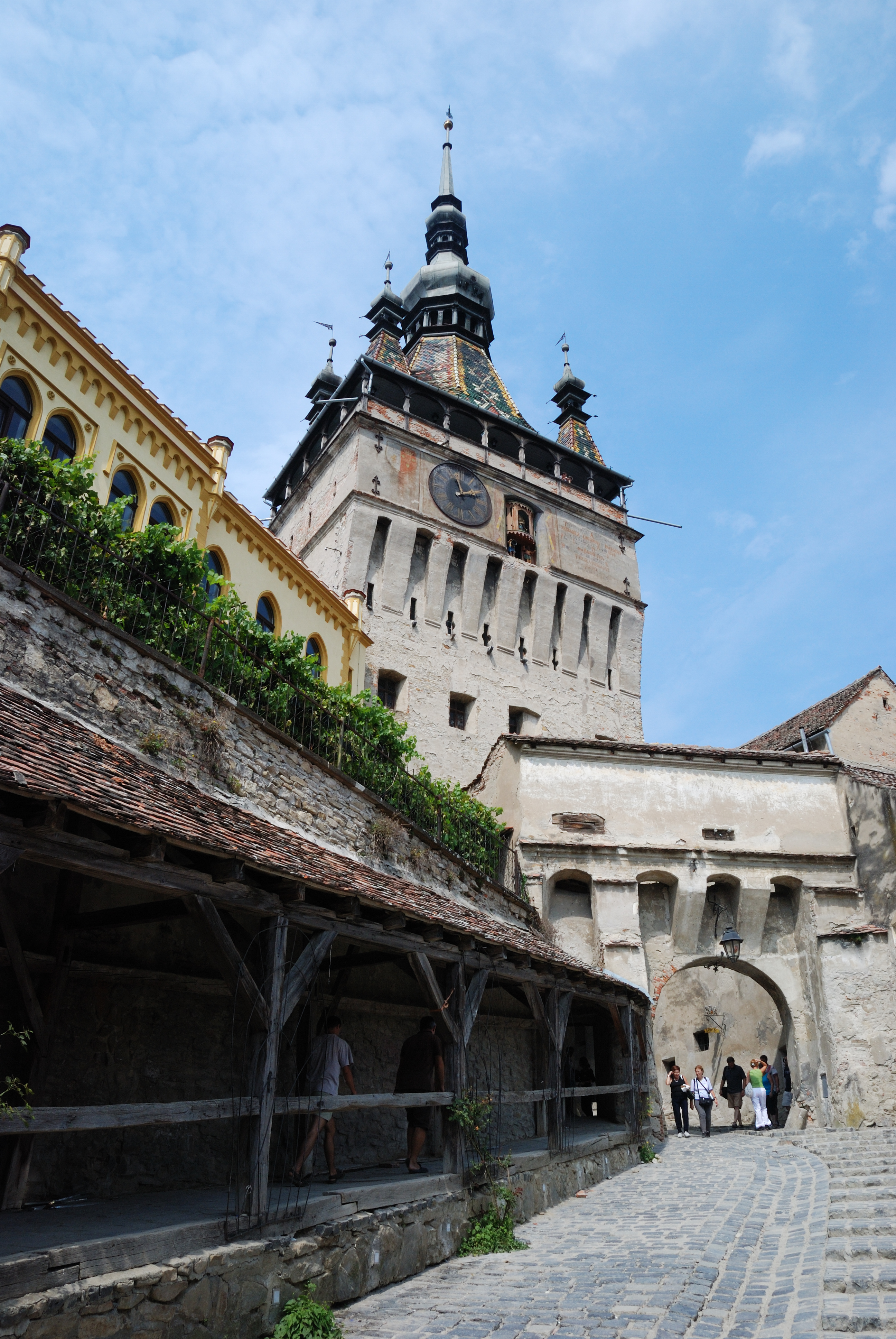
Sighișoara is a city on the Tarnava River in Mures county, in the historic region of Transylvania. German craftsmen and merchants, the Transylvanian Saxons, were invited here by the King of Hungary during the 12th century to settle and defend the frontier. Central Sighișoara has preserved in an exemplary way the features of a small medieval fortified city, which the Saxons called "Schäßburg", and it has been listed by UNESCO as a World Heritage Site. Each year a Medieval Festival takes place in the old citadel in July. Sighișoara is a popular tourist destination due to its well-preserved walled old town. The landmark of the city is the Clock Tower, a 64-m high tower built in 1556. It is now a museum of history.
Sighișoara travel guide
Getting there
By plane The nearest airports are Targu Mures (TGM IATA) 48 km (30 mi) away, Sibiu (SBZ IATA) 90 km (56 mi) away, Cluj Napoca (CLJ IATA) 145 km (90 mi) away, and Bucharest Otopeni (OTP IATA) 290 km (180 mi) away - see those pages for flight options. If you fly in and hire a car, none of those transfers are difficult. If you're relying on public transport, you probably need to stay overnight in the city you land in. Romania time is +1 hour on western Europe and +2 hours on UK, Eire and Portugal, so last trains and last buses will leave that much earlier.
By train There are 6 direct trains daily from Bucharest, 6 hours; 3 per day from Sibiu usually changing at Medias or Copsa Mica, 3 hours; and 3 from Targu Mures, 5 hours. From Budapest the best option is the overnight direct train, leaving at 19:00 to arrive 07:00. Destinations further west, e.g. Vienna, Prague and Warsaw, will usually mean a change in Budapest. From Istanbul take the overnight Bosfors Expres and change in Bucharest. For timetables, the easiest site to navigate is Deutsche Bahn. The 1 Sighișoara Railway Station is 1 km N of the old centre, next to the bus station. As you exit, zag right then left onto Str Garii/Station Rd, walk south with the citadel in plain view ahead, a jog left then right takes you over the little bridge into the centre.
By bus Direct buses to Cluj-Napoca (3 hours), Bucuresti (5½ hours), Otopeni OTP airport (6 hours; 250 lei), Sibiu (3½ hours) or Targu Mures (1 hour); but the times may be erratic. The 2 Sighișoara Bus Station is near the railway staion. For timetables check www.autogari.ro.
By road
Romanian highways are mostly well-signed and in good repair: reckon 8 hours to drive from Budapest. Drive defensively of course, watching especially for horse-drawn carts.
Getting around
It's such a small town that you will have no problem in going around walking. If you need any suggestion there is a tourist information office inside the Café International and Family Center or the tourist information booth, both located in the main square Piata Cetatii; they will help you reach the fortified churches in the area. For more information see the Do section.
Parking If you drive to the city you can park in:
3 historic center parking (Parcare Centrul Istoric Sighișoara). surface unguarded parking paid parking. Only coins accepted by the parkimeter. (updated Jul 2024) 4 Strada Morii parking, 3 Strada Morii. surface unguarded parking (updated Jul 2024) 5 parking area in Strada 1 decembrie 1918, Strada 1 decembrie 1918. street parking area. Parkimeter. (updated Jul 2024) 6 Strada Anton Pann parking area, 6 Strada Anton Pann. street parking area. Parkimeter. (updated Jul 2024)
See
1 Sighișoara Citadel. A 12th-century Saxon complex, it is the historic centre of the city. Still inhabited, the citadel is listed as a UNESCO World Heritage Site. Inside the Citadel: (updated Mar 2025) 2 Clock Tower (Turnul cu Ceas). Built in 1360 and standing at 60-m tall atop the citadel hill. Balcony with a great view on the top. It includes a museum of local history with explanations mostly in Romanian. 20 lei. (updated Sep 2018) 3 Iron Smiths' Tower (Turnul Fierarilor). 4 Rope Makers' Tower (Turnul Frânghierilor). 5 Boot Makers' Tower (Turnul Cizmarilor). 6 Tailors' Tower (Turnul Croitorilor). 7 Butchers' Tower (Turnul Măcelarilor). 8 Tin Smiths' Tower (Turnul Cositorarilor). 9 Coat Makers' Tower (Turnul Cojocarilor). 10 Monastery Church (Biserica Mănăstirii). Lutheran church in late Gothic style, next to the Clock Tower, built starting in 1291 by the Dominican Order. 15 lei. (updated Apr 2025) 11 Medieval Weapon Museum (Muzeul de Arme Medievale) (next to the Clock Tower). Very small, but it contains an interesting selection of medieval weapons (swords; arrows; etc.) 12 Covered Staircase (Scara Școlarilor). an old stone staircase with a wooden roof along the whole span. This leads up to the Church on the Hill, the cemetery and the Joseph Haltrich High School (a.k.a. "School from the Hill"). Has 175 steps. 13 The Hill Church (Biserica din Deal). Lutheran church in late Gothic style, contains many frescoes and a crypt. Close to the cemetery on the side of the hill, which contains many German tombstones. 15 lei. (updated Apr 2025) 14 Vlad Dracul House (Casa Vlad Dracul). Alleged to be where Vlad Țepeș "The Impaler" (a.k.a. "Dracula") was born. Now is a restaurant. 10 lei. 15 Bust of Vlad Țepeș. It's around the corner from his birthplace, within sight of the Clock Tower. 16 Mystical Transivania, Strada Școlii 12. Interesting show where they explain the real story of Vlad Tepes in rooms decorated to the story. The story is told only in English, Rom
Do
Special events:
Sighișoara Medieval Festival: During the annual event, the town receives around ~30,000 tourists, doubling its population. Numerous cultural events take place during the 3 days of the festival - theatre, indoor and outdoor music concerts, handicraft demonstrations and exhibitions, painting, sculpture, seminars, film projections, etc. Pro Etnica. Annual interethnic music and art festival, with indoor and outdoor performances (music; dance; film) of representatives of most ethnic groups living in Romania. Sighișoara Blues Festival. DAVA Festival: A young electronic music festival, organized in a former glass factory, 5 min away by car from the city centre. The town is quite small, so one day to visit it is enough. In any case, you can consider staying more to visit the surroundings.
Hike or cycle up to the great Oak forest on the Breite plateau - a wonderful walk in nature. A great picnic location is the hill to the south of the city directly opposite the clock tower (get your bearings from the lookout at the base before you set off). Grab some goodies from a local shop and walk up any road leading to that hill. Just keep going up and, eventually, the road will die out to grass which you can walk over (it's public land) towards the defunct communications tower on the hill. A seat up here will give you a grand view of Sighișoara and the villages beyond. A day out on a bike which you can easily rent (€1/hr or €10/day) involves heading south out of town to Soas, then on to Apold where you can see the fortified church. From Apold head left by the church towards Vulcan (signposted). The road becomes a stony track. After a few km, turn left following signs to Vulcan. At Vulcan, bear left over a tiny bridge and then onto a dirt track. Follow this uphill out of Vulcan. At the brow of the hill go straight across and down the valley to Sighișoara. If it has rained in the last couple of days or is raining, the track from Vulcan to a few kilometres south of
Buy
Paintings - local artists will have displays of their works on the sidewalks during tourist season. Many nice watercolors and oil paintings can be purchased in RON, EUR, USD, or HUF.
Eat
Hotel Sighișoara restaurant - Romanian and international cuisine in a medieval atmosphere. La Perla - Pizza and other foo
Overview adapted from Wikipedia, travel guide fromWikivoyage (CC BY-SA). Photography via Wikimedia Commons.