
Sainte-Mère-Église
France · Europe
About Sainte-Mère-Église
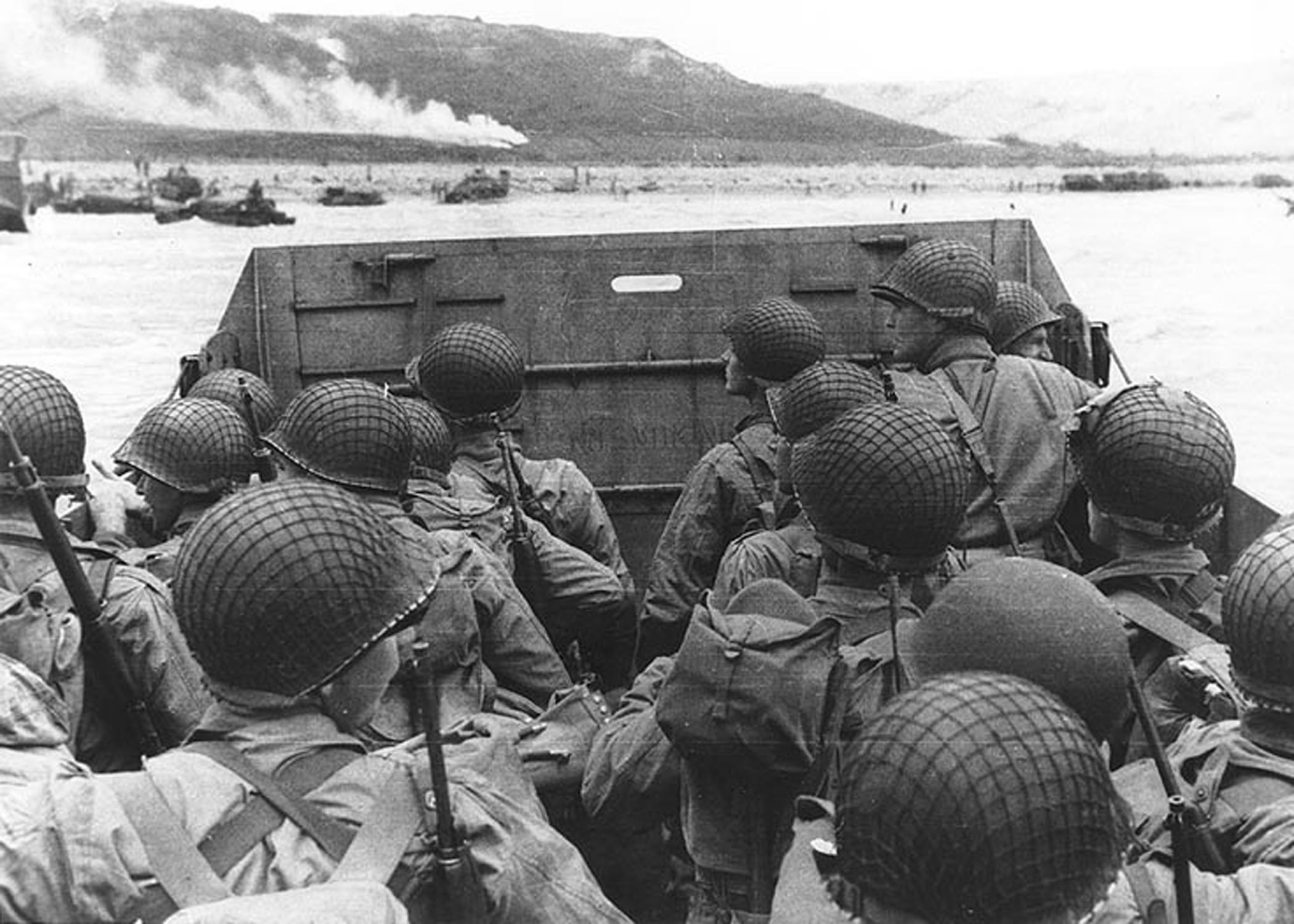
The D-Day Beaches are in the Calvados and Manche departments of Normandy, France. They were the landing places for the Allied invasion of western Europe during World War II.
An excellent time to visit is on the June 6th anniversary when there are numerous memorial ceremonies to mark the occasion. A large number of reenactment groups attend, adding pageantry and atmosphere. The church bells ring in the towns to celebrate the anniversary of their liberation. The French people will be happy to see you - these people remember, and the welcome will be warm.
It has been a long time since 1944 and not many of the old soldiers survive, but those that do often return to these beaches on June 6th. For the 70th anniversary in 2014, 90-year-old Royal Navy veteran Bernard Jordan was denied permission to leave his nursing home because of his health; he snuck out and got on a ferry to France anyway. Two elderly paratroopers, a 93-year-old American and an 89-year-old Briton, jumped into France that day as they had 70 years earlier.
Sainte-Mère-Église travel guide
Understand
See World War II in Europe for context. On 6 June 1944 (D-Day), the long-awaited invasion of Northwest Europe (Operation Overlord) began with Allied landings on the coast of Normandy (Operation Neptune).
The task was formidable, for the Germans had turned the coastline into an interlinked series of strongpoints with artillery, machine guns, pillboxes, barbed wire, land mines, and beach obstacles. Germany had 50 divisions in northern France and the Low Countries, including at least a dozen in position to immediately be used against this invasion. Following an extensive air and sea bombardment of the assault areas, the Allies launched a simultaneous landing of U.S., British and Canadian forces. About 160,000 ground troops landed that day, roughly half American and half Commonwealth. About 4,000 ships, 11,000 planes, and many thousands of sailors and airmen also took part in the operation. Overall commander of Allied forces in Europe was the American General Dwight D. Eisenhower, who would later become the country's president, while the British General Bernard Montgomery was in charge of the ground forces in Normandy once they landed. On the German side, General Erwin Rommel was in charge of coastal defenses while Field Marshall Gerd von Rundstedt had overall command in the region. This was the largest seaborne invasion in history and an important Allied victory, though the costs in both lives and material were enormous.
The landings
Just after midnight 24,000 men came in by parachute and glider on the flanks, to secure key points. Then the main seaborne landings on five separate beaches began at dawn. East-to-west, the attacks were:
The British 6th Airborne, with one Canadian battalion, on the left flank near Caen 1 Mémorial Pégasus, av du Major Howard, 14860 Ranville, ☏ +33 2 31 78 19 44. The capture of Pegasus Bridge was a remarkable achievement of the Glider Pilot regiment and the Sixth British Airborne. The story is well covered in the museum where exhibits
Getting there
Normandy is easily reachable from Paris, either by car (2 to 3 hours drive) or by train (2 hours from Paris St Lazare station to Caen central station). Alternatively, a ferry across the channel will take you in just over three hours from Portsmouth to Ouistreham, the easternmost D-Day target, an ideal starting point. Portsmouth was one of the ports from which the invasion was launched and has a D-Day Museum. Other ferries go to Cherbourg and Le Havre, nearby though not in the actual landing area. Cherbourg is a major city and was liberated by the Americans in late June; see Contentin Peninsula below. Le Havre is a smaller town and further from the beaches; it was a German naval base, mainly for torpedo boats. It was liberated by a British and Canadian force in early September after some of the heaviest bombing of the war and a fierce fight on the ground. Caen also has an airport, near the village of Carpiquet west of the city. Control of the airfield was fiercely contested in the weeks after D-Day.
Getting around
Tour the beaches and battlefields, see the various museums and cemeteries throughout the area, and visit the seaside villages and towns. Independent travel either by car or using public transport is possible.
Local tourist information offices provide a leaflet (in English) that lists key visitor attractions, and has details of seven route itineraries which are also signposted on the road network.
By car Car rental in Normandy can be arranged through several international chains including Avis, Budget, Eurocar, and Hertz. Cars can be picked up in Caen. Driving in France is on the right-hand side of the road and all distance and speed measurements are in km.
Bus Bus routes in Normandy with services between Caen and Bayeux, Bayeux and Ouistreham, and Bayeux to Grandcamp. These cover most of the main landing beaches. All the routes are operated by Bus Verts du Calvados ☏ 09 70 83 00 14 (non-geographic number)Country code missing, and free timetables can be acquired from the main tourist offices. From Bayeux train station, you can catch a bus to some of the D-Day beaches. On the bus website there is a map of the bus route to the D-Day beaches. Bus 70 takes you to Omaha beach, the American cemetery, and to Pointe Du Hoc. Bus 74 takes you to Arromanches Beach, the location of the Mulberry harbors. According to Wikipedia: "Omaha beach is 5 miles (8 km) long, from east of Sainte-Honorine-des-Pertes to west of Vierville-sur-Mer" and these villages are accessible via Bus 70. Buses are few and far between, so take the few number of buses into account. Also, buses do not run when there is heavy snow, so check the bus website beforehand during snow season. In July and August Nomad operates ligne 125 every day between Grandcamp-Maisy and Courseulles-sur-Mer via Arromanches-les-Bains, Colleville-sur-Mer, Longues-sur-Mer and Port-en-Bessin. It serves many sites and tourist attractions along the coast, including beaches, shops and museums. There are connections with routes 101
Go next
From this area, one might go anywhere in France or across the channel to the UK. Normandy is a major tourist area with a range of attractions, as are nearby Brittany, the Pays de la Loire, and the Channel Islands. Other places of possible interest to war buffs are the scenes of two Allied raids on the German-held French coast in 1942. A predominantly Canadian force attacked Dieppe, further north on the Normandy coast, and British commandos raided Saint-Nazaire, near Nantes to the south. Losses were extremely heavy in both places and arguably both raids were disasters, though the Saint-Nazaire attack did knock out an important drydock for the rest of the war. On the other hand, it is often claimed that these raids were essential preparation for D-Day, tests of German defenses that gave intelligence required for planning the invasion. People interested in earlier history can see sites associated with Duke William IV of Normandy, who invaded England in 1066 and is known there as William the Conqueror. He was born in Falaise and is buried in Caen which was his capital; his castle is now a tourist attraction. His invasion fleet sailed from Bayeux and a museum there has a famous tapestry depicting his conquest of England.
Overview adapted from Wikipedia, travel guide fromWikivoyage (CC BY-SA). Photography via Wikimedia Commons.