
Reykjahlíð
Iceland · Europe
About Reykjahlíð
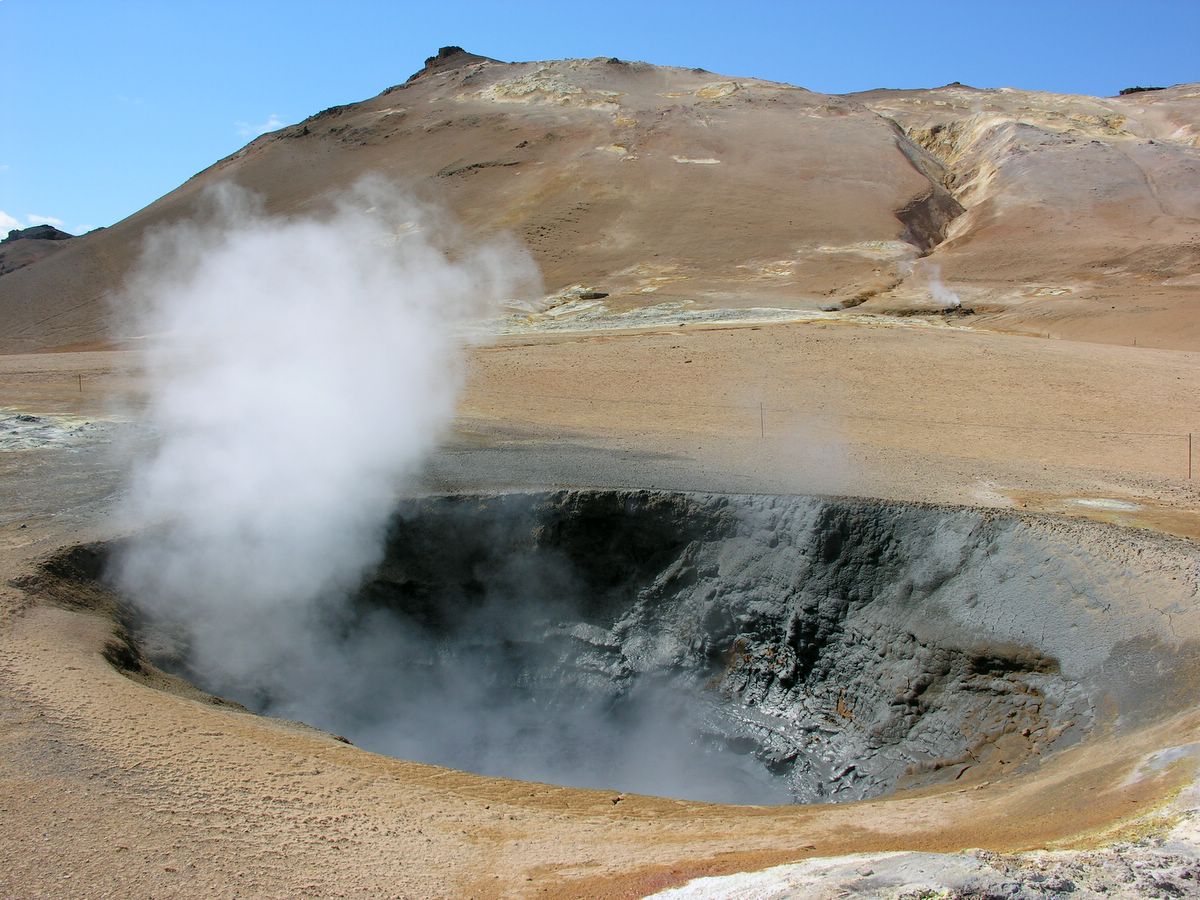
Mývatn is a lake near Akureyri in North Iceland. The lake was formed during a massive eruption 2300 years ago. Today the area is best known for the huge numbers of birds that visit in the summer, and for the weird and inspiring volcanic features that surround the lake. The name "Mývatn" is derived from the vast numbers of midges that gather at the lake and are sure to leave an impression on all who visit!
Reykjahlíð travel guide
Understand
History Mývatn was formed after a massive eruption 2300 years ago, and it remains geothermally active today. The lake is located along the western side of the volcanic zone which bisects Iceland and is an extension of the Mid-Atlantic Ridge. The features of the landscape are quite new in geologic times, with most of the land shaped by activity occurring since the last Ice Age. The inhabitants of the surrounding area, called Mývatnssveit, are approx. 450 but many more live there in the summer to serve tourists. Lately there has been a movement among the local entrepreneurs to increase tourism in the winter so now some hotels are open during the winter and tours are offered, including go-carting on ice, ice-bowling, and jeep rides over snowy terrain.
Landscape During the last Ice Age much of the Mývatn was covered by glaciers. Eruptions below the ice led to the formation of some of the area's mountains. Major volcanic events since that time have occurred 3800 years ago, 2500 years ago, 2300 years ago, and during a series of eruptions lasting from 1724 until 1729. Eruptions of the Krafla volcano from 1975 until 1984 produced fresh lava flows in the area. This volcanic activity is seen today in the relatively shallow lake, the many pseudocraters that surround it, and the fantastic lava formations and craters in the area.
Flora and fauna Due to the number of wetlands surrounding the lake there are an exceptional number of waterbirds, and the area is recognized as one of the premier bird-watching sites in the world. Over 115 species of birds have been sighted at the lake, including thirteen species of ducks that nest in the lake area. Most nesting birds arrive in late April or early May. The most abundant species is the tufted duck, followed by the greater scaup and wigeon. Other commonly sighted species include the Barrow's goldeneye, red-breasted merganser, gadwall, mallard, common scoter, long-tailed duck and teal. Harlequin ducks and the Barrow's go
Getting there
The easiest and most flexible way to visit the lake is by automobile. There are also numerous buses from Akureyri, Husavik or Egilsstadir. For those looking for more of an adventure, visiting by bicycle entails a 90-km pedal from Akureyri.
Getting around
There is not much of a public transport system. If you came to Myvatn by bus, walking, biking and hitchhiking are you best options but beware as it can get quite chilly in the winter. The road around the lake is approximately 36 km, so biking is a good option. There are some local trips available at Skútustaðir, Vogar and Reykjahlíð (ask store clerks or information centers for details).
See
There are a vast number of sights for visitors around the lake. The following listing includes major points along the Ring Road, listed in clockwise order starting from Reykjahlíð, followed by those sites that are located off of the Ring Road.
1 Hverfjall (Hverfell) Crater. This 2500-year-old, nearly symmetrical tephra crater rises 463 m high and is 1040 m across. It is accessible via a trail that runs from Reykjahlíð to Dimmuborgir. Access to the bottom of the crater is not permitted in order to prevent erosion - please obey signs and remain on the marked paths. (updated Oct 2017) 2 Dimmuborgir. Dimmuborgir, which means "dark forts" in Icelandic, is an area of volcanic arches, pillars, caves and bridges along the east shore. The black lava formations are the result of a 2000-year-old lava flow, and numerous trails lead through the area. Cracks in the ground here often hide deep and dangerous crevices; stay on the marked trails. (updated Oct 2017) 3 Lofthellir, Lava Cave. Lofthellir Lava Cave is a 45-min drive away from Lake Myvatn. It is about 370-m long and boasts the greatest natural ice sculptures known in an Icelandic lava cave. You must book a day tour as this is located on private land and off limits to the public. (updated Oct 2017) 4 Skútustaðagígar. The shores along the south side of the lake are home to many pseudocraters, formed during volcanic eruptions when lava flowed over wetlands, eventually resulting in steam eruptions and forming these medium-sized craters. There are a series of trails in the town of Skútustaðir that lead through these craters and provide further information about the geology behind these formations. (updated Oct 2017) 5 Vindbelgjarfjall. This 529-m tall peak is accessible from a trailhead along the road, just south of the mountain. The trail runs along generally flat land to the back of the mountain, after which it takes a decidedly vertical turn and leads straight to the summit. The trail is tiring and footing (on loose
Do
1 Mývatn Nature Baths, ☏ +354-464-4411, fax: +354-464-4422, [email protected]. Summertime: 09:00 – 00:00, wintertime: 12:00 – 22:00. Something of a "Blue Lagoon lite", the Mývatn Nature Baths was opened in June 2004 and offers mineral-rich geothermal waters drawn from depths of up to 2500 m. Facilities include a reception area and cafeteria, changing rooms and showers, three natural steam baths accommodating up to 50 bathers at a time, and a 5000-m2 geothermal bathing pool maintained at a constant temperature of 38-40ºC. 3800 kr. 2 Grjótagjá Fissure (located apx. 5 min to the right of the main road on the way Egilsstadir). Take a bath at the Grjótagjá fissure. The water is extremely hot (completely at own risk). The roof has become unstable and visitors are now warned not to enter. Free. 3 Sigurgeir's Birdmuseum (Fuglasafn Sigurgeirs), Neslönd (Just off the main road northwest of the lake), ☏ +354-464-4477. 11:00 - 19:00. A collection of birds collected by a local, Sigurgeir Stefánsson, who died in an accident on the lake in 1999. The museum has been built to honor his memory. It houses 300 birds of 180 species as well as some eggs. From the dining hall there is a nice view of the lake. Observe northern lights: the area round lake Mývatn is a great place for observing aurorae between September and March. Local hotels (e.g.; Sel - Hótel Mývatn in Skútustaðir) and tour operators offer guided tours and aurora hunts. A very special experience is observing aurora while having a soak in a geothermal bath. Play golf at Reykjahlið's 9-hole course. In the summer the locals in Reykjahlið often play football in the evening and usually welcome more people. Alcohol is often involved. Aerial tour over the lake: by Myflug at Reykjahlið airport. Take the hour long walk along the pseudo-craters. It offers a nice view of Mývatn as well as the surrounding mountains.
Buy
Gas, groceries, souvenirs and other supplies can be purchased in the towns of Reykjahlíð (next to the N1 station) and Skútustaðir (at Sel - Hótel Mývatn).
Eat
The Mývatn area is known for hverabrauð, a delicious, one-of-a-kind molasses bread that is slow-baked for 24 hours underground by natural geothermal heat. This bread is sold around the lake area. In addition, the local smoked trout, which is famous in Iceland for its taste, can be bought in most of the shops. Restaurants and gro
Overview adapted from Wikipedia, travel guide fromWikivoyage (CC BY-SA). Photography via Wikimedia Commons.