
Real de Catorce
Mexico · Americas
About Real de Catorce
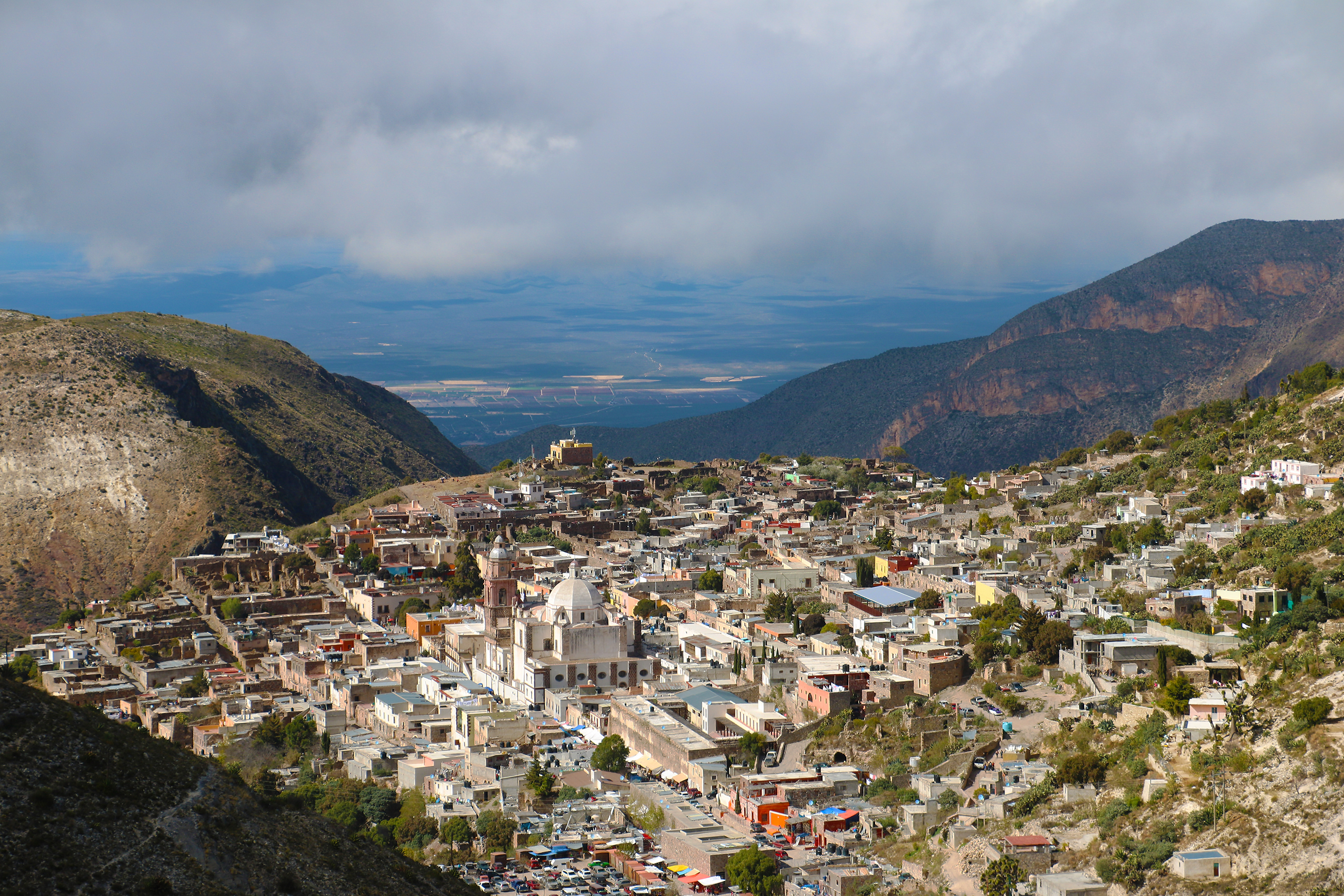
Real de Catorce is a ghost town in San Luis Potosí. The former silver mining boom town has lost over 90% of its population since its heyday in the late 19th century, and only about 1,400 residents remain (2010). Real de Catorce has been designated as one of Mexico's Pueblos Mágicos.
This old ghost town is very popular with tourists from Texas, especially the Austin area. Many of the old haciendas are being restored to former glory. The surrounding high desert area is becoming a popular area for horseback riding.
Real de Catorce travel guide
Understand
Although a town had been there for many years, silver was discovered in the local mountains in 1772. In 1779 the village was founded. The parish church was built between 1790 and 1817. Real de Catorce's heyday was in the late 19th century, when it had a population of 15,000, with some of Mexico's richest silver mines, a mint, a bullring, and shops selling European luxury goods. It was almost completely abandoned when the price of silver plummeted after 1900; only a few people remained in this ghost town, eking out a living from mine tailings and an annual influx of pilgrims to a reputedly miraculous image of St. Francis in the parish church. Today, its main income comes from tourism. Several major commercial motion pictures have been filmed in Real including Bandidas (featuring Salma Hayek and Penélope Cruz), The Mexican (featuring Brad Pitt and Julia Roberts), and some scenes of The Treasure of the Sierra Madre (featuring Humphrey Bogart), and of Puerto Escondido, directed by Gabriele Salvatores. Real de Catorce is benefiting from the renaissance that is sweeping across many of the forgotten colonial gems of the northern deserts.
Climate Although in the southern range of the Chihuahuan desert, due to its altitude, Real can be very cool at night. Although days, particularly in summer, can be very hot, it is advised to always bring a jacket, even in summer.
Getting there
By plane The nearest airport is San Luis Potosí (SLP IATA), with flights to destinations in Mexico and the USA. Monterrey Airport (MTY IATA), some 379 km away, has more flights to both Mexico and the USA, as well as nonstop services to Central America and Europe, but is further away. From the San Luis Potosí airport it is a 3-1/2 ride by car to Real de Catorce. From the Monterrey airport it is a 5-hour drive to Real de Catorce. Buses are available from both cities.
By bus Intercity buses from Saltillo, Monterrey, and San Luis Potosí stop in Matehuala, the closest major bus station to Real de Catorce. Multiple bus companies like Frontera and Senda serve the route. From Matehuala go the combis of Expreso Vanced to Real de Catorce. They depart at 8am, 2pm and 5pm from the address Altamirano 104 next to the shop Onix Bisutería. Other intercity buses from Monterrey, Saltillo and SLP go to the village Estación Catorce. The route is served by Frontera. On the website are the departure times shown. From Estación Catorce horses, mules and 4x4 cars can take you through the 12 km tunnel into Real de Catorce.
By car In order to get to Real de Catorce you have to go through a very narrow 11-km tunnel. At the high tourist seasons (Oct and Apr) you will have to leave your car outside the tunnel and take a horse and carriage in to the pueblito. Oversize vehicles must be parked outside the tunnel regardless of the season.
By taxi A driver offered direct service for M$9 per km (May 2017). From San Luis Potosí it is about ~250 km which would be around M$2,250 which may make sense for groups.
Getting around
Once in Real de Catorce you get around by walking mostly. Cars are not allowed to drive in the city. To get to one of the far away tourist destinations you travel by horse, donkey or mule. There is also a Willys Jeep tour service that can take you to distant sites or into the desert on sightseeing trips. Willys Jeeps can be found outside the Tunel Orgarrio when entering the town and in-town, can be found lined up near Plaza Hidalgo. Be aware that the town is quite hilly and all streets have old cobblestone paving, which look cool, but aren't very comfortable for walking (or even worse, riding a bike).
See
Quemado hill (Cerro el Quemado). Wixárika (Huichol) indigenous peoples walk across miles of desert from Nayarit, Durango, Jalisco and Zacatecas to visit the valley of Catorce every spring to leave religious offerings at the Cerro Quemado, a ceremonial center to the east of their mystical religious territory. Quemado is, according to their ancestral beliefs, the birthplace of their "Tatewari" or Grandfather Fire. 1 Panteon de Real de Catorce (Cemetery), Zaragoza. Since 1775, locals have been dying to rest in the Guadalupe Chapel before being laid to rest for eternity in the town's crowded graveyard. The abundance of memorials and old grave markers bear testament to the stories of this once being a bustling town with a thriving mining industry. Today, the deceased far outnumber the town's living population. (updated Apr 2026) 2 Parroquia Purisima Concepcion (Church of the Immaculate Conception), Juarez. 18th century church built in a neoclassical style of pink cantera granite. The inside is beautiful and tranquil with pastel painted domes along the main nave. (updated Apr 2026) 3 Ogarrio Tunnel. Narrow, single-lane tunnel that is the sole road into the town. The 11-km tunnel can only handle 1-way traffic that includes cars, small trucks, horse-drawn wagons, and mule trains. Cars are allowed into the town, but are restricted to certain locations. Oversize vehicles (including RVs, large trucks, and large vans, like Sprinters) must park outside the town and passengers use local transport (horse, Willys Jeep, or truck with benches). There are women with walkie-talkies at either end of the tunnel who coordinate traffic. There is often a long line during the day to enter the town. The tunnel is a travel experience in itself as well as a scenic point of interest and an odd curiosity in today's modern world. M$60 (2026). (updated Apr 2026) 4 Antiguo Palenque de Gallos Lavín (Cockfighting Ring). Historic stone cockfighting arena with stone benches surrounding the fight ring.
Do
Walking Hiking Mountain biking Equestrian riding Camping Peyote with a shaman At almost 2,700 m, the city is an excellent training ground for bicyclists and runners.
Buy
Home made crafts... made with minerals found in caves
Eat
Gorditas from street vendors Many Italian restaurants 1 Meson de la Abundancia, Lanzagorta 11, ☏ +52 488 887 5044. Traditional Mexican cuisine served in a historic hotel built in 1863. The atmosphere is rustic, but upscale, with first-class service, a full bar serving a variety of cocktails, beer, and wine, and vegetarian options available on request. M$250. (updated Apr 2026) 2 La Porfiriana, Lanzagorta 5, ☏ +52 488 887 5044. Daily 08:00 - 22:30. Casual elegance in a rustic dining room with timbered wood ceilings and rustic Saltillo tile floors. Serves a mix of traditional Mexican and international dishes. Breakfast is served until 13:00 and lunch/dinner dishes after 13:00. Robust coffee is a great start to the day along with Mexican egg dishes, waffles, or a fruit plate and sweet breads. M$250. (updated Apr 2026) 3 La Migaja, Gardenia 49, ☏ +52 488 120 2495. Daily 08:00 - 21:00. Fun, casual, family friendly restaurant serving traditional Mexican cuisine and Italian pasta and pizza in a rustic space that feels like an old-fashion country store. Many of the dishes feature home-grown or locally sourced vegetables. Well-behaved dogs welcome. Rooftop terrace with
Overview adapted from Wikipedia, travel guide fromWikivoyage (CC BY-SA)。Photography via Wikimedia Commons.