
Örö
Finland · Europe
About Örö
Örö is a large island in the Archipelago Sea National Park in Finland. It is quite easily reachable – a one-hour ferry trip from Kasnäs in Kimitoön through the inner archipelago – but still more or less by the open sea, and its sandy shores and meadows provide biotopes seldom found in the rest of Finland. The landscapes are nice and there are smooth cliffs and beaches with fine sand. Many of the visitors also come for the military history.
Örö travel guide
Understand
While most services in Finnish national parks are handled by Metsähallitus, in Örö they are left to private partners. Seeing the sights and walking around are still free also on Örö, and camping with a tent is cheap.
History
The island used to be a commons pasture for the villages of Hitis-Rosala. There were huts used as a base for fishing expeditions and other overnight stays. The sheltered waters were also used as temporary anchorages for naval vessels. This changed when the Russians built a fort on the island 1910–1915, as part of the "Peter the Great" chain of fortifications defending the Gulf of Finland and thereby Saint Petersburg (similar forts where built at Russarö and Utö; and in Estonia). When Finland became independent in 1917 it became part of the Finnish defence and construction works continued. The fort was modernized in the 1930s. In the Continuation War 1941–1944 the Soviet marine base in Hanko (leased as part of the Winter War peace treaty of 1940) was within range for the heavy batteries. Örö also provided supporting fire in the battle of Bengtskär. The coastal forts, and their artillery, long had an important role in Finnish coastal defence, but finally they were decommissioned. The island still remained a military area, used for training and supervision, until 2015, when it became part of the national park and opened for tourism. A few houses have been rented for year-round living, attracting mainly artists and authors. Some military installations are still in use and off limits for visitors. Being off limits for the public and used for military purposes has protected many otherwise threatened natural features. As a former training area for conscripts, it also has nostalgic value.
Landscape
The large island (200 ha; 1.5 km·3 km), surrounded by smooth cliffs, is a mostly forested sandy reef with low bedrock hills. The most precious habitats on Örö are the scorched heathlands and the sandy beaches.
Flora and fauna As the climate is a bi
Getting there
The only way in is by boat, unless you are permitted to use the former military helicopter field – or use a seaplane. Scheduled ferries are available from Kasnäs in the south-west end of Kimitoön. As of 2025, there is a daily ferry by Wilson Charter, leaving about 10:30 in the morning, and returning around 16:00. Check the exact schedule for the day on their website. Finferries also operates a service from Kasnäs; once-weekly in the summer season when the Wilson service runs, three weekly sailings out of season when this is the only scheduled connection. The latter has space for cars, but visitors aren't allowed to bring their car (it's for the company running the services on Örö). Thus, if you're driving to Kasnäs, park the car in the parking lot in the harbour. All ferries have to be booked ahead. Sailing your own craft would give you more options for schedules and destinations. Taxi boats are also available, and there might be tours with a chartered boat with their own schedule. There are few buses to Kasnäs, and they do not necessarily combine with the Örö ferries. Connections to Dalsbruk are better, with a few services a day, e.g. from Turku (1¾ hours; €18.70), Salo (1½ hours; €15) or Helsinki (3 hours; €36). Take a taxi (or your bike) from Dalsbruk, 20 km (€34–50). With private vessels the guest harbour, where also the ferry quay is situated, is the only allowed entry point, unless the harbour master assigns other moorings (as sometimes in peak season). If you arrive by canoe or kayak, there is also a landing spot on the south shore, near the camping site. Anchoring is forbidden (there are lots of unmarked cables).
1 Guest harbour (2.4-m fairway from the north; via the 9-m Utö–Hanko fairway; forking off north of Rosala), ☏ +358 40-144-7769, [email protected]. Year round (if you don't mind ice in winter); call harbour master for visiting off season. Facilities include septic tank emptying, toilet, water, washing facilities, café and sauna. Mooring between booms
Getting around
There are old cobbled roads providing easy access across the island, and some trails showing batteries, barracks and nature. Deviating from roads and trails is allowed, but should be avoided. All important sights can be accessed by the trails. There are bikes for rent (use on roads only): €8 half day, €16 whole day. Using motorized vehicles is not allowed (but you can get your luggage transported to your accommodation). Kayaks for rent, €25. The harbour is near the east end of the island, 0.5 km from the restaurant. The 12" battery and most lodgings are near the restaurant. The camping site is a further 0.5 km from the harbour, as are some lodgings. The beach is near the southern tip, 1–1.5 km (depending on route) from the camping site.
See
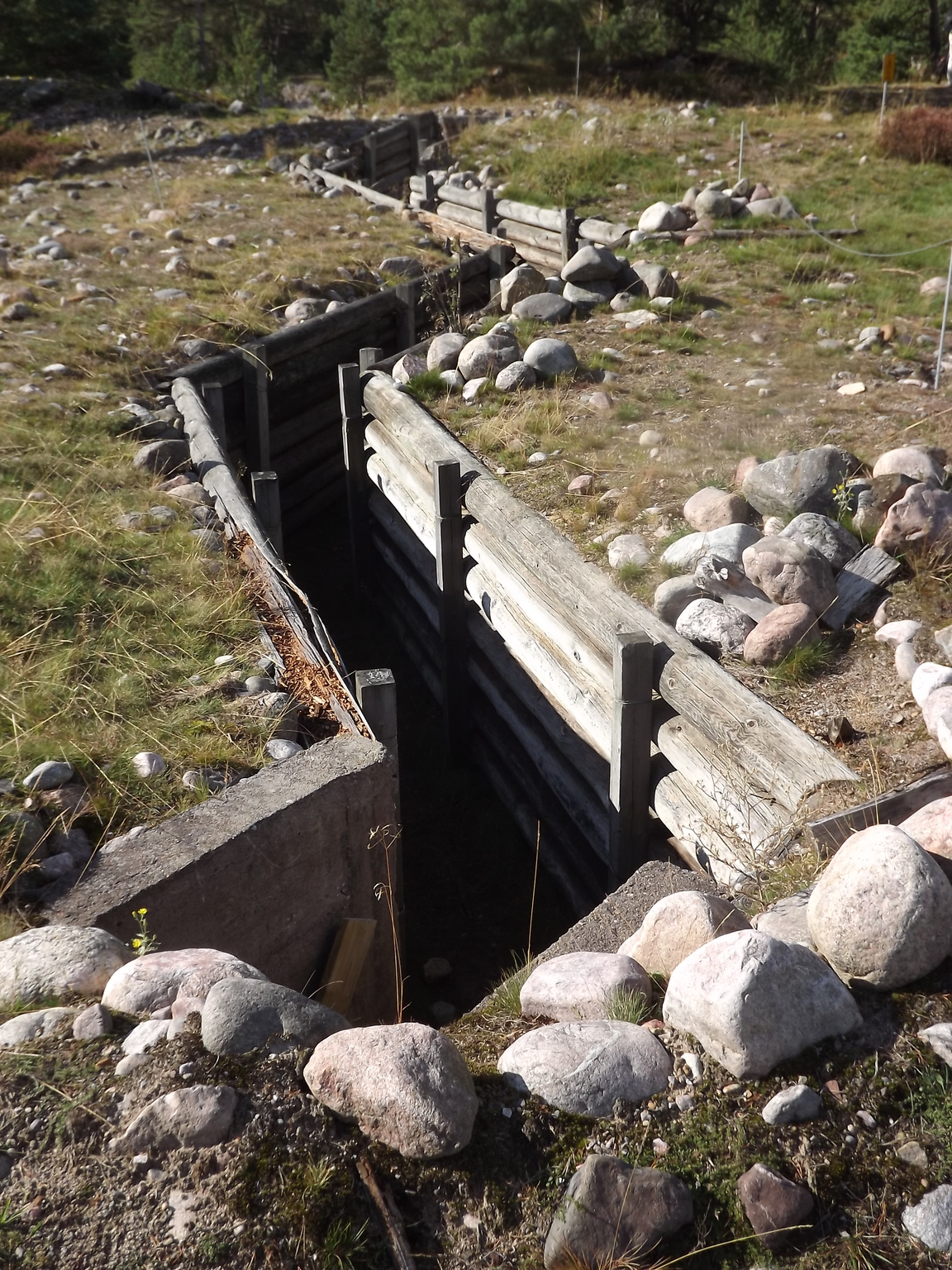
1 12" batteries. The heavy 12-inch (30-cm) Obuhov cannons had a range of 45 km. The impressive pieces have barrels weighting 50 tonnes, which would be replaced after a certain amount of firing. Two cannons out of the original four remain here, the other two were transferred to the archipelago outside Vyborg in the 1930s (which was back then part of Finland) and as such they were effectively returned to Russia when WWII was over. If climbing up the cannon which is further east (halfway on the road between the harbour and hotel), you can see the Bengtskär lighthouse in clear weather. (updated Jun 2016) Other fortifications and infrastructure. The landscapes. Archipelago woods. Sunny meadows. Sand and gravel beaches. Flora and fauna, especially butterflies and dragonflies.
Do
For swimming, use the designated beach. Sauna available, both private saunas (€35–60/50 min) and turns in shared gender-separated saunas. Guided tours, daily in Finnish in season, but private guiding in at least English and Swedish is available on request and can be tailored to your interests. Games, such as mölkky and krocket for rent by the restaurant. Sea kayaking around the island and in the nearby archipelago.
Buy
1 Shop in the info point. The shop in the info point has some Örö-themed souvenirs (think caps; shirts; mugs…), Moomin themed ones, and some snacks and supplies. As of May 2025 not all prices were displayed, and for instance two packaged ice cream cones costed €9.50 (but remember; the price includes transporting them out here; keeping them cold all the time). (updated Jun 2025)
Sleep
Accommodation in the barracks, in cottages (private or shared), at a campsite or in your yacht in the guest harbour. Luggage transport included, except for the campsite.
Lodging There are several options for lodging: rooms, apartments, cottages, guesthouse, dormitory. Most are available all year. Linen included. Check-in by 16:00, checkout by 12:00.
1 Hotel (in former barracks building by the main battery). Two classes of twin rooms (15 and 23 m² respectively; the more spacious with optional extra bed), one of each can be combined. Breakfast in the 12" restaurant included. Starting from €145 and €155. (updated Jun 2023) Hostel bed. Bunk bed in shared room. Shared
Overview adapted from Wikipedia, travel guide fromWikivoyage (CC BY-SA). Photography via Wikimedia Commons.