
Pyhäjärvi
Finland · Europe
About Pyhäjärvi
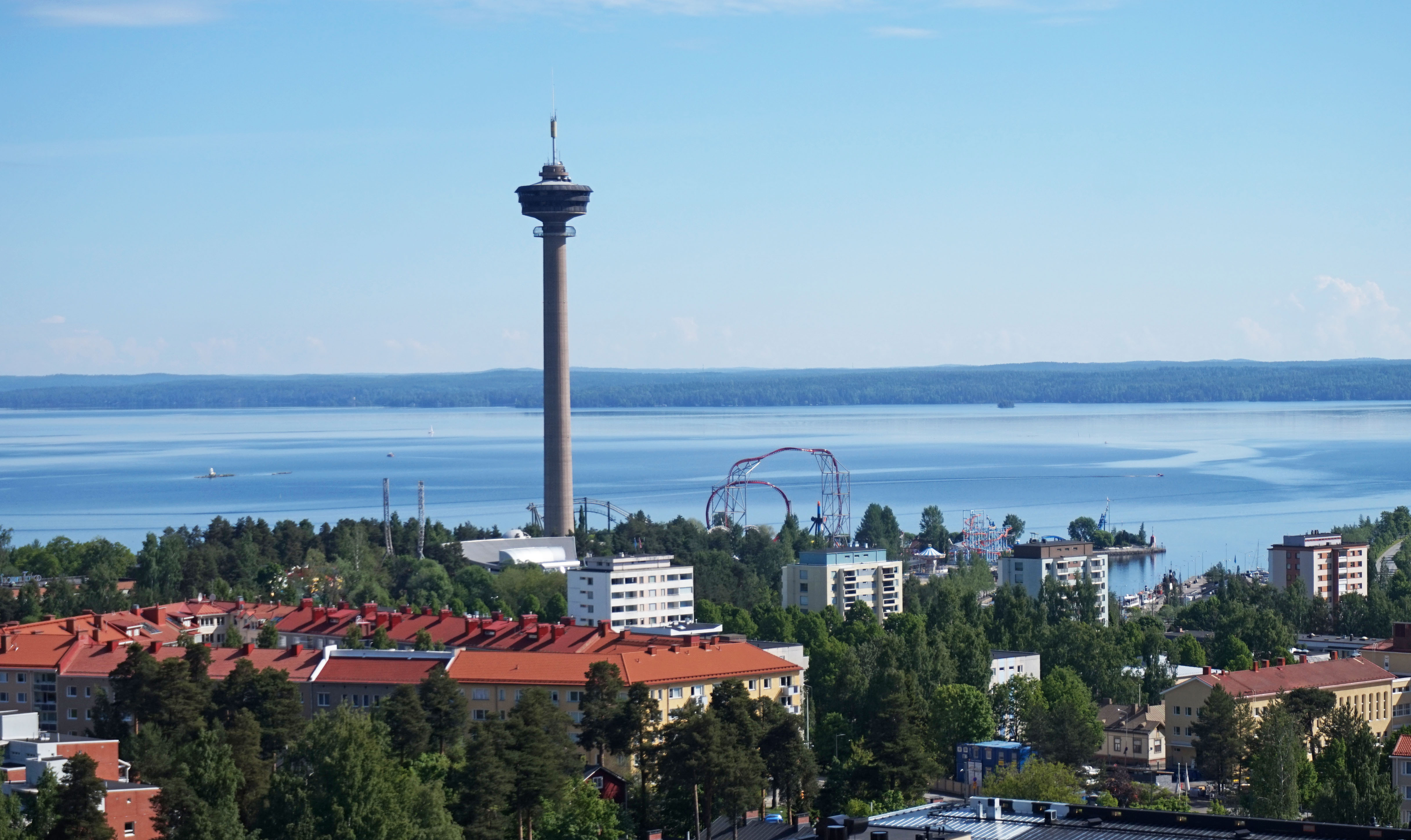
Tampere (Swedish: Tammerfors) is the third largest city in Finland with around 260,000 inhabitants, and around 410,000 in the metropolitan area. Located 170 km north of the Finnish coastal capital Helsinki, it is also the most populous inland town in the Nordic countries. The city lies on a narrow isthmus between Lake Näsijärvi, which reaches far to the north, and Lake Pyhäjärvi in the south. In addition, there are some 200 lakes and ponds in Tampere, and around 450 in the region. Despite being predominantly a former heavy industry centre, today Tampere is a major hub for information technology, research, education, culture, sports and business.
Pyhäjärvi travel guide
Understand
The Tammerkoski rapids, which now run in a canal through Tampere centre, connect the two major lakes with an elevation drop of 18 metres. As early as the 7th century people started to gather at the banks of the lakes, and in the 18th century the utilisation of the rapids as a source of hydropower resulted in a population boom. Tampere was officially founded on the banks of Tammerkoski in 1775 by Gustav III of Sweden, and four years later, 1 October 1779, Tampere was granted full city rights. The newly founded city was soon after established as a proving ground of revolutionary economical theories by declaring a freedom of trade to the city dwellers. The status of free town enabled import and export of foreign goods without customs. In addition, it was ordered that the citizens were allowed to freely practice any Christian faith. Due to the uncommon liberties, Tampere grew as a major market town and industrial centre in the 19th century. During the latter half of 19th century almost half of Finland's industrial labour force was in Tampere. The town's industrial inclination in the 19th and 20th centuries gave it the nickname that sticks to this day: "Manchester of the North", Manse for short (in Finnish).
Tampere has been an industrial pioneer in Finland since the very beginning. Finland’s first paper mill started operation in 1783, and the first paper machine was engaged at the J.C. Frenckell & Son’s factory in 1842. The cotton factory established in 1820 by James Finlayson grew to become the country’s first large-scale industrial establishment. The first electric light in the Nordic countries was also lit in Finlayson’s modern production facilities in 1882. Finlayson grew aggressively and eventually became the largest industrial complex in the Nordic countries. The city’s engineering industry was bolstered by the manufacturer of grinding machines and water turbines Tampella, which was established on the upper reaches of the Tammerkoski rapids in 1861. By the time o
Getting there
By plane
1 Tampere-Pirkkala Airport (TMP IATA) (17 km southwest of city). As of Feb 2026, Air Baltic is the only airline operating in the Tampere-Pirkkala Airport. (updated Mar 2022) Bus:
The bus line from Tampere airport will end operations in 2026. According to current information (as of Feb 2026), only the bus line 34 will continue operations from the airport. This bus goes to Lielahti through Tesoma, not to the centre, meaning you would need to transfer to a train (in Tesoma) or some other bus along the way. The regular taxis cost €40–50 (as of Feb 2026) and take 20 min. A shared airport taxi costs €17 each way. Helsinki Airport HEL IATA has a far greater range of flights. To reach Tampere, don't head into the capital, but take the P-train, bus or taxi to Tikkurila (Dickursby). Buy the train ticket (including the transfer) on the net, at the airport from the ticket machines or from the staffed kiosk. Helsinki Airport to Tampere by train takes 1½–2½ hr and costs €17–40, depending on train types (possibly cheaper in advance). There is an almost bi-hourly coach connection from Helsinki Airport to Tampere bus station operated by Valkeakosken Liikenne (☏ +358 3 584 2683; €21; 2½ hr; well-coordinated transfer in Vantaa) and two daily services by Finnair (2 hr; direct). It is also possible to come using Onnibus, in this case take the I-train from the airport to Kivistö and walk to Keimolanportti bus stop to continue to Tampere.
By train The train is by far the most convenient means of public transport when travelling to Tampere. The national railway company, VR, offers extensive train services from different parts of Finland to Tampere with connections south to Helsinki, south-west to Turku, west to Pori, and north to Oulu, Jyväskylä and Lapland. The trip from Helsinki takes 1 hour 35 minutes on the faster services (€5.90–34.00 as of Feb 2026 – dynamic pricing), whereas the commuter train R takes 2 hour 12 minutes and has a flat rate of €18.30 one-way for adult
Getting around
Orientation
The centre of Tampere has a couple of prominent features, which make it easy to navigate:
The main street of Tampere, Hämeenkatu, effectively divides the city centre into a north and a south side. The 1-km stretch is limited in the east by the main railway station, where many visitors arrive, and in the west by Hämeenpuisto Park with the City Library and the Church of Alexander. The street continues to the east as Itsenäisyydenkatu and to the west as Pirkankatu. Tammerkoski rapids crossing Hämeenkatu just by the central square, split the centre into an east and a west side. The rapids run from Lake Näsijärvi north of Tampere to Lake Pyhäjärvi in the south. The height difference between the two lakes is 18 meters, but the formerly thundering heart of Tampere now flows through the city centre rather peacefully, because of the several hydroelectric dams harnessing its power. The central square, Keskustori, is next to the bridge where Hämeenkatu crosses Tammerkoski rapids. It is the geographical and social focal point of the city. The centre is understood to be limited by Lake Näsijärvi in the north, Lake Pyhäjärvi in the south, the main railway station in the east, and the Hämeenpuisto park in the west. A great majority of the hotels, shops and attractions are either in the centre or within walking distance from it. You can get a great overview of the city beforehand from the aerial photos shot in 2011 at Virtual Tampere.
Districts
There are only a few neighbourhoods in Tampere that can be considered interesting to most visitors, namely the centre, Pyynikki and Pispala. While the centre is certainly where tourists often hang out in Tampere, it is worth the effort to spend a few hours hiking around the ridge in the Pyynikki and Pispala districts, which lie just 2–3 km west of the centre. Hervanta and Nekala districts are more off the beaten path.
The centre is the oldest part of Tampere, and where nearly all the sights and shops are. The busy main s
See
Museums and galleries
Most of Tampere's museums concentrate on its industrial history. Kids will get a kick out of the Moomin Valley and the Spy Museum.
1 Amuri Museum of Workers' Housing (Amurin työläismuseokortteli), Satakunnankatu 49, ☏ +358 3 5656-6690. Tu–Su 10:00–18:00 (summer only). Amuri is a block of 19th-century wooden houses turned into an open-air museum that vividly displays how the working-class used to live between 1880s and 1970s. The houses form an almost closed inner court, and there is a nice old-fashioned cafe with seatings both indoors and in the courtyard. Highly recommended for history buffs, but interesting to others as well. Adults €6, children (7-16) €1. 2 Art and Craftcenter Verkaranta (Käsi- ja taideteollisuuskeskus Verkaranta), Verkatehtaankatu 2, ☏ +358 3 225-1409. M–F 10:00–18:00, Sa Su 11:00–16:00 (12:00–17:00 in summer). Monthly exhibitions on arts and crafts. €3.50. 3 Finnish Labour Museum Werstas (Työväenmuseo Werstas), Väinö Linnan aukio 8. Tu–
Overview adapted from Wikipedia, travel guide fromWikivoyage (CC BY-SA). Photography via Wikimedia Commons.