
Northern Ireland
United Kingdom · Europe
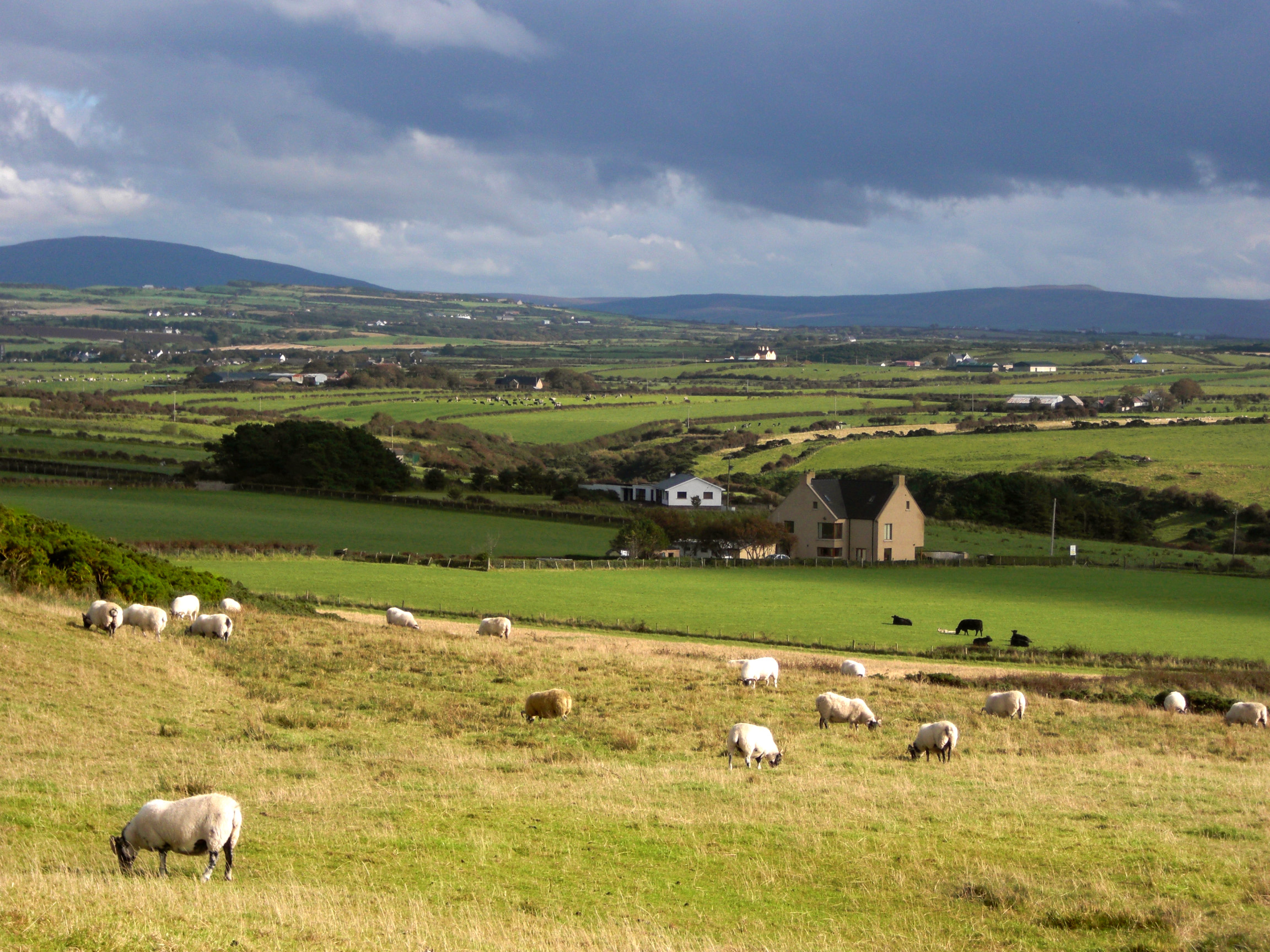
About Northern Ireland
Northern Ireland (Irish: Tuaisceart na hÉireann, Ulster Scots: Norlin Airlann) is part of the island of Ireland and one of the four constituent nations of the United Kingdom.
Northern Ireland has the Giant's Causeway (a world heritage site), stunning landscapes, vibrant cities, and welcoming locals interested in your own stories. The hit television series Game of Thrones was produced in Northern Ireland, which is also home to many of its filming locations.
Northern Ireland travel guide
Understand
History Northern Ireland was created in 1921 when Ireland was partitioned by the Treaty that ended the Anglo-Irish war. Most of the island became what was initially called Southern Ireland then the Irish Free State and is now the independent Republic of Ireland or Eire. But six of the nine historic counties of Ulster remained within the United Kingdom as Northern Ireland, with the other three joining the south, and the plate tectonics of this rift are still in motion. "Ulster" is thus a geographical and cultural term, and doesn't refer to the political entity of Northern Ireland. Lots of outsiders do conflate the two, but doing so in nationalist company... well, if you're lucky, you'll just be thrown out of the pub. If you're unlucky, you'll be required to stay and listen to a history lesson that begins in the 12th century. In the souvenir tea-towel version of Irish history, there were four provinces, Leinster, Munster, Connacht and Ulster, with a High King presiding over all. In reality in the early medieval period there were about a dozen kingdoms, forever warring and recognising no overlords. The northwest was O'Neill territory, while the northeast (now Antrim) was Ulaid hence "Ulster". From the 12th century the Normans settled in southeast Ireland but never got this far. Right up to the 17th century, Gaelic nobles ruled over Donegal, Derry and Tyrone. Then the English Tudors subdued this last redoubt and began to re-shape Ulster to their liking. They did this by "plantations" - colonisation by settlers from Great Britain, with new towns laid out and industries such as linen, and modern methods of agriculture that needed fewer hands and displaced people from the land. This had long gone on the south, the difference with the Ulster plantations was that Great Britain was now predominantly Protestant, and especially the Scottish incomers. Rural Ireland was Roman Catholic, a religion ghettoised by the Penal Laws, so sectarian tensions were added to grievances ove
Getting there
Immigration, visa, and customs requirements Northern Ireland is part of the United Kingdom, so it has exactly the same entry requirements as England, Scotland and Wales. Citizens of the UK and Crown Dependencies can travel to Northern Ireland without a passport and have the automatic right to reside, work and take up benefits. Citizens of Ireland have the same entitlement as UK citizens. Citizens of other European Union countries do not require a visa for short visits (e.g. holiday; family visits; business meetings) but do require a visa for work or study in the UK. Citizens of Iceland, Liechtenstein, Norway and Switzerland have (and will probably continue to have) the same rules as for the EU. Citizens of Argentina, Australia, Brazil, Canada, Israel, Japan, Mexico, New Zealand, South Korea, Taiwan, the United States and Uruguay do not require a visa for visits of less than 6 months. Most other countries will require a visa, which can be obtained from the nearest British Embassy, High Commission or Consulate. There is no passport control or border check between the Republic of Ireland and Northern Ireland. However visitors must carry any relevant documents that permit them entry to the UK, such as a passport or identity card and visa. The UK has a Working Holidaymaker Scheme for citizens of the Commonwealth of Nations and British dependent territories. This allows residency in the UK for up to 2 years, with limited working rights. There are restrictions in terms of goods one can bring from elsewhere in the UK to Northern Ireland and vice versa. Importing certain goods may incur tariffs. See the UK government website for more information. For more information on these requirements, see the UK government's website.
By plane Almost all direct flights to Northern Ireland are from the UK, Western Europe and the Mediterranean. There are no flights from the Republic of Ireland, as the distances are too short. George Best Belfast City Airport (BHD IATA) is 2 miles eas
Getting around
By car
You don't need a car within Belfast or Derry, but will greatly benefit further out, such as along the Antrim glens. Many visitors bring their own car by ferry. Car hire is best arranged at the airports, as there is little availability in the cities, even in Belfast. Check whether you're also covered to drive in the Republic - this should be automatic on rentals, and vice versa for the north if you fly into Dublin and rent from there. Cross-border motoring is easy (and the obvious way to explore Donegal), but one-way rentals such as Belfast-Dublin incur stiff drop-off charges. Motorway or equivalent fast dual carriageways have no tolls and fan out from Belfast to Newry and Dublin, Dungannon (for Omagh), Magherafelt (for Derry), Ballymena (for Antrim coast) and Larne (for glens). Their default speed limit is 70 miles per hour (112 km/h). Other main roads are usually 60 mph (96 km/h) out of town and 30 mph (48 km/h) in built-up areas. Road signage is identical to Great Britain's. The B-roads and back lanes are often narrow and twisty, with limited places to safely overtake, and sometimes little room for oncoming traffic to pass... and at this point you get a fright as some mad fellow blazes past with his hair on fire. Tradesmen's white vans drive at 18 or 80 mph and nothing in between. The worst speed bandits are the motorcyclists: Northern Ireland has a tradition of on-road motorbike circuits, which are risky enough under regulated sporting conditions, let alone when some boy racer with more throttle than skill decides to show off. Newly qualified drivers in Northern Ireland must display "R" plates (for "restricted") for one year from gaining their licence. As with "L" plate learner drivers, they're limited to 45 mph (72 km/h) on all roads, to the exasperation of other motorists. The days of tedious security checkpoints are gone, hopefully for good, but these still occur. The police are mostly looking for known local players and for EU smuggling (eg of f
See
Giant's Causeway is a UNESCO World Heritage Site, a dramatic cascade of basalt columns as the Antrim plateau reaches the sea. Carrick-a-Rede Bridge near Ballycastle was woven by fisherfolk to gain access to an islet with good salmon fishing. It's nowadays steel hawser not rope, but just as draughty across the chasm. Ulster American Folk Park is an open-air museum near Omagh in County Tyrone, depicting the story of emigration from Ulster to North America in the 18th and 19th centuries. There is an Old World section, the voyage itself, then emigrant life in the New World. Londonderry is a fascinating walled city and redoubt. Castles and mansions: Hillsborough and Newtownards have fine examples. Marble Arch Caves are part of the Global Geopark in the limestone terrain of Belcoo in County Fermanagh. Political murals are common in the "interface areas" where Protestant and Catholic neighbourhoods adjoin, so west Belfast and Derry have plenty. They're painted on gable walls of buildings an
Overview adapted from Wikipedia, travel guide fromWikivoyage (CC BY-SA). Photography via Wikimedia Commons.