
Northeast Region
Brazil · Americas
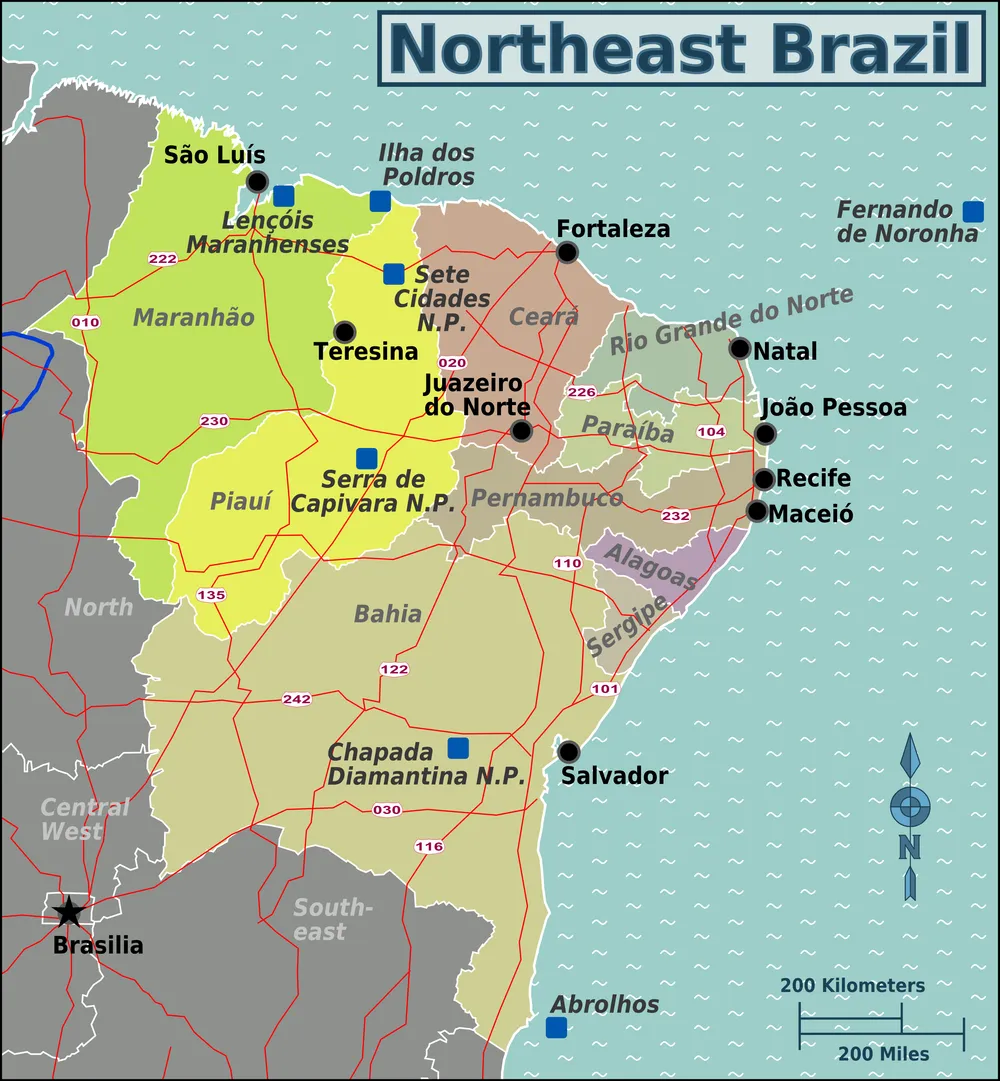
About Northeast Region
Whereas elegant Rio de Janeiro and cosmopolitan São Paulo may be the best-known places in Brazil, the Northeast, or Nordeste is one of the liveliest - a land of sunny beaches, colonial towns, vibrating street parties, music and friendly people.
Northeast Region travel guide
Understand
The Northeast is the sunniest of Brazilian regions. Although this may mean long periods of drought for the mainly agricultural inland of some states (and thus crop losses and widespread poverty), the climate also provides almost year-round opportunities for beach-going and other outdoor activities. Long favoured by Brazilian holiday makers, the Northeast has also become increasingly popular with European travellers, especially from Portugal, Spain and Italy due to language and cultural similarities. The region was also the original site of European colonization in Brazil. The first Europeans landed in Bahia, set up the country's first capital in Salvador, and over the next centuries brought millions of slaves from Africa to the region. Added to the indigenous population, the result is a fascinating rich cultural mix that makes up some often unknown faces of Brazilian culture.
Getting there
The largest airports are Salvador, Recife and Fortaleza, which provide easy access to most of Brazil. Some international flights too, but nothing compared to Rio or São Paulo. The international airport NAT IATA in Natal receives domestic flights, and a flight from Lisbon (as of March 2021).
Eat
Local dishes Buchada de Bode: made with the white entrails of a goat, with rice and farofa on the side. Not for the weak of stomach, this is considered a dish of national pride. Carne de Sol (sun-dried meat): beef jerky, a very traditional cearense food item, eaten in a wide array of styles, often splashed with clarified butter Escondidinho: dish of shredded beef jerky (or shredded chicken breast; or shrimps) topped with mashed cassava, seasoned with clarified butter and gratin with coalho cheese Macaxeira frita: cassava fries, frequently enjoyed as a late night snack Moqueca: seafood stew made with coconut milk Rapadura: brick of dried raw garapa (sugarcane juice). Very caloric and durable and portable and rich in vitamin C. Traditional cowboy fare Sarapatel: made with the red entrails and blood of a goat or pig. Another dish not for the weak of stomach.
Local beverages Açaí: thick creamy purple juice from the grated fruit of the açaí palm (Euterpe oleracea); particularly tasty when served with crushed cashew nuts (castanha de caju), whipped with banana and honey. Cajuína: delicious clarified juice from the pulpy part of the cashew fruit, sold in glass bottles
Overview adapted from Wikipedia, travel guide fromWikivoyage (CC BY-SA). Photography via Wikimedia Commons.