
Molfetta
Italy · Europe
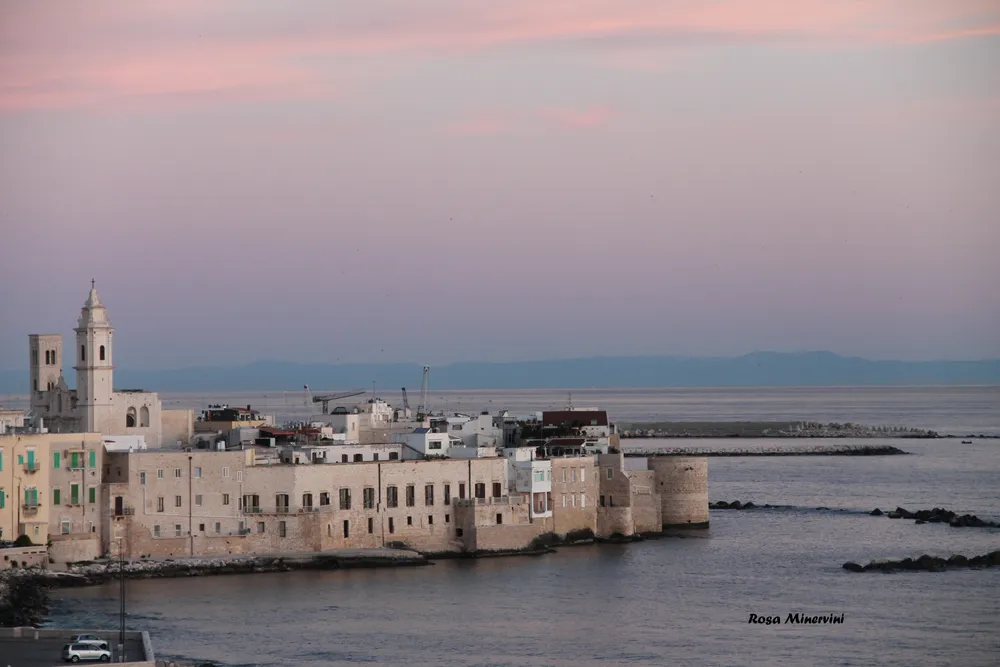
About Molfetta
Molfetta is a town in the province of Bari in the Italian region of Apulia (Puglia). The city has always had a strong bond with the sea and with the other cities of the Mediterranean.
Molfetta travel guide
Understand
Molfetta is a town of almost 60,000 inhabitants. Over time, many peoples passed from Molfetta, from the Byzantines to the Lombards, from the Saracens to the Swabians. Frederick II of Swabia named Molfetta "royal city". During the period of the Crusades, Molfetta acquired notoriety as a renowned stop during the journey to the Holy Land. There were also numerous artists that the city gave to the world, among all: the painter Corrado Giaquinto, the sculptors Giulio Cozzoli and Filippo Cifariello, the composers Luigi Capotorti and Angelo Inglese, the philosopher Pantaleo Carabellese and the writer and poet Dino Claudio.
Climate Molfetta enjoys a mild and comfortable climate in the spring and autumn months. In summer, temperatures can reach and exceed 30 °C during the day, but the city offers numerous free-to-use beaches and lidos.
Getting there
It is about 25 km north-west of Bari.
By plane The nearest airport is Bari Palese.
By car From the A14 motorway, exit at Molfetta and turn left onto Provincial Road 112. From the SS 16 Adriatica, take the Molfetta Nord, Molfetta Centro or Molfetta Sud exit.
By train 1 Molfetta station. It is on the Lecce-Bologna Adriatic line, where the regional trains from Bari and Barletta stop.
Getting around
Most of Molfetta's points of interest are located near the Borgo, and can all be visited on foot. The historic centre, Piazza Municipio and Banchina Seminario are ZTL: only residents' vehicles or those with a permit can access them. Urban public transport is provided by 5 bus lines.
See
1 The Pulo of Molfetta, Contrada Pulo (about 1.5 km SW of the centre), ☏ +39 080 8850402. A characteristic karstic collapse sinkhole created by the collapse of the vault and the dividing walls of one or more caves and tunnels formed starting from distant geological times and forming part of a complex karst system consisting of the confluence and intersection of several karst wells which originated precisely in that place from a series of geological coincidences. 2 Archaeological Civic Museum of Pulo (Museo civico archeologico del Pulo), Via Mayer (in the Casina Cappeluti). Housed a restored building from the early 19th century, it exhibits various finds from various archaeological excavations, carried out since 1997 in the Neolithic village of the Azzollini Fund and in the nearby Pulo. The collection includes a selection of ceramics, lithic industries and fragments of the huts, dating back to the Neolithic and the Bronze Age, accompanied by captions, images and reconstructions. There are also some ceramic containers of the local 18th-century factories, which refer to the period in which the sinkhole was used as a saltpetre quarry.
3 Cathedral of San Corrado (Duomo di San Corrado), Largo Chiesa Vecchia (on the edge of the ancient village of Molfetta; facing the port). Built between 1150 and the end of the 13th century, it is a singular example of Romanesque-Apulian architecture. The Cathedral was dedicated to Maria SS. Assunta and was the only existing parish in Molfetta until 1671. In 1785 the seat of the Cathedral was transferred to the present Cathedral of Maria SS. Assunta in Cielo and since then the Old Cathedral took the name of the patron San Corrado.
4 Cathedral of Santa Maria Assunta (Cattedrale di Santa Maria Assunta), Corso Dante, 7. Its majestic facade was completed in 1744 after years of work started in 1610 and continued in the eighteenth century. On the façade, at the top, there is a large marble statue of St. Ignatius of Loyola, founder of the So
Eat
Molfetta's gastronomy is very vast, it includes simple, rustic dishes, and more refined dishes, designed to conquer the interest and pleasure of gourmets. As Molfetta is a maritime city, traditional Molfetta dishes can only be based on fish; among these we remember the famous one which consists of a soup of fresh boiled rock fish together with a sauté of fresh tomatoes, garlic and parsley in extra virgin olive oil.
Overview adapted from Wikipedia, travel guide fromWikivoyage (CC BY-SA). Photography via Wikimedia Commons.