
Metro Cebu
Philippines · Asia
About Metro Cebu
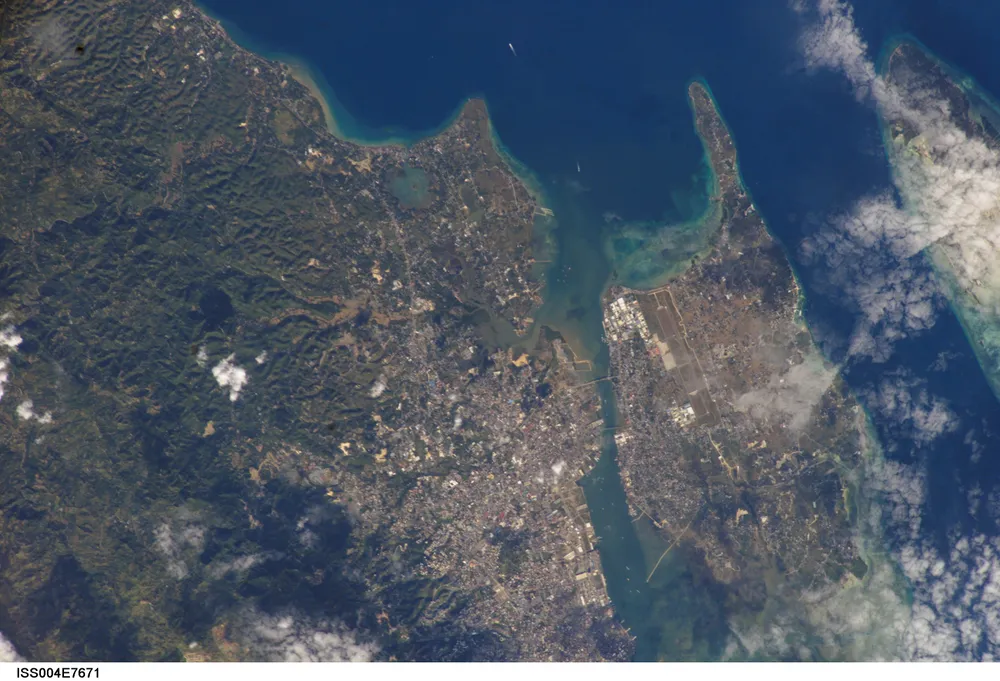
Metro Cebu is in Cebu Province in the Philippines. It is the country's second largest urban area, after Metro Manila, and the main urban center both of the province and of the larger Visayas region which forms the central third of the country. Metro Cebu has more than 60% of the total population of the province with nearly 3.2 million in the 2020 census.
Metro Cebu is the main transport hub for southern parts of the country, either the Visayas or Mindanao. Mactan-Cebu International Airport is the second busiest in the country (after Manila), with good connections both domestic and international. The ferry port in Cebu City is the country's busiest.
Metro Cebu travel guide
Understand
This is an overview article. The tourist attractions, hotels, eateries and bars are described in the articles for cities within the urban conglomerate, mainly Cebu City and Lapu-Lapu. The region has many resident foreigners, both employed and retired. Under Philippine law foreigners cannot own land but they can buy condominiums, and there are condo developments in many parts of the country catering to that market and to well-off Filipinos. In this area most foreigners can be found in Cebu City or in Lapu-Lapu, which has many high-end condos near beaches. For digital nomads the IT Park area of Cebu City may be attractive; it has good facilities and there is some work to be had with companies there.
Climate The region has a tropical monsoon climate with a long wet season and a shorter dry season. Average temperatures show little variance during the year; average daily highs range from 30 °C (86 °F) to 33 °C (91 °F) in various months and lows from 22.6 °C (72.7 °F) to 24.5 °C (76.1 °F). Cebu City averages roughly 1,700 mm (67 in) of precipitation annually. As anywhere in the country, there is some risk of typhoons. Cebu is south of the most dangerous areas but does get hit by some storms. Nearby areas with somewhat less rain and lower typhoon risk are Bohol or Dumaguete further south.
Getting there
It is possible to arrive at the airport, go directly to one of Lapu-Lapu's resorts, not visit Cebu City (or only go there on a guided tour), and be almost entirely insulated from the Philippines. Some package holidays, mainly for Japanese and Koreans, do exactly this.
By plane For air travel, Mactan-Cebu International Airport (CEB IATA) is in Lapu-Lapu; it has many international flights, mostly within Asia, plus domestic flights to and from most major cities in the southern Philippines, direct flights to some cities in the north and connections via Manila to most of the others. Many travellers land at the airport then take the My Bus or a taxi into Cebu City.
By boat For travel by sea, the port in Cebu City is the busiest in the country; it is the main hub for the Visayas region and has connections to many cities outside that region. Mandaue and Talisay have container ports, and more-or-less every town in the region has a port area or at least a few docks. Most of these are of zero interest to visitors; the exception is a dock in Lapu-Lapu which has boats to Olango Island and Bohol.
By bus
There are two major bus terminals, the north terminal in Mandaue and south terminal in Cebu City. Ceres Liner buses have routes from most cities on Cebu Island. There are also buses from major cities not on Cebu Island, including Quezon City in Metro Manila, Dumaguete, Iloilo, and Bacolod; they ride ferries for parts of their routes. Moalboal can be reached by bus. Other resort areas within Cebu Province, such as Malapascua and Bantayan, require a ferry.
By car Anywhere in Metro Cebu, except Olango Island, is easily reached by road from anywhere on Cebu Island via the highway that runs north-south following the coast. This is part of a coastal road that runs around all of Cebu Island. Although called a highway, it is not a divided fast road and goes through the center of most towns in the region. The Natalio Bacalso Avenue (N8 - South National Highway) runs from Santa
Getting around
There is a coastal highway that runs north-south through all parts of Metro Cebu that are on Cebu Island; roads branch off it to Lapu-Lapu and Córdova. Very little of this road is divided highway or limited access, and parts of it form the main streets of several towns; traffic is often slow and driving difficult. Traffic in the main cities is sometimes awful, especially in Mandaue since it is between two larger cities (Cebu City and Lapu-Lapu), there are only a few ways through and there is sometimes construction work on those. Traffic in Cebu City can also be unpleasantly heavy at times. Throughout the area travel during rush hours should be avoided if possible. The Metro Cebu Expressway — 75 km of modern divided highway from Naga to Danao — was originally scheduled to be completed by 2022. The project was halted in 2024 due to environmental concerns and, as of mid-2025, it remains incomplete. Not much of it is in service yet, only a section from near SM Seaside mall in Cebu City into Talisay. There are taxi, jeepney and bus services anywhere in the region.
By taxi Taxis can be expensive since the urban area is quite spread out; for example a taxi from the airport in Lapu-Lapu to downtown Cebu City costs from ₱250-400. However, while that is expensive by local standards — in a country where many jobs pay about that much a day — it is still a bargain by international standards. For trips to the more distant suburbs taxis are somewhat expensive even by international standards; most locals and many visitors use buses or jeepneys instead.
By bus A company called MyBus has four routes around the region with full-size air-conditioned low-floor buses. Fares start from ₱25:
Route 1 SM Seaside, Cebu Port, SM City, North Bus Terminal, Park Mall. Route 2 SM Seaside, Talisay. Route 3 SM City, Park Mall, Mactan Airport. Route 4 Park Mall, North Bus Terminal, SM City, Talisay. Sugbo Transit operates a bus service within Cebu City, between South Road Properties and Cebu I
See
See the articles for individual cities for descriptions of most of the area's attractions. Here we mention only a few of the most important, and even for those the details are in the city articles. Magellan's expedition in the 1520s was the first to circumnavigate the Earth, but Magellan himself did not make it all the way; he was killed in a battle on Mactan Island with the forces of a local chief named Lapu-Lapu. Today the island's main city is called Lapu-Lapu; it has a statue commemorating the warrior, with a monument to Magellan nearby. Magellan was fighting Lapu-Lapu at the request of Rajah Humabon of Cebu, who was friendly with the Spaniards and had been baptised a Christian. Two of Magellan's gifts to the Rajah are now among Cebu City's most important tourist sites. One is Magellan's Cross, the other a statue of Santo Niño (the Holy Child). Cebu's greatest church is the Basilica of Santo Niño; the statue is inside and the cross is in a small chapel nearby. These draw Catholic pilgrims from all over the Philippines, and some from further away. The Sinulog festival, dedicated to Santo Niño, is on the third Sunday in January; it attracts large numbers of both tourists and pilgrims. It is centered on the Basilica in Cebu City but is celebrated throughout Metro Cebu, in the rest of the province, and to some extent even in nearby provinces. If you visit around that time, be prepared for sold-out hotels, large crowds and severe traffic problems. There are many religious sites to visit, notable churches being the Archdiocesan Immaculate Heart of Mary in Minglanilla and Sto Tomas de Villanueva in Danao, as well as many shrines and crosses such as at Q Park in the hil
Overview adapted from Wikipedia, travel guide fromWikivoyage (CC BY-SA). Photography via Wikimedia Commons.