
Merseburg
Germany · Europe
About Merseburg
Merseburg is a more than thousand-year-old town in Saxony-Anhalt, Germany. Although the historic centre was largely destroyed in World War II, the town has several notable buildings, including the Merseburg Cathedral of St John the Baptist (founded 1015, rebuilt in the 13th and 16th centuries) and the episcopal palace (15th century). The cathedral-and-palace ensemble also features a palace garden (Schlossgarten). Other attractions include the Merseburg House of Trades with a cultural stage and the German Museum of Chemistry, Merseburg.
Merseburg travel guide
Understand
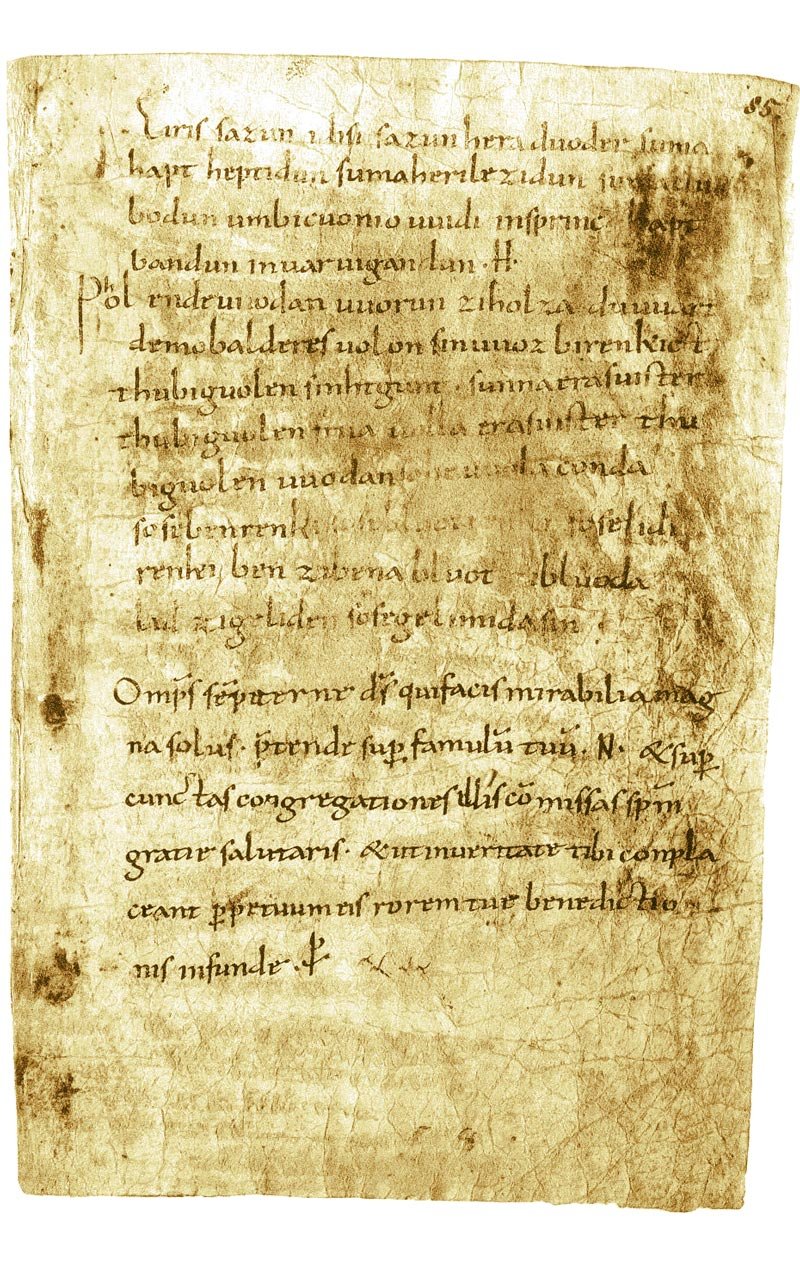
Merseburg was one of the most important cities in central Germany during the early to high Middle Ages. It was first mentioned in a written document dating from c. 890 AD. Among German history adepts it is well known for the "Merseburg Incantations" or "Merseburg Charms" (Merseburger Zaubersprüche), a collection of medieval pre-Christian, pagan magic spells written in Old High German in the 9th or 10th century. In 968 Emperor Otto I founded the Merseburg bishopric. The city which was then near Germany's eastern border, remained an important religious centre until the 16th century, being home to a Benedictine abbey and a Romanesque cathedral. Merseburg was one of Emperor Henry II's favourite palaces. The diocese of Merseburg was rather small but contained important cities like Leipzig. In the mid 16th-century Merseburg adopted Protestantism. The Benedictine monastery was disbanded and the bishopric's territory annexed by the secular Electorate of Saxony. From the mid-17th to 18th century, Merseburg was the residence of its own branch line of Dukes. Under Prussian rule after the Vienna Congress of 1815, it was the seat of a governorate, administrating the south of today's Saxony-Anhalt (including the much bigger Halle).
In the 20th century, Merseburg and more importantly its suburb Schkopau became production sites of the chemical industry. The Buna works in Schkopau, founded in 1936 to support the Nazi policy of autarky, i.e. independence from imports of raw materials, was the first facility to industrially synthesise rubber. During the division of Germany, Plaste und Elaste ("plastics and rubber") from Schkopau was an almost proverbial household name in East Germany. Much of the historical old town was torn down to be replaced by "socialist" architecture. After the reunification, many workers lost their jobs in the now unprofitable factories, and Merseburg lost about a third of its population since the 1980s (it had some 34; 000 inhabitants in 2020). The Buna works a
Getting there
By plane Leipzig/Halle airport (LEJ IATA) is 25 km from Merseburg. There is however no direct rail link, so you will have to take a taxi to get into town or change trains in Halle.
By train 1 Merseburg central station. The train station is served by half-hourly local trains from Halle (10 minutes) and Naumburg (20–25 minutes), hourly from Köthen (40 minutes), Weimar (one hour), Erfurt (1 hr 15 min) and Magdeburg (1 hr 20 min). Arriving from more distant places, you will have to change in Halle. Merseburg Bergmannsring. Only S11 Halle - Merseburg central station - Merseburg Bergmannsring - Mücheln im Geiseltal - Querfurt.
By bus From Leipzig, Bus line 100 connects to Merseburg, taking one hour from the central station (due to frequent stops). Riding the train takes about an hour as well, as you have to change in either Halle or Bad Dürrenberg.
By tram see section Get around. Not a preferable option for travellers but an interesting anomaly is the 31-km-long tram line from Halle to Bad Dürrenberg via Merseburg. A tram ride from Halle's city centre to Merseburg takes about 50 minutes.
Getting around
By public transport Hallesche Verkehrs-AG (HAVAG) operates the long-distance tram line 5 from Halle, but as of February 2026, there is a Saale bridge problem interrupting this tram, replacement by bus between Schkopau-Am Schloß and Halle-Ammendorf. The remaining tram route Merseburg is Schkopau-Buna Werke - Merseburg - Leuna - Bad Dürrenberg. Personennahverkehrsgesellschaft Merseburg-Querfurt (PNVG) is responsible for a network of urban and regional busses, i. e. daily 727 Bad Lauchstädt, 724 Schkeuditz, 131 Leipzig, 723 Freyburg, and 111/112 inside Merseburg. The MDV combi tickets are valid in all local means of transportation in the Halle-Leipzig region and you may change from (local) train to bus or tram and vice versa using the same ticket, i. e. daily train Naumburg, Querfurt, and Halle.
By foot The city is small enough to walk around (at least if you focus on the centre; where most sights are found).
See
1 Merseburg Cathedral (Merseburger Dom). Started in 1015, only the crypt, the circular towers accompanying the choir, the basements of the western towers and the lower parts of the transept including both apses have retained their original Romanesque forms, while most of the cathedral has been rebuilt in a Gothic style. The remarkable 13th-century glass paintings were lost but have been replaced by new ones in the mid-20th century, created by Charles Crodel who tried to uphold the medieval imagery. The Romanesque crucifix and a 12th-century baptismal font made from red sandstone still exist. In the southern enclosure, remarkable pieces from the cathedral treasure are presented, including valuable manuscripts like an illustrated 13th-century Bible, a Romanesque portable altar, a 13th-century ivory casket and reredos as well as the mummified hand of 11th-century anti-king Rudolf of Swabia. A facsimile of the famous pagan Merseburg Incantations is exhibited in the "charms vault". Moreover the cathedral includes a romantic tuned, 1850s grand organ by Friedrich Ladegast. (updated Nov 2016)
2 Episcopal Palace (Schloss Merseburg). Renaissance three-wing palace, built as an episcopal residence, later used by Prince-Electors and Dukes of Saxony, then by Prussian governors. Today it houses the district administration, school of music and a museum of cultural history. The latter provides an understanding of local history, displaying exhibits from prehistory to modern times. Some scenes of George Clooney's film The Monuments Men were shot here. The Palace is completed by a beautiful Baroque garden, part of the "Saxony-Anhalt Garden Dreams" project. (updated Nov 2016) Raven cage. A raven cage in the palace courtyard illustrates a local legend: Bishop Thilo von Trotha condemned one of his servants for stealing his golden signet ring and had him executed. The convict asserted his innocence, even after his head was cut off. Later, the ring was retrieved in a raven's nest, proving
Do
1 Domstadt Kino, König-Heinrich-Str. 7 (tram station "Merseburg Zentrum"; 150 m from train station), ☏ +49 3461 352853. Smallish private cinema with special programmes. €6.50–9.50. (updated Nov 2016) Walking aroung the historic city center - take some photos for your instagram Merseburger Orgeltage, Thüringer Weg 28, 06217 Merseburg, ☏ +49 3461 342620, [email protected]. Festival of organ music at the cathedral and other local churches, with national and international guests. (updated Nov 2016)
Buy
Shopping possibilities are mostly limited to Gotthardstraße and Mersecenter. Nothing special - just the usual shops you´ll find in every mid sized German city. Better shopping is possible in Nova-Eventis-Mall right on the way to Leipzig (https://www.nova-shopping.de/). There's a bus that connects Merseburg with the mall and goes further to Leipzig.
Eat
Die Sonne - Mediterranean restaurant (mostly Italian cuisine) - highly recommended place (http://sonn
Overview adapted from Wikipedia, travel guide fromWikivoyage (CC BY-SA). Photography via Wikimedia Commons.