
Mátészalka
Hungary · Europe
About Mátészalka
Mátészalka is a small town in Szabolcs-Szatmár-Bereg county, in north-eastern Hungary. It is the second largest town in the county, after Nyíregyháza. Despite being frequently overlooked by foreign travellers and by Hungarians from other regions, it is a charming place steeped with early 20th-century Jewish history, and Eastern European influences from Soviet times.
Mátészalka travel guide
Understand
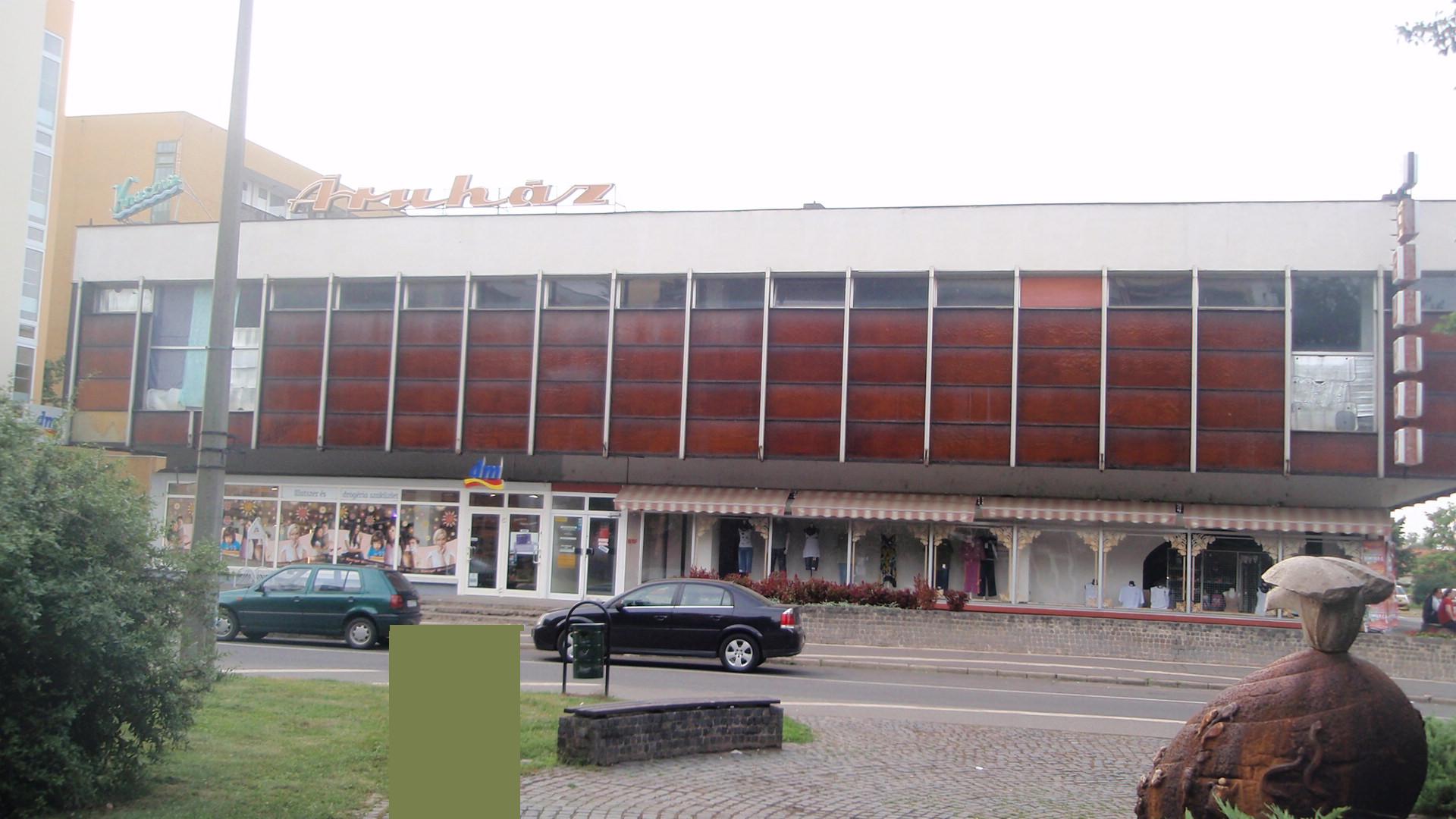
Modern Mátészalka is a fusion of four smaller settlements, which existed in one form or the other since the Middle Ages. The city contains architecture from various time periods: late 19th- and early 20th-century bourgeois and Jewish houses in Kossuth Lajos street complete with a famous Synagogue, an East Berlin-esque Stalinist city center from Soviet times, a quiet, suburban area in the outer parts of the town with houses dating from the 1930s to modern times, and the new high-tech railway station, indoor swimming pool, and Tesco supermarket from the globalized era.
Getting there
By train
From Budapest, Mátészalka can most easily be reached by train. There is a daily InterCity train in the afternoon which goes from Budapest-Nyugati to Mátészalka in about 4 hours, and goes back to Budapest the following day in the early morning. During the day, various InterCity trains go from Budapest to Debrecen. From Debrecen, you can easily catch a regional train to Mátészalka. On the regional train you will have the opportunity to get a taste of "real Hungary" and not the sanitized, artificial version usually put before a traveller. Mátészalka is also directly connected by train to Carei, Romania.
By bus From Nyíregyháza, the easiest way to go to Mátészalka is by bus. There is a train connection but it's painfully slow.
By car By car, the easiest way to get to Mátészalka from Budapest is to drive to Nyíregyháza on the M3 freeway, then get to the Rohod-junction on route 41, then turn right and follow route 49 through Vaja, Őr, and Jármi to Mátészalka. From Debrecen, follow route 471 through various small villages.
By bicycle If you're not totally new to bicycles it's not that dangerous to ride a bike between Mátészalka and various smaller villages in the region, like Jármi, Ópályi, Kocsord, Nyírmeggyes and Nyírcsaholy. Exercise caution with lorry drivers and youngsters with a fresh driving license in sports cars. Mátészalka is also connected, mostly to the east and the north, by dirt roads to various villages. These are safer, although watch out for stray dogs that may attack the fast moving bicycle or hares and pheasants which might jump in your path. If you sprain your ankle or knee you may be left there for good. In rainy weather, these dirt roads are mostly unpassable.
By hitchhiking The car is the main method of transport in this area with an infrequent bus network and a rail network which only touches a fraction of the settlements. Only some locals can afford a car, the others rely mostly on their car-owning acquaintances to take them
Getting around
Mátészalka is not too big, you can easily get around on foot, or by bicycle.
By bus There is a local bus service mainly consisting of regional buses which also have stops in Mátészalka, but it's pretty irregular. A free bus service is operated by the Tesco supermarket. It starts from Tesco, goes around in a loop through Southeast, East, East-Central and Northeast Mátészalka, arriving back at Tesco.
On foot If you don't have a problem with long walks, you can reach any point from any other point in the town with a long, healthy walk.
By bicycle There isn't too much traffic and the paved roads are in good condition. Don't ride a bike on Alkotmány street, and exercise caution on Jármi street, Meggyesi street and Ipari street.
By car The car is the main method of transport that the locals use. There isn't much traffic, most intersections have traffic lights. It's quite easy and quick to get around by car.
By hitchhiking The flea market is quite a distance away from the city center. If you don't want to take a long walk, ride a bike on a busy road, or try to get here with the infrequent bus connection, try to hitch a ride to the market from the junction of Jármi street and Ipari street.
By taxi There are some taxis waiting at the railway station.
See
Synagogue, Kossuth Lajos street 37. An early 20th-century synagogue in what was the Jewish District before the Holocaust. The first electric street light in Hungary, a streetlight-pole made of iron near the synagogue on Kossuth Lajos street. Mátészalka was the first settlement in Hungary to get electric street lighting. Electric lighting was established in 1888, the same time as in New York. Szatmár Museum, Kossuth Lajos street 5. A modern museum about traditional life and art in the region. Features an extensive carriage collection from every part of Hungary. The "meteorite", in the garden of the Reformed Church. Near the fence, easily visible from the street, Kossuth square. A strange darkish rock slab. No scientific examinations have been made on it yet, but rumored by some locals to have extraterrestrial origins. Kraszna River, a small river east of the town. Cycle eastwards on Fekeszegi street. After a while, the paved road will veer off left, the straight path will turn into dirt road. Continue on the dirt road and you will arrive at the bridge. Don't follow the paved road after it turns left, it leads to a sewage works patrolled by attack dogs! At the bridge, there are various trees on which yellow plums grow. They are smaller and more sour than typical plums, but are very tasty. They can be safely eaten off the tree. In folk language they are jokingly called "diarrhea-plums" as eating large amounts at once can cause diarrhea. The "egg" in front of the Kraszna Áruház, There used to be a big swamp south of Mátészalka called "the Ecsedi Láp" which was drained. This statue commemorates it with various reptiles and amphibians climbing up the egg-shaped rock on which a huge eagle sits. Various statues and memorials in the city centre, about famous people in Hungarian and European history. Mátészalka has got the nickname "the city of statues" because it has so many of them. The Soviet-style city center, if you're interested in life behind the Iron Curtain during th
Do
Visit the flea market, in the southwest part of the city, at the junction of Ipari street and Meggyesi street. This is more than a simple market, this is a central hub in the town's social life. While nowadays fewer people come here for shopping because this Eastern-style market is overshadowed by the Western-style Tesco, it is still a pretty good place with various kinds of vendors, small buffets offering local versions of fast food and loud party music blasting through loudspeakers on poles from Kesha, Lady Gaga, etc. If you have kids, bring them here, they'll love it! Things to look for on the market:
Fast food vendors offering Lángos, a traditional Hungarian fast-food, Palacsinta, 1980s-style communist hamburgers and hot-dogs which are markedly different from McDonald's, grilled open-face sandwiches made like a pizza, gyros, soft drinks, not just Coca Cola but also Traubisoda, Márka and other Hungarian soft drinks. Ukrainian candies and chocolates. Very cheap, good quality and tasty. The kids'll think it's Halloween! Beauty care products, soap, diapers, etc. Very cheap. Electronic equipment from Eastern Europe, China, sometim
Overview adapted from Wikipedia, travel guide fromWikivoyage (CC BY-SA). Photography via Wikimedia Commons.