
Lugo
Spain · Europe
About Lugo
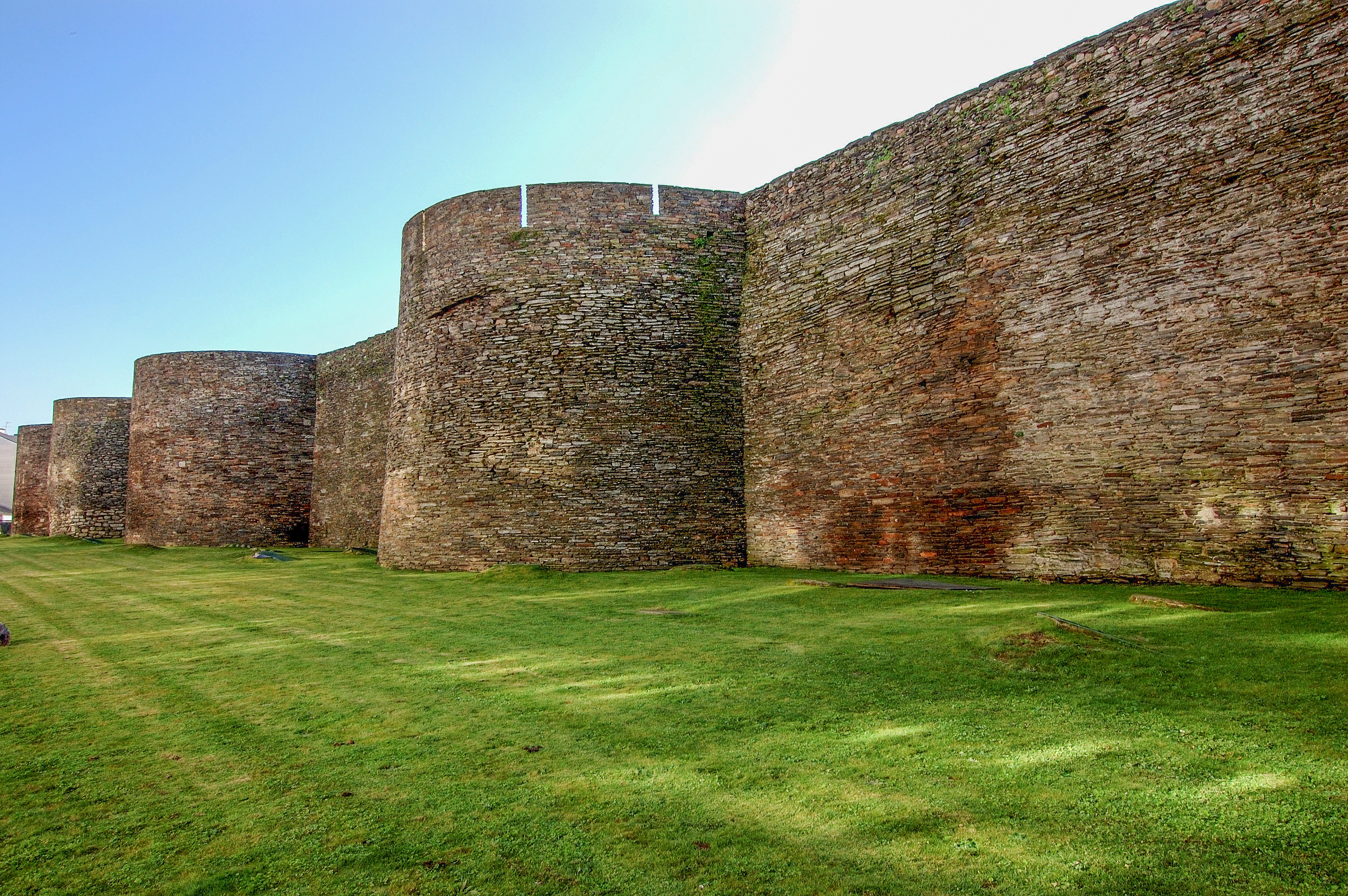
Lugo is a city in Galicia in northwest Spain, encircled by intact Roman walls, a UNESCO World Heritage site. It's a popular start point for pilgrims on one of the trails to Santiago de Compostela. In 2024 its population was almost 100,000 and growing, bucking the trend of depopulation elsewhere in Galicia.
Lugo travel guide
Understand
Gold! That's what lit up Roman eyes, and it didn't take long to wrest control of this area from the native Iberoceltic people. Gold ores stretched through the mountains to the east, and were washed out by early forms of "Placer-mining". There's no sign of this nowadays in Lugo (see Ponferrada for the landscape it created), but what did endure was a substantial city encircled by stout walls, erected 263-276 AD. Those walls sufficed for defence while the Roman military empire remained strong, but that crumbled from the 4th century AD, and outlying cities such as Lugo fell to Celts and Visigoths. The Moors invaded Spain in the 8th century and swiftly captured all except northern parts held by the Visigoths, and Galicia like Castile and León became a depopulated borderland. When the Moors were rolled back in later centuries, there was a determined effort to re-populate and re-christianise these areas, with a flurry of church-building in Romanesque style. By the late Middle Ages the pilgrimage trail to Santiago was well-established, and Lugo stood on one of the routes, Camino Primitivo from Oviedo. They sought to boost their revenue by the permanent display of the "host" - the communion bread that supposedly is literally the body of Jesus while retaining its standard appearance. It's displayed in an elaborate "monstrance" on the cathedral main altar. Spain briefly grew rich in the early modern period from gold, silver, slavery and other commerce with the Americas, but little of this wealth reached Lugo, nor did industrialisation. In 1809 the British fought a rearguard action here as Napoleon chased them all the way to Corunna on the coast. By that era, cannons could blast down walls while mortars could lob destruction over them, and many cities removed this obsolete form of defence in order to open up their streets and expand their conurbation. De-populated Lugo had simply no need, so theirs stood. It became a provincial capital in 1883 and the railway arrived in 1875.
Getting there
By plane Santiago de Compostela (SCQ IATA) is the best-served airport, as tourists and pilgrims converge from all over west Europe. Take the bus into city centre for onward transport. A Coruña (LCG IATA) is slightly closer, with flights from Madrid and Barcelona but not much internationally.
By road From Madrid is 505 km by A-6 (toll), which continues to A Coruna (97 km). From Santiago is 105 km by A-54.
By bus ALSA buses run from Madrid Estacion Sur five times a day, taking 7 hours via Madrid Moncloa, Astorga, Bembibre and Ponferrada, and continue to A Coruña, Ferrol and Santiago. Some start from Madrid Airport T4. Four buses a day run from Oviedo, taking 6 hours via Gijon, León (where you may have to change), Astorga and Ponferrada, and continue to A Coruña; one bus comes from Bilbao via Santander. Arriva Galicia buses ply between A Coruña and Lugo every 30 min, taking 90 min. Monbus runs from Vigo twice on Friday and Sunday, taking 2 hr 30 min via Santiago, but doesn't otherwise serve Lugo. 1 Lugo Bus Station is on Praza da Constitución south of the city walls.
By train There are four connections a day from Madrid Charmartin, all taking about 4 hr 30 min. One is direct via Segovia Guiomar, Zamora and Ourense, the others have a change at Ourense. Two trains a day from A Coruña take 1 hr 50 min via Betanzos. 2 Lugo railway station is 500 m east of city centre.
Getting around
The inner city within the walls is compact and best explored on foot. Avoid bringing a car in here, the old streets are traffic-restricted and parking is difficult.
See
A total solar eclipse on Wednesday 12 Aug 2026, starting at 20:28 and lasting 84 sec. The chances of a clear sky are 50%, and you need to find a spot with a clear view to the northwest horizon, where the sun will be setting. Coast is best: hilltops are more likely to be socked in by cloud, and after the show you’d have to descend an unfamiliar hill trail in darkness. Roman Walls encircle the old city in an unbroken 2.1 km loop, among the best preserved in Europe. There's a walkway on top, 71 towers and ten gates. Access free 24 hours by the stairs at any gate, for example by Praza Pío XII west of the cathedral. 1 Catedral de Lugo, Praza Santa María, ☏ +34 98 223 1038. M-Sa 09:30-18:30. Built from 1129 in Romanesque style, with additions down the centuries in Gothic and Renaissance. Highlights are the capilla mayor, other chapels, choir, girola or ambulatory, and museum. Adult €8. (updated Mar 2025) Domus Mitreo, Praza Pío XII 3 (just west of cathedral), ☏ +34 61 032 3926. Tu-Sa 11:00-14:00, 17:00-20:00, Su 11:00-14:00. Roman house from about 3rd century AD, same age as the adjacent walls. It also exhibits the Roman foundations of Lugo. Adult €3.30, conc €2.20, 1st W of month free. (updated Mar 2025) Praza Maior is the bosky main square just east of the cathedral. 2 Casa do Concello is City Hall, just east of Praza Maior. It's Baroque with a mid-18th-century façade. Perched on top is a 16th century clock tower rebuilt here. 3 Museo Provincial, Praza de Soldade, ☏ +34 98 224 2112, [email protected]. Tu-Sa 10:00-13:30,16:00-20:30, Su 10:00-15:00. Displaying Galician art. It's within the former monastery of St Francis, and incorporates Iglesia de San Pedro, the Church of St Peter. Free. (updated Mar 2025) Convent of San Domingos remains active, with the nuns in seclusion. No tourist visits but enquire whether it's possible to attend the church service. It's 100 m east of Museo Provincial.
O Vello Cárcere meaning "The Old Prison" has been converted into an art exhib
Do
Football: CD Lugo play soccer in Primera Federación, the third tier. Their Estadio Anxo Carro (capacity 7000) is on the riverbank 2 km west of city centre. Círculo das Artes is a performance and events venue southwest corner of Praza Maior. El Camino Primitivo is a variant of the pilgrimage trail to Santiago, 320 km starting in Oviedo, but you can claim your pilgrimage certificate by starting here for the last 100+ km. The name is because it was the first documented pilgrimage, by King Alfonso II of Asturias in 814. Arde Lucus is three days in mid-June, celebrating the city's Roman roots. Fiesta of San Froilán is held 4-12 October. Froilán (833-904) was born in Lugo and became bishop of León.
Buy
Supermarket: biggest is Hiper Froiz, 200 m north of the bus station at Carril das Flores 14, open M-Sa 09:00-22:00. Gadis is the main store within the city walls, 200 m north of Museo Provincial at Quiroga Ballesteros 10, open M-Sa 08:30-21:00.
Eat
Restaurante da Rua is 100 m south of Museo Provincial at Rúa Nova 13, open W-M 11:00-00:00. Restaurante Campos is an upmarket place just south at Rúa Nova 2, open Tu-Sa 12:30-15:30, 20:00-23:30, Su 12:30-15:30. Royal Tandoori is east of centre at Rúa Rafael de Vega Doutor 1, open Tu-Su 12:30-16:30, 19:30-00:00. 1 Shanghai, San Roque 62, ☏ +34 98 225 2890. Th-Tu 12:00-16:00, 20:00-00:00. Reliable Chinese near the bus station. (updated Mar 2025) 2 Fonte do Rei 2, Av de Madrid 63, ☏ +34 98
Overview adapted from Wikipedia, travel guide fromWikivoyage (CC BY-SA). Photography via Wikimedia Commons.