
Lower Normandy
France · Europe
About Lower Normandy
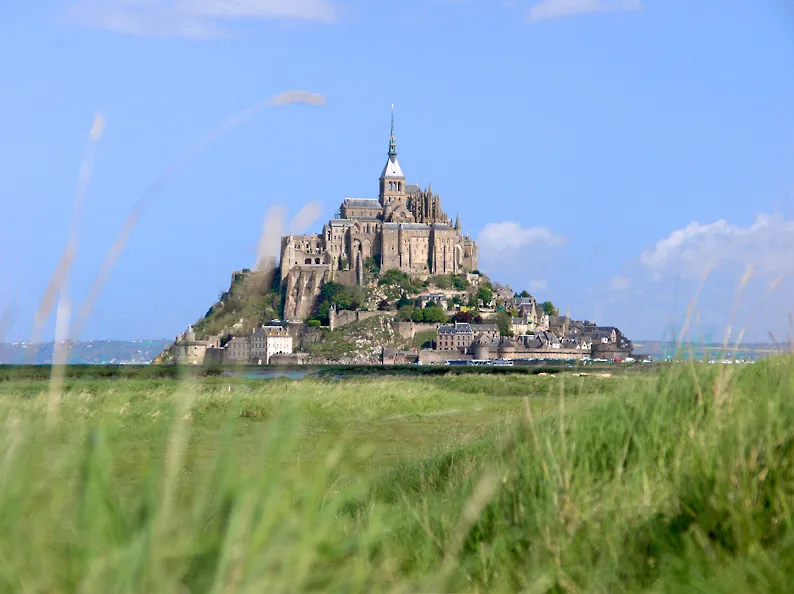
Normandy (French: Normandie, Norman: Normaundie) is a region of northern France, bordering the English Channel. Once the centre of a powerful medieval empire that controlled a significant area of continental Europe, and most of England and Wales, Normandy has an incredibly rich heritage to draw from. Many visitors come to be enchanted by historical attractions such as the triple peaks of Rouen cathedral, the Bayeux Tapestry's engrossing tale of vengeance and conquest, and the fantastical abbey atop Mont Saint-Michel.
Normandy is also famed for the D-Day Allied invasion on 6 June 1944, and the brutal inland fighting that ensued, but which eventually resulted in the liberation of France from Nazi rule.
However, Normandy is more than just a history museum; this is a region of natural beauty too, from the chalky cliffs of the Alabaster Coast, to the rocky hills of the Suisse Normande, and the Cotentin marshlands. And where better to savour the twin pillars of Norman cuisine, milk and apples?
Lower Normandy travel guide
Understand
History
Normandy is the land of the Normans, whose Norse ancestors arrived in 820 and conducted several raids in their longboats up the River Seine, terrorising and extorting the Franks out of much of their wealth. In 911, the Viking warrior leader Rollo besieged Chartres and forced the Frankish king Charles the Simple to sign a costly treaty; in exchange for ceasing their raids and protecting the coast from their Norse kin, Rollo and his people were granted the lands that became the Duchy of Normandy in perpetuity. On paper, the dukes of Normandy (as Rollo's descendants became) were vassals of the Frankish, and later French, crown. However, the early French kings were weak and controlled very little land beyond Paris, so Normandy had a lot of practical independence and leverage to expand its borders, which it did repeatedly. Normandy's most famous duke - William the Conqueror (Guillaume le Conquérant) - sailed an invasion fleet to England in 1066 and there crowned himself King William I. Thus followed a long period of Anglo-Norman domination on both sides of the Channel, and Normandy was for several centuries a part of the Kingdom of England. During this time, many defensive castles and Romanesque and Gothic churches were constructed, and the famous Bayeux tapestry was woven by now-unknown hands. This state of affairs was only altered by the Hundred Years War (1337 - 1453), as France took back more and more of its territory. During this time, French national heroine Joan of Arc (Jeanne d'Arc) was infamously executed by the English at Rouen. Despite this blow, the French won the war and the only part of Normandy left under English - now British - control today is the Channel Islands. Indeed, it is possession of these islands that still grants the British monarch the title Duke of Normandy. In the Belle-Époque of the late 19th and early 20th centuries, Normandy was adopted as a rural bolt hole by the great and the good of the era (Gustave Flaubert, Marcel Proust,
Getting there
By car From Paris, take the A13 autoroute (motorway) in the direction of Rouen, which takes about 2 hr. Caen is around 2 hr 45 min from the capital, while Cherbourg is about 4 hr. The A28 links traffic from the south, i.e. Le Mans and Tours, for the A10 from Bordeaux and ultimately Spain. Those coming in from Rennes and the rest of Brittany should find the A84 helpful. If driving from the north (Hauts-de-France and the Benelux), the A28 branches off the A16 at Abbeville and heads down into Upper Normandy. Driving times from the Calais ferry port and Channel Tunnel terminal are around 2 hr to Rouen using the A16 and A28 motorways.
By train
Normandy is not connected to any high speed rail (TGV) lines, so services to and around the region are rather slow by French standards.
From within France SNCF Intercités trains depart from Paris Saint-Lazare to Rouen Rive Droite (1 hr 30 min), Le Havre (2 hr), Caen (2 hr), and Cherbourg (3 hr), among other places. You can catch trains from these cities to other destinations in the region. For the south of the region, trains leave Paris Montparnasse to towns such as Argentan and Granville. For Mont Saint Michel, the best option is to take a TGV from Gare Montparnasse to Rennes, then a bus. Rail services from other parts of France are not so great, but still doable. For instance, direct services from Tours to Caen take around 3 hours, while those travelling from Nantes to Caen should expect a 4-hour journey, changing trains in Le Mans. When coming from Lille, which is a hub for high speed trains from the Benelux and Germany, a direct 2 hr 45 min journey to Rouen is possible.
From the United Kingdom Eurostar links London to Paris Nord in 2 hr 15 mins. From Gare du Nord, it is just one stop on Line E of the RER (express metro) to Haussmann Saint-Lazare, from where you should follow the instructions above. Alternatively, you may wish to take it slow, by combining the train with a ferry crossing. On the British side, Portsmo
Getting around
By car
Unfortunately the best and quickest way to get around Normandy, particularly the rural areas, is by private car. The road network is well-developed, though Normandy and north-west France in general tends to have fewer motorways (autoroutes; with A-prefixed route numbers) and more national roads (routes nationales; with N-prefixed route numbers). This has the advantage of far fewer toll roads than in other parts of the country. The major roads of the region are:
A13 / N13 (west - east): Cherbourg, D-Day beaches, N174, Bayeux, Caen (A84; N158), Deauville (A132), A29, Seine Valley, A28, Rouen, A154, Giverny, Île-de-France, towards Paris A28 (north - south): Hauts-de-France, from Abbeville, A29, Rouen, A13, Alençon, Pays de la Loire, towards Le Mans A29: Hauts-de-France, from Amiens, A28, A151, A150, Le Havre, Pont de Normandie, Honfleur, Deauville, A13 A84: Caen (A13; N13; N158), N174 / Saint-Lô, Granville, Avranches, Mont Saint-Michel, Brittany, towards Rennes A88 / N158: Caen (A13; N13; A84), Falaise, Argentan, A28 A150: Rouen, A151, A29 A151 / N27: A150 from Rouen, A29, Dieppe A154 / N154: A13 from Rouen, Évreux, N12 towards Paris N31: Rouen (A28), to Beauvais and Reims N174 (marked as E3 on some maps): N13 / D-Day beaches, Saint-Lô, A84
By public transport Regional public transport (trains and coaches) is provided by Nomad. Use the Nomad website to plan journeys and suss out maps. There are some advantages to using public transport; many attractions offer a 10% discount to visitors who arrive by train, bus or bicycle, while the Normandy Discovery Pass gives two adults and up to three children unlimited travel for €20 every weekend of the year. Transport within larger urban areas is on a par with French standards, which is to say it's good. Rouen has a metro, Caen and Le Havre have trams, and all three have extensive bus services. These systems are separate from Nomad.
By train See also: Rail travel in France Normandy lacks high-speed rail, and its
See
Castles Both the 'ruined fortress' and 'fancy château' varieties are present in Normandy. A notable example of the former is Richard the Lionheart's Château Gaillard in Les Andelys, a seemingly-impregnable fortress commanding an impressive vantage point, but which lasted only a few years before being captured after a seven-month siege. An example of a castle that provided comfort as well as defence can be seen in the Dukes' Castle at Alençon. There are also some châteaux in the region with no defensive purpose which were built purely to show off their owners' wealth and prestige. Examples include the slightly worn-around-the-edges renaissance Château de Gaillon in the town of the same name, and the 17th-century Château de Balleroy near Bayeux, which is now owned by the hot air balloon-obsessed Forbes family, of American business media fame.
Coast Normandy has several named coasts, each with a different character. Furthest east is the iconic Alabaster Coast (Côte d'Albâtre), known
Overview adapted from Wikipedia, travel guide fromWikivoyage (CC BY-SA). Photography via Wikimedia Commons.