
La Ràpita
Spain · Europe
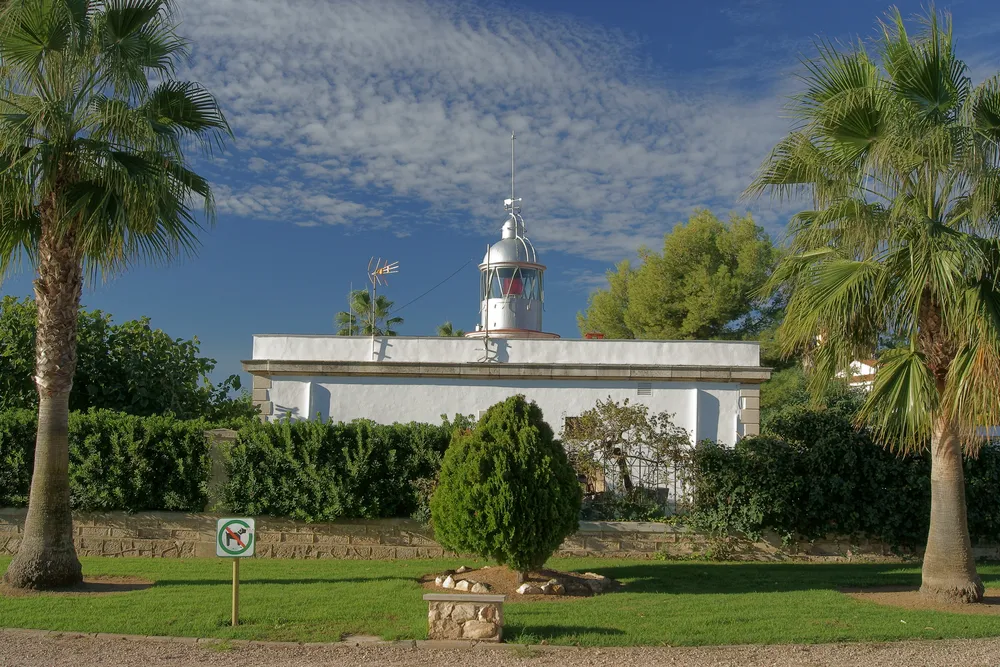
About La Ràpita
La Ràpita is a town of 15,000 people (2018) in Tarragona (province). It is known for the production of rice and salt, and is also an important fishing port, particularly for shellfish and prawns, and a tourist centre. The town hosts two large marinas, a beach, a market and many shops and restaurants. It is attractive and draws an increasing number of tourists each summer, and is a stage on the Ebro Way of St. James.
La Ràpita travel guide
Understand
The town covers a portion of the south-west of the Ebro Delta, including el Trabucador isthmus and la Banya peninsula, which close off a salt water lagoon known as the Port dels Alfacs. The town is on the coast near the mouth of the lagoon. It was founded by Charles III of Spain as a port to serve trade with the Spanish colonies, and constructed in the neoclassical style of the period. However, much of the town remained uncompleted after Charles' death. Sant Carles is part of the Taula del Sénia free association of municipalities. In the early years of the 21st century, the town experienced a huge urban development due to the construction of many apartments and residential buildings.
Tourism information
Climate In the Ebro Delta the climate is typical of the Mediterranean, with moderate temperatures (average temperature of 17 °C) and high humidity, with low rainfall and a stormy regime. The summer is dry, while spring and autumn are the seasons in which there is increased precipitation. The most characteristic phenomenon of this territory is the wind, which is usually persistent and often intense. The most frequent is from the north and northwest, the latter with a low moisture content. The winds from the east and northeast are the so-called "levante" and are responsible for the rains and the entry of seawater into the coastal lagoons.
Getting there
By plane Reus Airport REU IATA: Located approximately 100 km from the city, it offers a convenient option for travelers with limited international flights. Barcelona El Prat Airport BCN IATA: While further at about 200 km, it offers extensive international connections and better public transport
By train 1 Estacio L'Aldea-Amposta, Arrabal de San Ramón, S/N, 43896 L’Aldea, ☏ +34 912 320 320. For high-speed trains to Barcelona and Valencia. (updated Mar 2025)
By bus
By car To get to la Ràpita
N-340 Valencia-Barcelona AP-7 Valencia- France C-12 Amposta-Lleida
By boat 2 Club nautic La Rápita, Avinguda dels Alfacs, 2, 43540 La Ràpita, ☏ +34 977 74 11 03. In La Rápita there is a marina for sport and fishing ships (updated Sep 2025)
Getting around
Parking 3 Motorhome parking Área Ràpita (Area Municipal de Autocaravanas Ràpita). free. (updated Sep 2025)
Do
The Delta de l'Ebre Natural Park (in Catalan; the Parc Natural del Delta de l'Ebre) is a protected natural area at the mouth of the Ebro river, between the regions the Bajo Ebro and the Montsiá. It has an area of 7,736 ha. It is part of the Biosphere Reserve of the Lands of the Ebro.
Hiking
Long-range Ebro Way of St. James from Ebro mouth to Zaragoza to Logroño passes the city.
Sleep
1 Hostal Agustí, Carrer del Pilar, 22-24, ☏ +34 977 740427. Check-in: 13:00, check-out: 12:00. 2 Las Carolinas, Carrer Las Carolinas, 15, ☏ +34 634 56 42 07, [email protected]. Las Carolinas is a group of apartments next to the Ebro Delta Natural Park between the sea and the mountains. Specially designed for families and groups of friends, they are equipped with all the facilities to offer a pleasant stay at any time of the year. (updated Jun 2020)
Overview adapted from Wikipedia, travel guide fromWikivoyage (CC BY-SA). Photography via Wikimedia Commons.