
Kimitoön
Finland · Europe
About Kimitoön
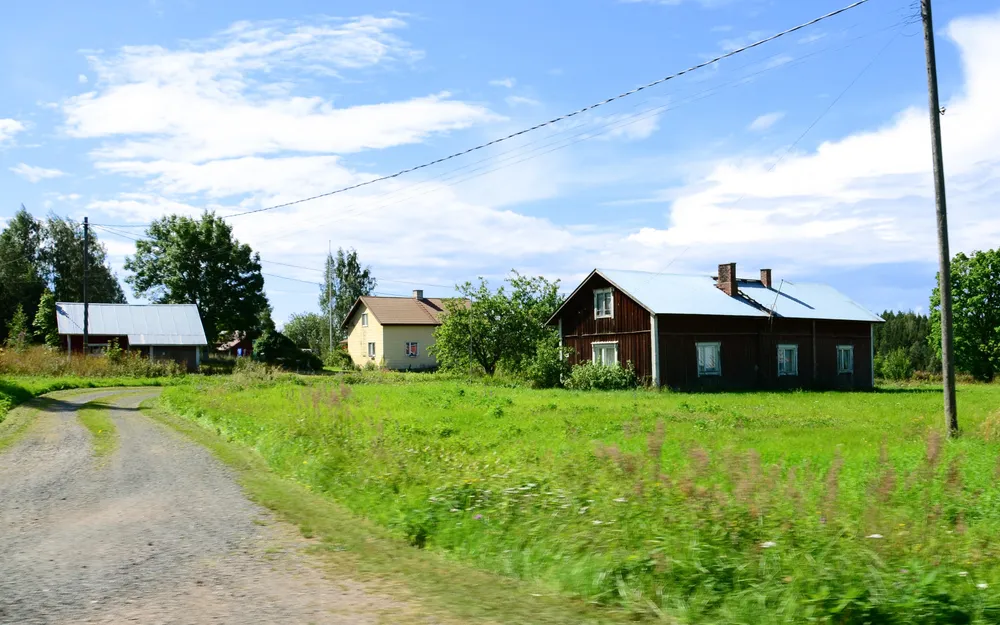
Kimitoön (Finnish: Kemiönsaari), literally Kimito Island, is a municipality in the Archipelago Sea, Finland. The main island (which gives the municipality its name) is a large coastal island with rural landscape typical for southern Finland. It is surrounded by inner archipelago and outer archipelagos of minor islands, similar to that in the rest of the Archipelago Sea.
In the summer 2023 the official tourist information points are at Sagalund's museum in Kimito and DB Marina in Dalsbruk. For detailed info see the official website Visit Kemitoön.
1 Kimito tourist information, Museivägen 7, ☏ +358 2 421-738, [email protected]. Jun–Aug Tu–Su 11:00–17:00, M closed. (updated Jul 2023)
Villa Lande, Engelsbyvägen 8 (Kimito). M–F 12:00–17:00. (updated Feb 2018)
Magasinet, Stallsbacksvägen 6 (Dalsbruk). W–F 10:30–17:30, Sa Su 10:30–16:00. (updated Feb 2018)
2 Dalsbruk harbour office and tourist info, Stallsbacksvägen, ☏ +358 440-221-321, [email protected]. Jun–Aug M–Su 10:00–20:00. (updated Jul 2023)
Kimitoön travel guide
Understand
The island Kimito is the second largest island on Finnish seas after Fasta Åland. The municipality consists of about 3,000 separate islands, of which, in addition to the main island, Hitis, Örö and Bengtskär are especially important for tourism. Kasnäs is an important hub for travelling to the outer archipelago. The area has been permanently inhabited since at least the 12th century, the Hitis islands are probably home to the oldest settlements. A separate Kimito parish was first mentioned in written documents in the 1320s and the marine pilot station of Jungfrusund in 1490. The current Kimito church was completed in 1496. In the village Dahl there was a deep natural harbour and plenty of iron ore, which is why an iron factory was established in the village as early as in 1686. The factory was in continuous operation until 2012. Such 326-years history is rare in the metal industry, even worldwide. This industrial history have significantly affected the appearance of the village, now known as Dalsbruk (Finnish: Taalintehdas), and the building stock in the village is fairly exceptional and worth of seeing. The famous locksmith company Abloy had a lock factory in the village of Björkboda until 2019. Nowadays there is a lock museum in the village. In the Västanfjärd area there were several small limestone quarries and lime kilns since the 1600s until the last one ceased its operations in 1952. Finnish businessman and significant art patron Amos Andersson lived in the Söderlångvik manor 1927—1961. Today, the manor is a museum with a remarkable art collection on display. Kimitoön as a municipality was created in 2009 by joining the small municipalities of Kimito (Finnish: Kemiö), Västanfjärd and Dragsfjärd, all partly on the main island. Earlier many of the island groups and some other villages were independent municipalities. Kimitoön forms the eastern part of the Åboland region. The western part is now the "city" of Pargas (of which only a tiny part is urban). In 2022 t
See
1 Björkboda lock museum (Björkboda låsmuseum), Tullbacksvägen 7 (in Björkboda), ☏ +358 40-721-9535 (mobile), +358 2 466-200 (landline), [email protected]. 27 Jun–5 Aug: W–Su 14:00–18:00 or by request. Björkboda has ironworks traditions since 1732. The museum tells about the local locksmith and lock factory traditions (the Abloy lock factory closed down in 2018). The museum is in a worker house from the 1840s. Signboards probably in Swedish only, ask about guiding in English in advance. The museum is administratively part of the Dalsbruk ironworks museum. €2/1, children under 16 free, guiding included. Churches. The 2 Kimito church is a medieval stone church first documented in 1447 but there are coins from the 14th century found in archaeological excavations. The wooden 3 Hitis church was built in 1686 while 4 Dragsfjärd church and 5 Västanfjärd old church are both wooden cross churches built in 1750-1760. The 6 Dalsbruk church was built 1921–1922 and is a bit off-town. Like some other buildings in Dalsbruk the church is made of slag, a by-product of ferroalloy production. 7 The ironworks museum in Dalsbruk (Dalsbruks bruksmuseum), Tullbacksvägen 7, ☏ +358 40-721-9535, [email protected]. Daily 11:00–18:00 or by request. Dalsbruk has ironworks traditions from 1686. The museum tells about the history of ironworking and worker housing. Signboards probably in Swedish only, ask about guiding in English in advance. €4/2, children under 16 free, guiding included. 8 Coke ovens (Kolugnarna), Malmvägen 2. This group of 11 coke ovens survived until today is completely unique. The ovens were built during 1830's and there were originally 28 of them. The coke ovens were used to burn wood into coke which is necessary to smelt raw iron ore into metallic iron. The ovens are made of slag, which is a by-product of iron production. The same, weird looking material, has also been used in many other buildings in Dalsbruk. free. (updated Jul 2023) 9 The old blast furnace (
Do
Sailing with traditional sailing ship (Eugenia) (from Kasnäs, Dalsbruk or Kalkholmen (Västanfjärd)), ☏ +358 440-427-862, [email protected]. Weekly to Örö, check other routes and dates. Groups of 15–34 can book trips of their own. Start usually 09:00. The original Eugenia, built 1879–1880, was one of the last Finnish ships without engine in 1951. She was a small ship sailing with coastal cargo, e.g. stone for the Bengtskär lighthouse 1905–1906. The replica was built 1997–2000. The ship is maintained by volunteers. Book in advance. Dress warmly. €48/30 for an eight hours trip including lunch (children's fare for 5–14 years old). 1 Bjärkas golf, Västanfjärdsvägen 655 (Nivelax; Västanfjärd), ☏ +358 440-184-653, [email protected]. Demos/courses available. Greenfee 16–18/9 holes/unlimited: M–F €24/16/36 Sa–Su €28/18/36, juniors (<18) -50 %; golf cart €25/round. Go on a sea kayaking tour Aavameri, ☏ +358 50-569-7088, [email protected]. Full service guided trips and supported solo expeditions with transportation from/to Turku. Also help with route planning and maps. Equipped sea kayak €40 first day, €35 consecutive days, delivery or pick up at Kimitoön €40; hiking mattresses and sleeping bags for two, tent and camping stove €56/day/night. Day tour with guide (ca 7 hours; 4–8 persons; lunch included) from Kasnäs or Rosala €95/adult, €50/child. Four days' tour with guide and tent accommodation (own food; 4–8 persons) €440/person, with accommodation indoors €560/person. Sailing: Go on an afternoon trip or charter a yacht and go for a week or two of sailing in the Archipelago Sea. Along the main boating routes you could sail to Kustavi or Uusikaupunki through the inner archipelago and back through the outer, or you could sail to Mariehamn. If you have more than a week, also Hiiumaa in Estonia, the Stockholm archipelago and Gotland may also be good options – although there is indeed enough to explore in the Archipelago Sea alone. Bareboat chartering is the default, and req
Buy
Kimito 1 K-supermarket Kompass, Engelsbyvägen 9. M–Sa 07:00–22:00, Su 09:00–22:00. Large K-group supermarket. (updated Jul 2023) 2 S-Market Kemiö, Engelsbyvägen 15. M–Sa 07:00–22:00, Su 09:00–22:00. Large S-group supermarket. (updated Jul 2023) 3 Alko Kimito, Engelsbyvägen 15. M–F, Sa 09:00–18:00, F 09:00–21:00, Su closed. Alcoholic beverages. (updated Jul 2023)
Dalsbruk 4 K-market Kompis, Hertsbölevägen 1. M–F 07:00–21:00, Sa 9:00–20:00, Su 10:00–18:00. Grocery store. Some local products. (updated Jul 2023) 5 Sale Dalsbruk, Kolabacksvägen 2. M–Sa 07:00–21:00, Su 09:00–21:00. Grocery store. (updated Jul 2023) 6 Alko Dalsbruk, Kolabacksvägen 2 (same entrance with Sale). M–Th 09:00–18:00, F 09:00–21:00, Sa 09:00–18:00, Su closed. Alcoholic beverages. (updated Jul 2023) 7 Varuhuset Wahlsten, Kolabacksvägen 1. M–F 09:00–17:00, Sa 09:00–15:00, Su closed. All kinds of stuff from clothes to toys. Dalsbruk-themed souvenirs. (updated Jul 2023) 8 Glasshyttan. Glassblower J. Hohenthal makes
Overview adapted from Wikipedia, travel guide fromWikivoyage (CC BY-SA). Photography via Wikimedia Commons.