
Kiambu
Kenya · Africa
About Kiambu
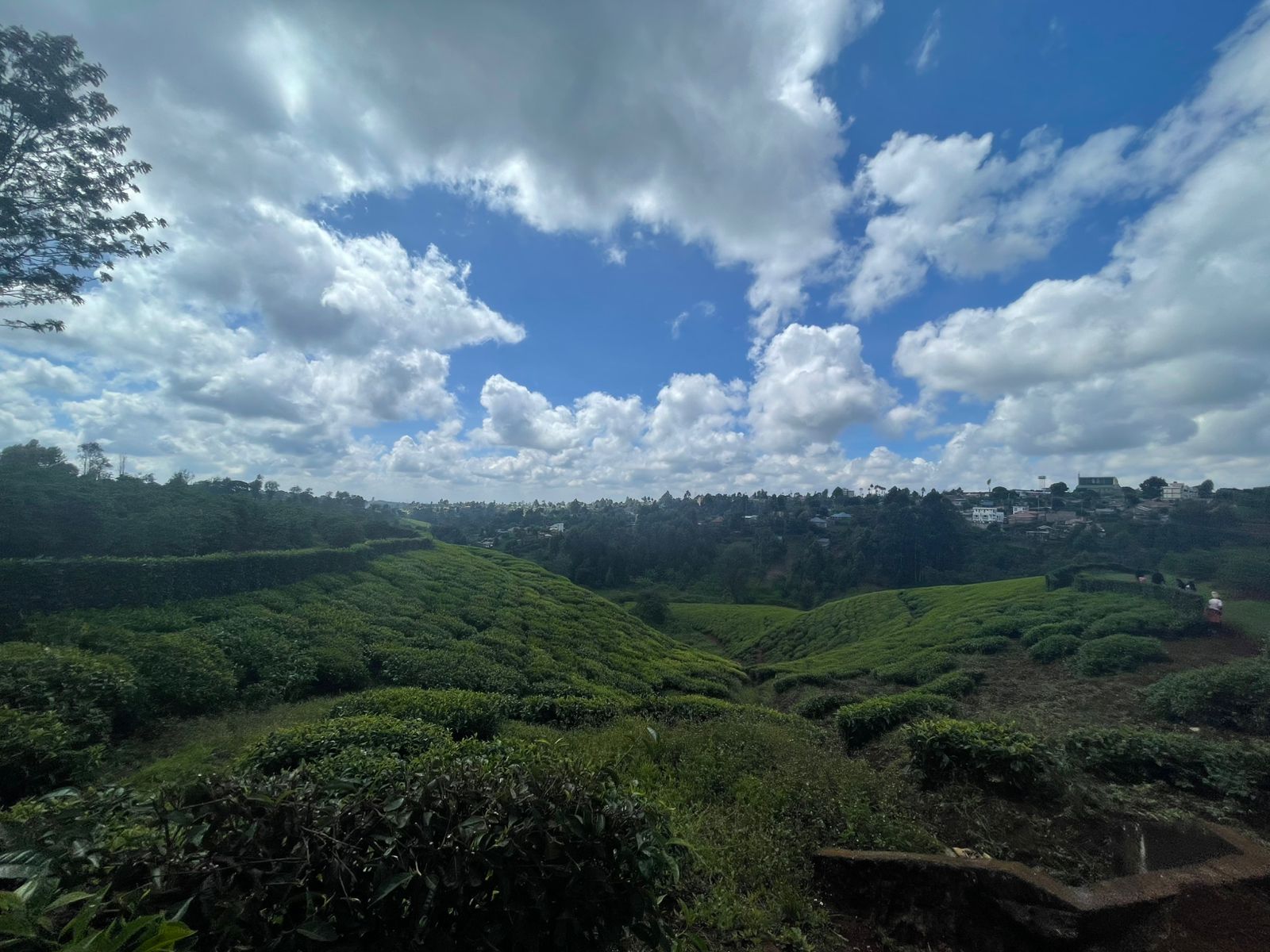
Kiambu is a major town and the capital of Kiambu County, located just north of Nairobi in Kenya. Sitting at a high elevation, it features a cool, lush climate and is deeply characterized by rolling green hills covered in sprawling tea and coffee plantations. While it serves as a rapidly growing commuter hub for the capital, Kiambu County is a destination in its own right, offering nature escapes, waterfalls, deep caves and a glimpse into Kenya's rich agricultural heritage.
Kiambu travel guide
Understand
History Kiambu has historically been a stronghold of the Kikuyu people. During the colonial era, its fertile soils and cool climate made it a prime location for British settlers, who established massive coffee and tea estates that still dominate the landscape today. Many of the surrounding towns, such as Limuru and Thika, were built around these agricultural industries. Today, Kiambu merges its rural, agricultural roots with rapid urban development expanding outward from Nairobi.
Climate Because of its elevation (often exceeding 1; 700 meters above sea level), Kiambu enjoys a subtropical highland climate that is generally cooler than Nairobi. The months of June and July can be notably chilly, especially in the mornings and evenings, with temperatures dropping below 10 °C. The warmest months are December through March. You will see plenty of rain during the "long rains" (March to May) and "short rains" (October to December), which keeps the region's famous tea and coffee estates so green.
Tourist information There is no centralized tourist information office in Kiambu town itself, but the Kiambu County Government website occasionally posts cultural and tourism updates. For broader travel information, the Kenyan Tourist Board's website Magical Kenya includes details on the central highlands region.
Getting there
For general information about visas and vaccinations, etc., see the Kenya article.
By plane There is no commercial airport in Kiambu. Visitors fly into Jomo Kenyatta International Airport (JKIA) or Wilson Airport in Nairobi and commute via road to Kiambu.
From JKIA, you can take the Nairobi Expressway to the Westlands exit, and then connect to the Northern Bypass or Limuru Road. The drive takes about 45 minutes to an hour depending on traffic.
By train While there is no major long-distance passenger terminal in Kiambu town, the Kenya Railways commuter train service connects the Nairobi Central Station to several towns within Kiambu County, including Kikuyu, Ruiru, and Kahawa. These commuter trains operate mostly during the morning and evening rush hours, offering a cheap (around Ksh 50-100) way to bypass highway traffic if you are heading to these specific suburban towns.
By bus (matatu) Kiambu is easily accessible from downtown Nairobi via matatu (public minibuses).
From the Nairobi CBD (around Commercial/Koja roundabout), take Route 100 matatus to get to Kiambu Town. The journey takes about 30 to 45 minutes depending on traffic and costs around Ksh 50-100. For towns further into Kiambu County like Limuru (Route 114 or 116) or Thika (Route 237), you can also catch matatus from the CBD. Extreme caution should be exercised with valuables in crowded matatu stages in Nairobi before boarding.
By car Hiring a car or using a ride-hailing app is the most convenient way to reach Kiambu from Nairobi. Kiambu town is located about 14 km from the Nairobi city centre. You can drive via Kiambu Road (which branches off the Thika Superhighway at Muthaiga) or via Limuru Road. Taxis, Uber, and Bolt all operate freely between Nairobi and Kiambu, with a ride from Nairobi CBD to Kiambu town generally costing around Ksh 800 - 1,200 on ride-hailing apps.
Getting around
Traffic is very bad on Kiambu road from Muthaiga, but you should be able to get where you want.
By car
Driving is the best way to explore the deeper rural and agricultural parts of the county (such as the tea farms in Tigoni). The main highways (Kiambu Road; Thika Road; Northern Bypass) are well paved, but smaller access roads to waterfalls and farms may be dirt or gravel. A 4x4 is rarely necessary unless it has been raining heavily.
By taxi and ride-hailing Uber, Bolt, and Little Cab work exceptionally well in the more urbanized parts of Kiambu County (Ruaka; Kiambu Town; Thika). Wait times may be slightly longer than in Nairobi, but it is much safer and more reliable than negotiating with unmetered local taxis. The taxi services Uber, Bolt (formerly Taxify), Little, and MaraMoja
By bus (matatu) Local matatus (public minibuses/commuter buses) connect Kiambu town to surrounding villages, estates and attractions (like Ndumberi; Banana; or Ruaka). They are very cheap (Ksh 30-50 for short hops) but can be crowded and erratic.
By boda-boda
Motorcycle taxis (boda-bodas) are the most common and convenient way to navigate the smaller, unpaved roads leading into the coffee and tea estates or specific natural attractions where cars might struggle. You will find them clustered at almost every major junction. Always agree on the fare beforehand and ensure the driver provides you with a helmet.
By foot Walking around Kiambu town center during the day is perfectly safe and easy. However, walking along the major highways connecting the towns is not recommended due to high-speed traffic and a lack of pedestrian sidewalks. For leisure walking, head to the forests and estates listed in the "See" and "Do" sections.
By cycle Cycling is quite uncommon and most roads are not at all suited for safe cycling.
See
Kiambu is an ecotourism haven, known for its forests, caves, cascading waterfalls, and sprawling colonial-era estates.
Nature and outdoors
1 Paradise Lost, Kiambu Road (Turn left at the Paradise Lost signpost along Kiambu Road), ☏ +254 110022222, [email protected]. 24 hours. A resort and park set around a 54-acre coffee estate. It is most famous for its labyrinth of Stone Age caves hidden behind a stunning waterfall. You can explore the caves (which were used as a hideout by Mau Mau freedom fighters), take a boat ride on the small lake, ride horses, or walk through the coffee farms. Ksh 400 for adults. (updated Apr 2026) 2 Kawaida Waterfall and Caves, Cianda (in the Cianda area of Kiambu). 24 hours. A notable, lesser-known natural gem hidden within rolling tea and coffee plantations. The site features a rushing waterfall cascading over a rocky ledge into a plunge pool. You can walk into the natural rock caves directly behind the waterfall and look out through a dramatic curtain of hanging tree roots and vines. (updated Apr 2026) 3 Fourteen Falls, Thika (off the Thika-Garissa Road). Located near the border of Kiambu and Machakos counties, this impressive 27-m-deep waterfall is formed by 14 distinct streams of the Athi River merging together. It is a scenic spot, though it is sometimes impacted by upstream pollution. US$15 per person for non-residents. (updated Apr 2026) 4 Chania and Thika Falls, Thika (viewable from the Blue Post Hotel). Two waterfalls just off the Thika Superhighway. The best viewing point is from the grounds of the historic Blue Post Hotel, where you can enjoy a drink or a meal while overlooking the falls. (updated Apr 2026)
Agri-tourism
5 Kiambethu Tea Farm, Limuru, ☏ +254 729 290894. 11:00-14:30. Dating back to 1910, this was one of the first farms to grow tea commercially in Kenya. A visit includes a lecture on the history of the farm and the tea-making process, a walk through the indigenous f
Overview adapted from Wikipedia, travel guide fromWikivoyage (CC BY-SA). Photography via Wikimedia Commons.