
Java
Indonesia · Asia
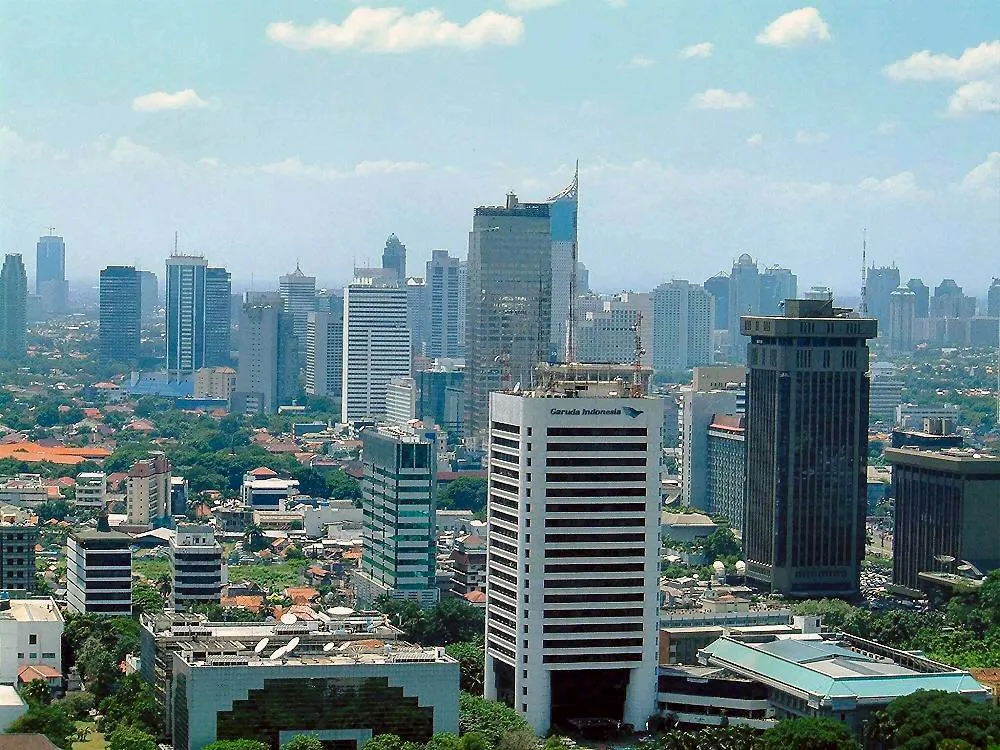
About Java
Java (Indonesian: Jawa) is an island in Indonesia. The much smaller but still sizable island of Madura, off the coast of and covered as part of the region of East Java, is also included in this article.
Java travel guide
Understand
Java is Indonesia's fifth-largest island, comprising only 7% of Indonesia's territory (127,569 km2 (49,255 sq mi)), but 65% of Indonesia's entire population (145 million people) fills the island. It is the world's most populous island, with a density of 940 people per km²! Java has a population larger than Russia's despite being over 130 times smaller than Russia in land area. Indonesia's most important cities are on this island. Jakarta, the capital of Indonesia, is located on Java's northwest coast. Surabaya (the second largest city in Indonesia), is located in East Java. Bandung (the third most populous city in Indonesia), is the capital city of West Java province. Yogyakarta and Surakarta (Solo), although not large in population are very significant centres of culture, in southern central Java. The island of Java has distinct cultural zones. In the west Sundanese, Betawi in Jakarta. Javanese, for most of Central and Eastern Java provinces with the Madurese at Madura Island. Smaller indigenous tribes include the Badui of the west and Tengger from the east. This is a quite remarkable island with no less than 30 active volcanoes. Add to that a host of major national parks with lots to offer the visitor who appreciates outdoor attractions.
Getting there
By plane The largest airport of Java (and the entire country) by far is Soekarno-Hatta International Airport (CGK IATA), serving the Greater Jakarta area. Most international airlines fly to this airport. An increasing number of international carriers also fly to Surabaya in East Java, and to a lesser extent to Bandung, Semarang, Solo, and Yogyakarta. Flying to these secondary airports can be dramatically cheaper than connecting from Jakarta thanks to the role of low cost carriers from Malaysia and Singapore, so you might want to transit at one of these two countries before heading to Java. All of the mentioned airports are well-connected by domestic flights. Jakarta's secondary Halim Airport (HLP IATA), in East Jakarta, also has frequent flights from all major Indonesian cities.
By ferry
There are two high-frequency ferry routes to Java, operated by ASDP. From the island of Sumatra in the west, ferries operate from Bakauheni in Lampung province to the port of Merak on Java (24 hours per day, multiple departures per hour). From the island of Bali in the east, ferries operate from Gilimanuk to the port of Ketapang in East Java (24 hours per day, two departures per hour). Java is also part of the national PELNI passenger ferry network, with routes to and from all major Indonesian islands. PELNI ships call at the ports of Surabaya, Semarang, and Tanjung Priok port in North Jakarta.
Getting around
Java's infrastructure is comprehensive in - it is possible (but not advisable to try) to cross the entire island by land in a single (long) day. However, the sheer density of population means that roads, buses and trains can get overcrowded if you're moving at the same time as everyone else.
By bus The main form of long-distance transport, vast armadas of buses cross the island and connect every city and mountain hamlet. Using a bus is a good option since most cities in Java are connected to a toll road. The buses mostly run in the afternoon and/or night, can stop along the route and are generally cheaper than most low-cost air carriers. There are two types of buses, with aircon and without aircon; the fare of non-aircon is only about a third of using aircon. If you do take a bus, take one with aircon because drivers of such buses are known to be safer, as a general rule. For long trips, people tend to use a low-cost carrier, because it's much faster. There are also luxury double-decker bus services from Jakarta to several cities in Central Java. The lower deck is occupied with sleepers (bed seats) and the upper deck with reclining seats. Shoes must be taken off when using sleepers. Due to limited seats and high demand for a sleeper seat, booking in advance is needed.
By train Java has the most comprehensive railway network in Indonesia, with trains connecting the capital city of Jakarta with most other cities and towns on the island. The executive class is available between capital cities of the province. Some routes also have priority class carriages for 28 passengers. Jakarta-Surabaya has a luxury class carriage with 18 reclining sleepers. Jakarta-Solo, Jakarta-Yogya, and Jakarta-Malang train route have a luxury class carriage with 26 sleepers seats. The exclusive carriage (kereta wisata, literally, "tourist carriage") is a luxury passenger carriage that can be rented and attached to a regular train for a specific journey. Ticket reservations can be made 9
See
Java offers everything a somewhat adventurous traveler is looking for: two of the world's great ancient monuments, volcanoes (all 121 of them), major national parks, rainforests, tea and rice plantations, large cities, big waves and even savanna. The scenery in most parts of Java is spectacular and, while the island is overpopulated, there are still plenty of unspoiled places. Even though the beaches are not very appealing in Java and tides can be fatal especially in the south of Java, except for surfing in Banyuwangi, East Java. In nearby archipelagos like Pulau Seribu or Karimunjawa the traveler can find white sand beaches and coral islands.
Itineraries Great Post Road — one of the main roads of Java Island, that spans from its west coast at Anyer, to Panarukan at the east Gunung Semeru — a demanding trek up an active volcano
Do
Trek in Ujung Kulon National Park and Mount Halimun Salak National Park, see good examples of rainforest and wild animal habitats. Dive in the pristine waters of the Karimunjawa islands. Rent a fisherman's boat and sail around the Kepulauan Seribu National Park archipelago. See the crater of a volcano real close at Tangkuban Perahu (in Lembang). Watch the sunrise at the breathtaking Bromo-Tengger-Semeru National Park. Surf one of the world's great waves at G-Land near Banyuwangi. Travel from Jakarta to Yogyakarta by day train. Beautiful landscapes and a cheap and more relaxing way to travel around Java. Visit the Dutch war cemeteries Menteng Pulo (central Jakarta) or Ancol (in the north of Jakarta by the sea). They are haunting and quiet getaways from the bustling city. To visit Ancol, take a taxi and ask for "makam kehormatan Ancol". Visit Kebun Raya (botanical gardens) in Bogor.
Wake up early to see the sunrise at the Borobudur temple near Yogyakarta. Watch a spell-binding evening performance of The Ramayana against the lit backdrop of magnificent Prambanan. Climb the Gunung Gede volcano. Play golf at the Merapi Golf Course in Yogyakarta. The active volcano Mount Merapi looms over the course just a few miles away. Eat mie goreng from a street vendor ("kaki lima"). Try martabak. Eat ice-cream at Toko Oen in Malang. Visit the huge shopping malls at Jakarta. Enjoy a fine Sunday brunch in any Jakarta international hotel at an amazing value.
Drink & nightlife
Boiled water or drink water fr
Overview adapted from Wikipedia, travel guide fromWikivoyage (CC BY-SA)。Photography via Wikimedia Commons.