
Jõhvi
Estonia · Europe
About Jõhvi
Jõhvi is a town of 10,000 people (2021) in East Estonia. It is the most important transport hub of the north-eastern-most county in Estonia, Ida-Virumaa.
Jõhvi travel guide
Understand
Due to its location at the border of the country, Ida-Virumaa, or Alutaguse, has been the site of many wars. The most important architectural monument in Jõhvi is a mighty Gothic fortress built in the 13th century. In the Middle Ages, it was surrounded by a rampart and a ditch. Now, a museum for Jõhvi's fortress church is located in the vaulted cellars. As a typical merchant center, Jõhvi town grew around a market place, which was surrounded by a tavern, post office, shops, an inn, banks and, since 1895, a Russian Orthodox church. All the roads leading to the town met at the market place, right in front of the post office. Today, a symbolic direction sign which shows distances to places from Rome to Moscow, and to all of Jõhvi's friendship towns, marks this place. In 1917, in the midst of a revolutionary period, Jõhvi was recognised as a borough, and in 1938 it was recognised as a town. At the same time, with the development of the oil shale industry, the town grew into a metropolitan centre. During World War II, the historic centre of Jõhvi was badly damaged. Due to its convenient location, Jõhvi became the county centre as early as 1949. Now, besides the county government offices, most of the central institutions for the region have moved to the town, and the regional offices of many large companies are also found here. Jõhvi has become the business and financial centre of Ida-Viru county. Rapid development has given the town a youthful lifestyle. The heart of cultural life in today's Jõhvi is the concert hall and culture and hobby centre, which opened in 2005.
1 Tourist Information Centre (Jõhvi turismiinfokeskus), Rakvere 13a, ☏ +372 3370568, fax: +372 3370568, [email protected]. M–F 12–17:00 all year, Sa 10–15:00 in summer.
Getting there
By bus or train A railway and a highway connecting Tallinn to Saint Petersburg pass through the town. It is also part of the Jõhvi-Tartu-Riga highway. In this county, all roads lead to Jõhvi, as this is the only way to cross the county from one side to the other.
1 Railway station, Jaama 21 (300 m west of the city centre). The platform does not have a shed. The post-war buildung is closed and threatened by demolition. Twice a day trains pass through and stop here. From Tallinn 2 hours, from Narva 35 min. 2 Jõhvi Bus Station, Narva mnt. 8. M–F 07:30–20:00, Sa-Su 08–20:00. Buses from Tallinn (2-3 hr) and from Narva (1 hr) stop every half an hour on their way to Narva, Tallinn or Tartu, respectively. The station is also a shopping centre. The roof is simultaneously a canopy over the aprons, which is very uncommon for Estonia. Inside is a tiny hall with cash desks and several shops, like the well-known R-kiosk (M–F 08–20:00; Sa Su 09–17:00). In one of the "legs" of the building, a small café with pies, chebureks, shish kebabs and pizza (M–F 08–19:00; Sa 08–17:00; Su 09–17:00). Bus and train schedules are easily available online – read more under Estonia#Get around.
By car By car along the route #1 from Tallinn (160 km) and Narva (50 km), or from Tartu on the route #3 (130 km).
Getting around
Jõhvi is a small town with a few cumbersome attractions that you might not need to go anywhere to inspect them. Local transport in Jõhvi is shared with its neighbour Kohtla-Järve. Their buses go mostly along Rakvere road, crossing the railway and finishing somewhere on the way towards Tartu.
See
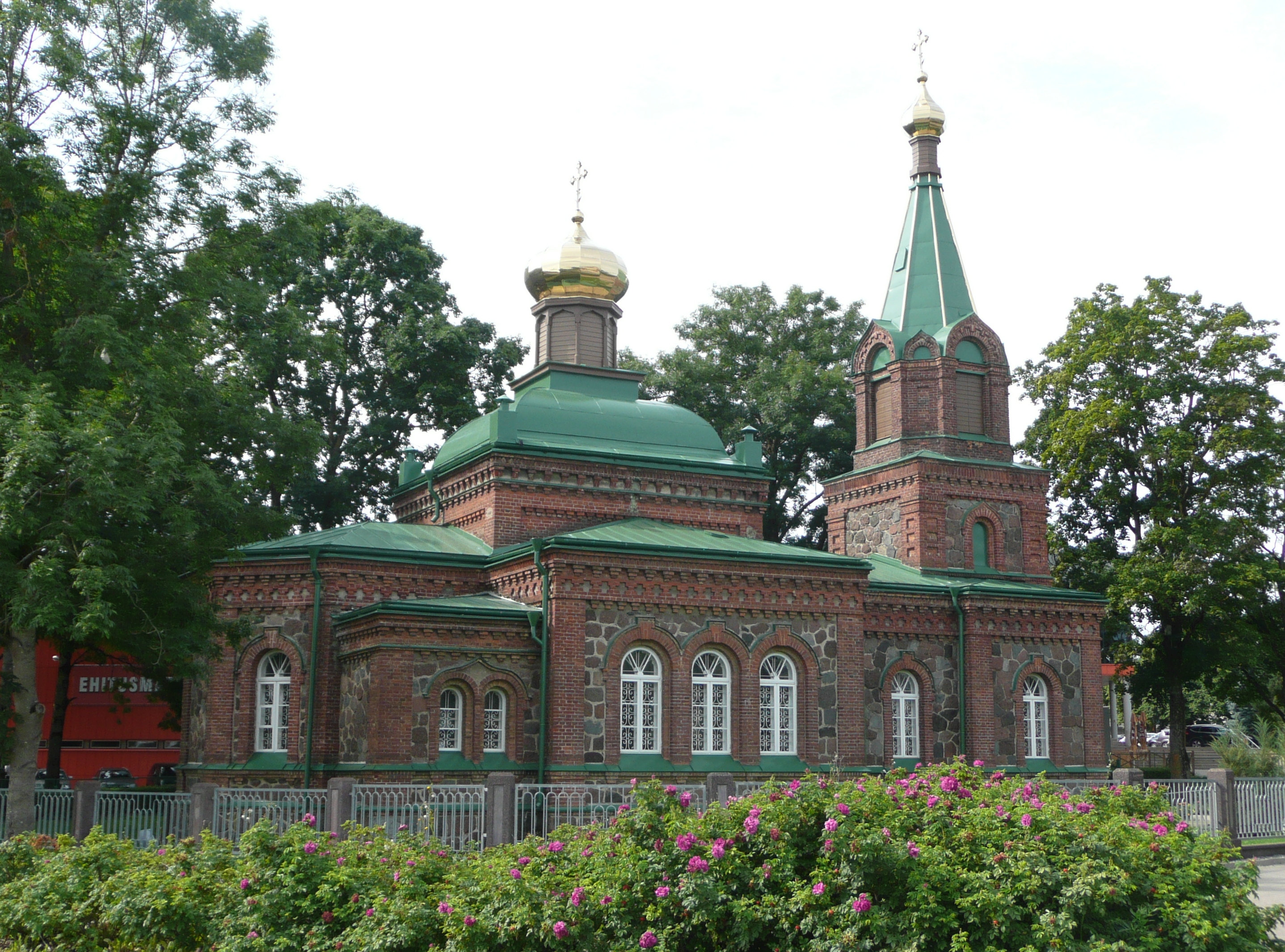
1 St. Michael Church and Stronghold (Jõhvi Mihkli kirik), Rakvere 6, ☏ +372 3370013. Built in 13th century, this Lutheran Gothic Church is the oldest building in Jõhvi and the largest one-vaulted one in Estonia. Like other examples in this region that have turned rural churches into small castles with bastions and towers, also this church was boasted for defensive purpose. Inside it is pretty with lots of carved wooden ornaments and two organs at once, which can be played simultaneously. However, this is seldom and only during special concerts. Furthermore, a museum is opened in cellar of the church. 2 Museum, Rakvere 6, ☏ +372 3370013. Tu–Sa 11:00–16:00. Located right in the basement of St. Michael Church. History and archaeology are presented, basically on the church itself and its defensive function. (updated Oct 2017) 3 Epiphany Church, Narva mnt. 2a. This Orthodox Church was built in 1895 and is of modernist style by the standards of that time – large grey cobbles, fastened with a brick "frame". The local rector of the 1950s was the future patriarch Alexy II. 4 Town Hall, Narva mnt. 2a. The Town Hall of Jõhvi is one of the examples of adaptation of Stalinist style into local architecture. A disgustingly dull grey building, crowned with a white turret, clearly borrowed from the Tallinn Town Hall and somehow animating the landscape. 5 Windmill (behind the cemetery and slightly south of the interchange). An authentic windmill in the middle of the area west of Jõhvi. 6 Cemetery, Rakvere tn. Here you can see the chapel of 1798, built in an ascetic style. It looks more like a barn from the outside. At the far end of it, there is the mass grave of Soviet soldiers and accompanying memorial with sickle and hammer. 7 The Iron Hedgehog / Monument to the hedgehog (Raudne Siil), Rakvere tn 13a (next to the Tourist Information Centre). A hedgehog made of scrap metal. It either symbolizes the purity of the city (according to the official version), or perpetuates a fragme
Do
Walk around and try to imagine the described importance of this town in the past. 1 Jõhvi Concert Hall (Jõhvi kontserdimaja), Pargi 40 (behind the railway), ☏ +372 3342000, +372 3342001, +372 3342003, [email protected]. Jõhvi is the home of Estonia's newest concert hall, which opened in 2005. It has two concert halls: the Grand Hall seating 836 (can be changed to 926), and the other 170. During the season, from autumn to spring, on average one or two concerts a week take place in the Jõhvi Concert Hall. During the summer season several concerts also take place at other beautiful locations throughout Ida-Viru county. The traditional festival "Music of Seven Towns" takes place in late July, with concerts in the concert hall and all over Ida-Viru county. 2 City Stadium, Pargi 1 (near the Concert Hall). The stadium is the home of the Lokomotiv football club, which plays in the Estonian Premier League. 3 Mäetaguse von Rosen Manor Spa, Pargi 1, Mäetaguse (19 km south of Jõhvi). Massages and body treatments can be booked in advance at the adult ward. The spa area, open to all, features traditional steam and infrared saunas, as well as massage and jacuzzis. The back room features a hot tub and a steam room with salt, aroma and tropical rain effects. You can play disc golf, kick bikes and climb the children’s adventure track on the manor’s grounds.
Buy
1 The market (Turg), Narva mnt. 14. Tu–Su 08:00–18:00. Street and flea market of local residents. Vegetables, berries and more. 2 Tsentraal, Keskväljaku 4. The shopping-business centre Tsentraal is a 3-floor building on Central square. There are shops with food (Rimi), electronic
Overview adapted from Wikipedia, travel guide fromWikivoyage (CC BY-SA). Photography via Wikimedia Commons.