
Hedmark
Norway · Europe
About Hedmark
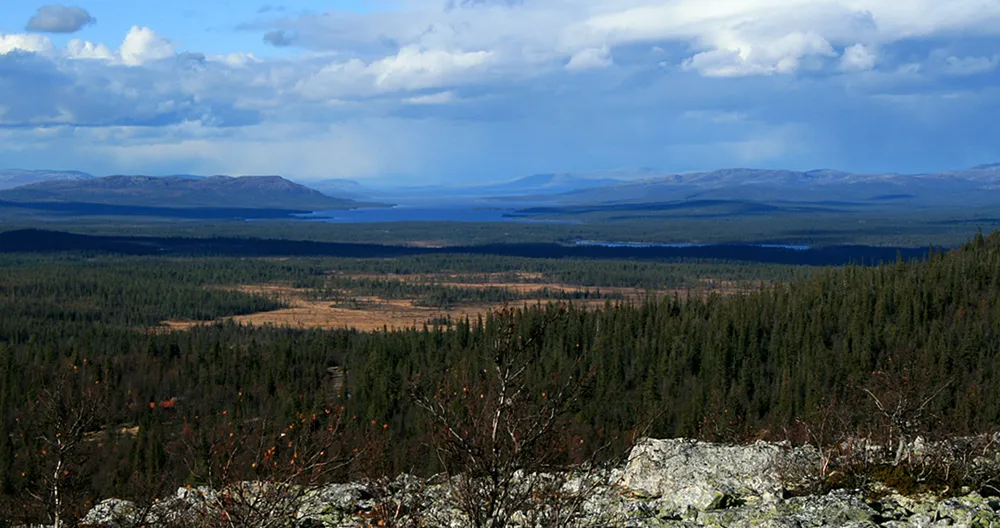
Hedmark is a landlocked inland traditional county in East Norway It merged with Oppland in 2020 to form the new county of Innlandet. The area has big rivers, long valleys, wide lakes, fertile flatlands and deep forests. The landscape is generally mellow and unlike Norway's the wild western edge. There big mountains and high plateaus in the north. Hedmark is Norway's most important agricultural and forestry district.
Hedmark travel guide
Understand
Hedmark together with Oppland are landlocked counties and makes up the great interior between Oslo and Trondheim. As of 2020 Oppland and Hedmark are governed as one entity called Innlandet (literally "the Interior"). Hedmark stretches some 400 km south to north. High mountains and plateaus separate Hedmark and Oppland from Trøndelag and Western Norway, the border with Sweden is less distinct as it mostly runs through forest and mellow landscape. Østerdalen, the main north-south valley of Hedmark, is separated from Oppland and Gudbrandsdalen by wide forests, bogs, uplands and mountains (including Rondane) with only a few roads connecting main valleys east-west. On the lowlands south of Hamar there are fewer natural transport obstacles. There are no big cities, only the smallish regional capital of Hamar. The area is relatively sparsely populated, population density in Germany or the Netherlands is 50 or 100 times higher. Half of Hedmark is covered by forest, and one third is barren upland/mountains. Several notable lakes and rivers cover some 5% of the area. Hedmark is dominated by the river Glomma and its valley Østerdalen. Østerdalen simply means "eastern valley(s)" and includes the main valley of Glomma as well as adjacent valleys with tributary rivers. The middle part of the valley is called Stor-Elvdal which simply means Big Rivervalley, whereas the upper area around Alvdal used to be called Small Rivervalley. Glomma is Norway's largest river and unlike many other rivers in Norway flows slowly down the big valley partly creating wide meanders. In the west lake Mjøsa is shared with Oppland county and the outflow of Mjøsa joins Glomma on the flatlands North-East of Oslo. Mjøsa is Norway's widest lake and at 450 m also one of the deepest in Europe. Mjøsa stretches like a fjord for 120 km between Lillehammer and Eidsvoll. Most of the water in the lake is below sea level. Despite the great inflow of water, Mjøsa's great volume means that the water needs 5 years to fl
Getting there
The south-west corner of Hedmark, along Mjøsa lake, is well connected to all main transport options. Hamar sits on Norway's main transport corridor south-north. The E6, Norway's main road, is a motorway between Hamar, Oslo airport, central Oslo and Sweden (Gothenburg). The main railway line from Oslo at Hamar connects to Dovrebanen (Dovre line; the main line north) and to Rørosbanen (Røros line).
By plane There is no airport with scheduled flights in Hedmark.
The closest for most of the county is Oslo Airport, Gardermoen, a major international airport with flights from the USA, Asia and major European cities. The airport sits just south of county line on the main road (E6) and main railway line north-south, road E16 towards Kongsvinger also pass through the airport. Direct trains to Hamar, and with a change to Kongsvinger. Røros just north of the county line has a small airport operated by Widerøe. Trondheim airport is the closest international airport for the northern part of the county.
By rail
NSB's regional trains run 1-2 times per hour between Oslo and Lillehammer. They stop at the Oslo airport and in Hedmark they stop at Tangen, Stange, Hamar and Brumunddal. NSB intercity trains go between Oslo and Trondheim, 3-4 times per day. They stop in Hamar. NSB regional trains go between Hamar and Røros, 3-4 times per day. They stop at several places, like Elverum and Tynset. NSB regional trains go between Oslo and Kongsvinger, stopping at several places. SJ intercity trains go Oslo-Stockholm, stopping in Kongsvinger.
By bus The long-distance coach operator Nor-Way Bussekspress operates extensively throughout the county, serving Østerdalen valley, Trysil and other destinations. From Oslo, Timeekspressen operates to Elverum.
By car
Road 3 (Østerdalen road) runs through all of Hedmark north-south and connects to E6 south of Trondheim. This is the main alternative to E6 between Oslo and Trondheim. Road 25 connects to road 66 from Västerås in Sweden, border c
Getting around
Innlandstrafikk is the local bus operator (website in Norwegian only). Route info also on en-tur.no (available in English). In summer (23 Jun–17 Aug in 2025), they often have specials allowing you to travel for 10 kr per ride on regional buses, e.g. a tour from the far northwestern Dombås to the far southeastern Kongsvinger (330 km) will cost you just 50 kr then. Røros railway line: NSB trains Hamar-Røros with stops in Elverum, Tynset and over a dozen more places inside Hedmark.
See
Norsk skogbruksmuseum in Elverum is a national museum for forests and wilderness in Norway. Vang kirke i Ridabu, Hamar, is a monumental church nicknamed "Hedmark cathedral". With some 1000 seats it is one of the largest churches built in the countryside (now within the town of Hamar) and still one of the biggest in Norway. Because of the octagonal style and wide span without supporting columns the church has a great volume inside. Sollia kirke is a small log-built church in baroque style (1738) at isolated Sollia village south of Tynset. Decorated interior. Stor-Elvdal kirke, north of Elverum, is a wooden church in neoclassical style (1821) in Stor-Elvdal district. Known as Østerdal Cathedral because of its size and monumental style. Vikingskipet, the Hamar Olympic speed skating rink, looks like an upside down viking ship, hence the name. It is an indoor multi-use sport and event venue in Hamar, Norway. It was built as the speed skating rink for the 1994 Winter Olympics. Spark, in Tynset, is the world's largest kicksled. A kicksled is used to get around during the winter in Norway. It's like a sledge that you push around on the snow.
Do
Trysil, near the border, has one of the largest alpine skiing resorts in Norway. Most of the visitors there are from Sweden and Denmark. Femundsmarka national park and surroundings is a gently rolling partly forested landscape. The wide Femunden lake, several other lakes and gentle rivers make this area popular for canoe paddling. The national park itself is only available hiking. There are handful of lodges within the area. Hiking into Sweden also possible. Sail on Skibladner, the world's oldest paddle steamer on the Mjøsa lake just south of Lillehammer. Sail between Lillehammer, Moelv, Gjøvik, Hamar and Eidsvoll. Drive Road 27 from Ringebu to Folldal through Rondane National Park. Tron summit is a prominent summit in Alvdal/Tynset area. This is Norway's second highest road. There is a fine panorama from the summit.
Go next
Sweden (Kongsvinger is one of the natural crossing points): Dalarna with Sälen ski resort and Falun. Trøndelag: Røros, Oppdal and Trondheim Oppland: Gudbrandsdalen and Lillehammer Oslo region: The city of Oslo and surroundings
Overview adapted from Wikipedia, travel guide fromWikivoyage (CC BY-SA). Photography via Wikimedia Commons.