
Guiguinto
Philippines · Asia
About Guiguinto
Bulacan is a province in the Philippines. It is located just north of Metro Manila and shares boundaries with Pampanga and Nueva Ecija in the north, and Manila Bay on the south west.
Guiguinto travel guide
Understand
Bulacan has contributed greatly to Philippine history, from being one of the battlefields of the Philippine Revolution, the Philippine-American War and its capital Malolos also becoming the first national capital of the Philippine Republic for a few months in 1899. Bulacan, while still agricultural in background, has become part of Manila's ever-expanding sprawl that has converted most farmland and paddies into subdivision, malls, and industrial parks. It is home to about 3.9 million people (census; 1 July 2024), and is one of the most densely populated provinces in the Philippines. Residents of the province call themselves Bulakenyo (derived and sometimes spelled as Spanish Bulaqueño). Most of the locals are culturally and linguistically Tagalog, but towns at the boundary with Pampanga also have significant numbers of Kapampangan speakers, and the sparsely populated areas of the province are the traditional land of the Dumagat, a Negrito tribe inhabiting the foothills of the Sierra Madre.
Getting there
By car The North Luzon Expressway (NLEX) is a major motorway that can get you into Bulacan from Metro Manila (particularly Quezon City and Valenzuela) and the neighbouring province of Pampanga. Exits in Bulacan include Meycauayan, Marilao, Bocaue, Balagtas, Tabang and Santa Rita (both part of Guiguinto) and Pulilan. Comparatively and almost parallel to the NLEX, travellers can take the at-grade McArthur Highway, stretching from the Bonifacio Monument in Caloocan up to Pangasinan. Asian Highway 26 enters Bulacan from Nueva Ecija, running south towards Manila. It follows NLEX near Malolos.
By bus There are provincial buses to and from Manila to most key cities and towns in the province. Some operators are:
Baliwag Transit. Serves Hagonoy, Paombong, Malolos, and the municipalities along the Cagayan Valley Road, especially Baliwag, the bus company's namesake and headquarters. (updated Jul 2026) San Jose del Monte is served by city buses from Metro Manila, mostly via Fairview in Quezon City. Point-to-Point (P2P) buses heading to Bulacan have terminals in SM North EDSA and Trinoma in Quezon City. These mostly cater to Metro Manila workers commuting to and from Bulacan, particularly the coastal regions. The main destinations for these buses are Bocaue, Sta. Maria, Balagtas, Plaridel, Pulilan, Baliwag and Malolos.
By jeep From Metro Manila, jeepneys serving the coastal towns of Bulacan have their terminals at Valenzuela Monumento Circle in Caloocan. There are also passenger vans and minibuses serving the coastal regions from Trinoma and SM North EDSA in Quezon City. Be prepared to wait for an hour or more for the vehicle to fill up before departure. There are also jeeps heading from SM Fairview and Novaliches in Quezon City heading to San Jose del Monte and Norzagaray.
By plane Bulacan is halfway between Ninoy Aquino International Airport (MNL IATA) and Clark International Airport (CRK IATA), both served by international and domestic flights, but transportation
Getting around
In the major highways, the main mode of transportation is by bus or jeepney. The major jeepney hubs of Bulacan are Meycauayan, Baliwag, Santa Maria and Malolos. There are also van shuttles (UV Express) that service longer routes within the province (for example; from Meycauayan to Malolos via NLEX). Within most cities and towns, you can get by tricycles. Main highways include the tolled NLEX, the MacArthur Highway (Rte 1 and 2) and Cagayan Valley Road (Rte 1; also Maharlika Highway). All roads are of decent quality, but with the exception of NLEX, traffic speeds are quite slow and there is constant road construction. Most highways also serve as main streets of the cities and towns they serve. It is necessary to bring a private vehicle when heading to Dona Remedios Trinidad due to its isolated location and lack of public transportation.
See
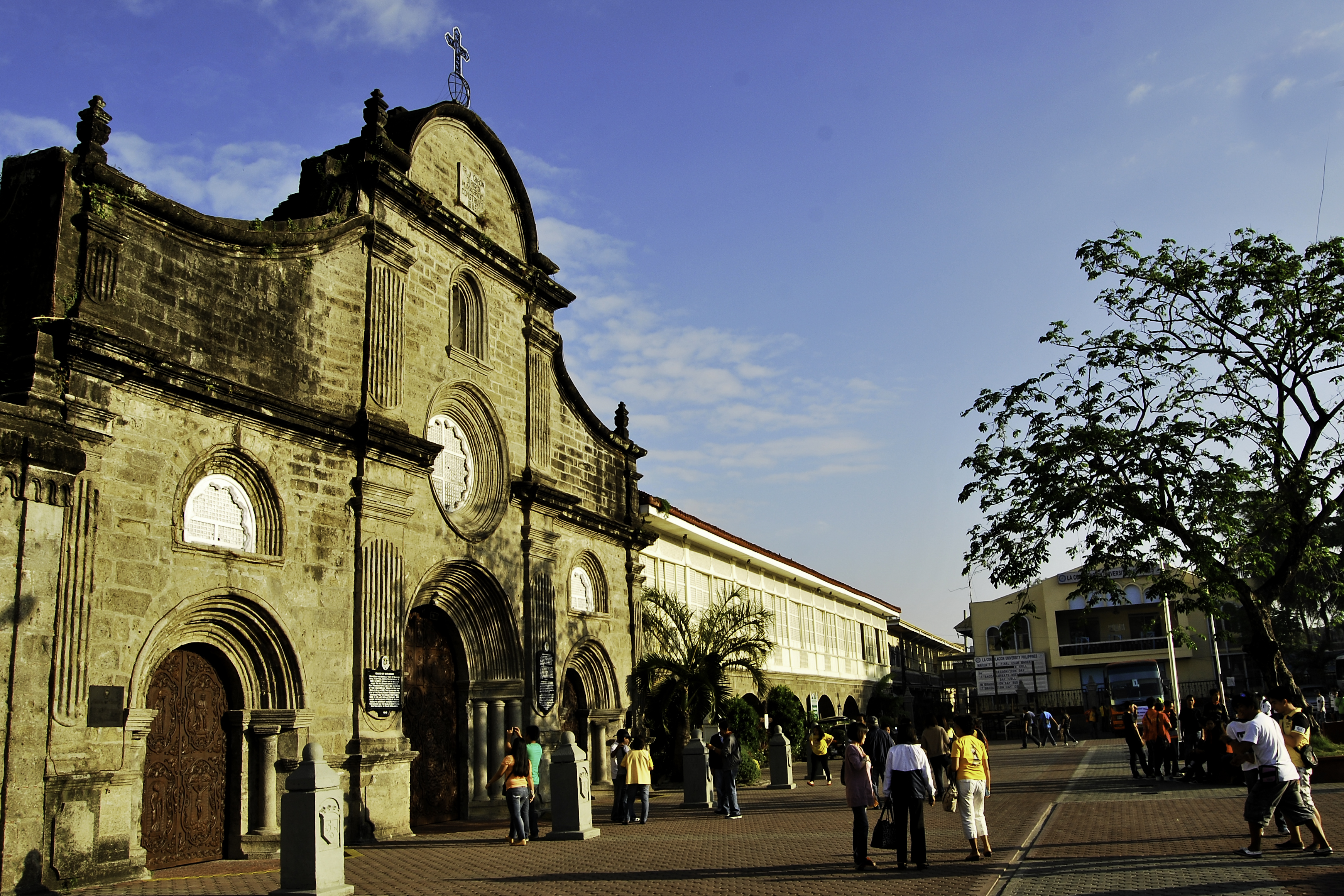
Bulacan has a diverse array of attractions ranging from the natural to the historical and architectural. Nearly every town has a Spanish era church, the most famous of which is Barasoain in Malolos, where the Congress of the short-lived First Philippine Republic convened. Contrary to perceptions of Bulacan as a flat province due to its location in the Central Luzon plains, the province actually has lots of hiking sports due to its position along the slopes of the Sierra Madre. The most famous of these attractions is Biaknabato National Park in San Miguel, a sprawling region of forests, caves, mountains and springs that hosted the headquarters of the Biaknabato Republic, a proto-state that was the precursor of subsequent independent Philippine governments. Bulacan also pioneered the concept of massive swimming resort complexes complete with wave pools in the Philippines, which attracts hordes of tourists from Metro Manila unable to build their own swimming pools. Many of these resorts are concentrated in San Rafael, Pandi and Calumpit.
Do
Every town in Bulacan has a unique festival of their own, usually revolving around religious themes or celebrating products they are famous for. As a sign of the urban spillover from Metro Manila, Bulacan has become the site for the Philippine Arena, a massive edifice in Bocaue way bigger than any event venue in the capital, and which hosts international concerts and sports events.
Eat
Native delicacies Ensaymada Inipit Pastillas, a favorite and popular "pasalubong" (or take home treat) in Bulacan. Traditionally, it is made of the best carabao's milk, but in commercial quantites, believed to be made out of locally produced and commercially available milk in supermarkets. Patiently simmerred in very low heat and painstakingly stirred into a soft and sticky batter that melts in your mouth, pastillas is rolled into finger-sized pieces, then rolled onto white sugar. Bulacan's pastillas are individually wrapped in white Japanese paper, as compared to the intricately cut pastillas wrappers as it is made in other parts of Luzon. They are then packed into colorfully patterned boxes, a practical way of handing these sweet delicacies either as gifts, or just as "pasalubong". Beware not to limit yourself to only a couple of boxes of these milky treats, as one may later on lament that he should have taken a half-dozen or a dozen even, boxes of the best pastillas of Bulacan. Puto, a rice cake that may be topped off with cheese slices or egg. Some of the most famed puto can be bought in Marilao and Mecauayan Suman Minasa Chicharon Bulacan Longganisa, also known as longganisang bawang. Known for garlic flavor. Bulacan longganisa also have Hamonado, as sweet cured pork sausage. In 2021 department of tourism accredited Bulacan’s Prime -Home of Bulacan’s Garlic Longaniza as a tourist shop where travelers can buy authentic Bulacan Longganisa, located at San Rafael and Baliwag.
Overview adapted from Wikipedia, travel guide fromWikivoyage (CC BY-SA). Photography via Wikimedia Commons.