
Great Basin National Park
United States · Americas
About Great Basin National Park
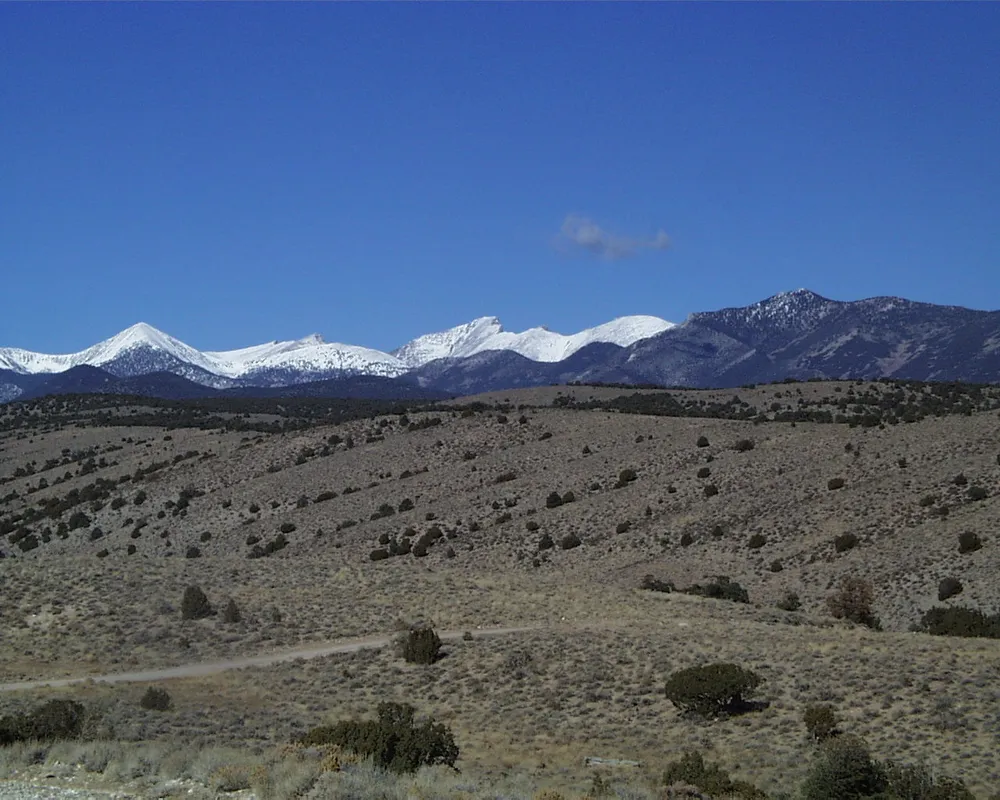
Great Basin National Park is a national park established in 1986, in east-central Nevada near its border with Utah, five miles west of the tiny town of Baker. The park's name is derived from the Great Basin, the dry and mountainous region between the Sierra Nevada and the Rocky Mountains. The park is dominated by one of the many mountain ranges in the Great Basin.
Great Basin National Park travel guide
Understand
The region surrounding the park has a low population, spread out in small communities over a large area. Therefore, unlike other national parks in the West, such as the Grand Canyon, Great Basin is not particularly well-known as a national park. However, if you're willing to make the journey to this park in eastern Nevada, it's an excellent example of Nevada's mountainous scenery.
History Great Basin National Park is at the western end of the area in which the Indian Fremont culture used to dominate.
Landscape Great Basin National Park is, despite the name, a mountainous park region. It is in many ways similar to the Sierra Nevada Range of California, and has high, rocky peaks from which small creeks descend into the valleys below. Approaching the park from Baker, the land is flat until the visitor center is reached; then steep-sided mountains block road travel westward across the mountains at this point within the range. The scenic drive to Wheeler Peak follows the mountain slopes until the mountain range becomes too steep to climb by road.
Flora and fauna
At lower elevations, sagebrush dominates. Higher elevations include many juniper trees, and these collect in woodlands in some places. The highest elevations have very little vegetation.
Climate
There is almost an 8,000 ft (2; 400 m) difference in elevation between Wheeler Peak and the valley floor. Weather conditions in the park vary with elevation. In late spring and early summer, days in the valley may be hot, yet the snowpack may not have melted at high elevations. The Great Basin is a high-elevation desert, with low relative humidity and sharp drops in temperature at night. In the summer, fierce afternoon thunderstorms are common. Weather conditions are highly variable, so come prepared for all types of weather. It can snow any time of the year at high elevations. Due to the elevation, temperatures can get cold at night but quickly get warm when the sun rises, as sunlight does not have to pass t
Getting there
By plane The nearest airport is in Cedar City, Utah, 142 mi (229 km) away. Major airports are found in Salt Lake City, Utah, 234 mi (377 km) away, and Las Vegas, Nevada, 286 mi (460 km) away.
By car From the east or west, from U.S. Highway 6 and 50, turn south on Nevada State Highway 487 and travel 5 mi (8.0 km) to Baker, Nevada. In Baker turn west on Highway 488 and travel 5 mi (8.0 km) to the park. From the south (Utah), travel north on Utah State Highway 21 through Milford and Garrison, Utah, which will become Nevada State Highway 487 as you cross the border. Turn west on Highway 488 in Baker and travel 5 mi (8.0 km) to the park. From the south (Nevada), travel north on U.S. Highway 93 (Great Basin Highway). At the junction of U.S. Highway 6 and 50, drive east to Nevada State Highway 487 and turn south. Travel 5 mi (8.0 km) to Baker. In Baker turn west on Highway 488 and travel 5 mi (8.0 km) to the park.
By bus No public transportation is available to, or in, Great Basin National Park.
Getting around
Most of the park's attractions and facilities can be reached from the visitor center and the roads surrounding it. However, there are some attractions in the park that require you to drive to Baker and take the main highway south and turn onto a dirt road that leads into another section of the park. Two main roads in Great Basin National Park are paved; the first road leads to the visitor center, and the other goes up Wheeler Peak. All other major roads are dirt track, often four-wheel drive recommended routes.
Sleep
Lodging Lodging is available outside of the park in the town of Baker and at Hidden Canyon Retreat, which is south of Baker and is in a canyon on the east side of Great Basin National Park. Lodging is generally on the basic side in the Great Basin National Park area, since there are no major towns within thirty miles' travel of the park. Internet connectivity and cell phone service can often be poor.
Camping
Great Basin National Park has four developed campgrounds with vault toilets, picnic tables, tent pads, and campfire grills. There are no hookups or leveled parking sites. Campsites are limited to eight people, three tents, and two vehicles per site. There are three campgrounds that have accessible sites. Lower Lehman Creek is the only campground open year round. Other campgrounds are generally open from May until October, weather permitting. Water may not be available early and late in the season, and is not available in the winter at Lower Lehman Creek. Fees are reduced if water is not available. Since exact opening and closing dates are dependent on weather conditions, contact a visitor center at +1 775 234-7331 or check the current conditions for information specific to your arrival date. Reservations: All park camping is on a first-come, first-served basis. No reservations can be made, except for the Grey Cliffs Group Campground where they are required. Campsites may not be "saved" or reserved for family or friends arriving later. Campgrounds often fill on weekends and holidays in the summer months. Visitors are advised to find a campsite early in the day.
1 Lower Lehman Creek Campground, Wheeler Peak Scenic Drive (2.5 miles from the Lehman Caves Visitor Center). Open all year; elevation: 7,300 feet (2; 200 meters); 11 campsites. There are a limited number of pull-through sites for RVs and trailers. Water is available in the summer only. 2 Upper Lehman Creek Campground, Wheeler Peak Scenic Drive (3.5 miles from the Lehman Caves Visitor Center). Open m
Go next
A small settlement, Baker, is 5 mi (8.0 km) from the park, and offers lodging, food, and supplies. Farther away is the town of Ely, which has a supermarket and some restaurants. Still farther away is a larger city, Salt Lake City. However, both Salt Lake City and Ely are quite a long way from Great Basin National Park, so prepare accordingly.
Overview adapted from Wikipedia, travel guide fromWikivoyage (CC BY-SA). Photography via Wikimedia Commons.