
Friedrichshain-Kreuzberg
Germany · Europe
About Friedrichshain-Kreuzberg
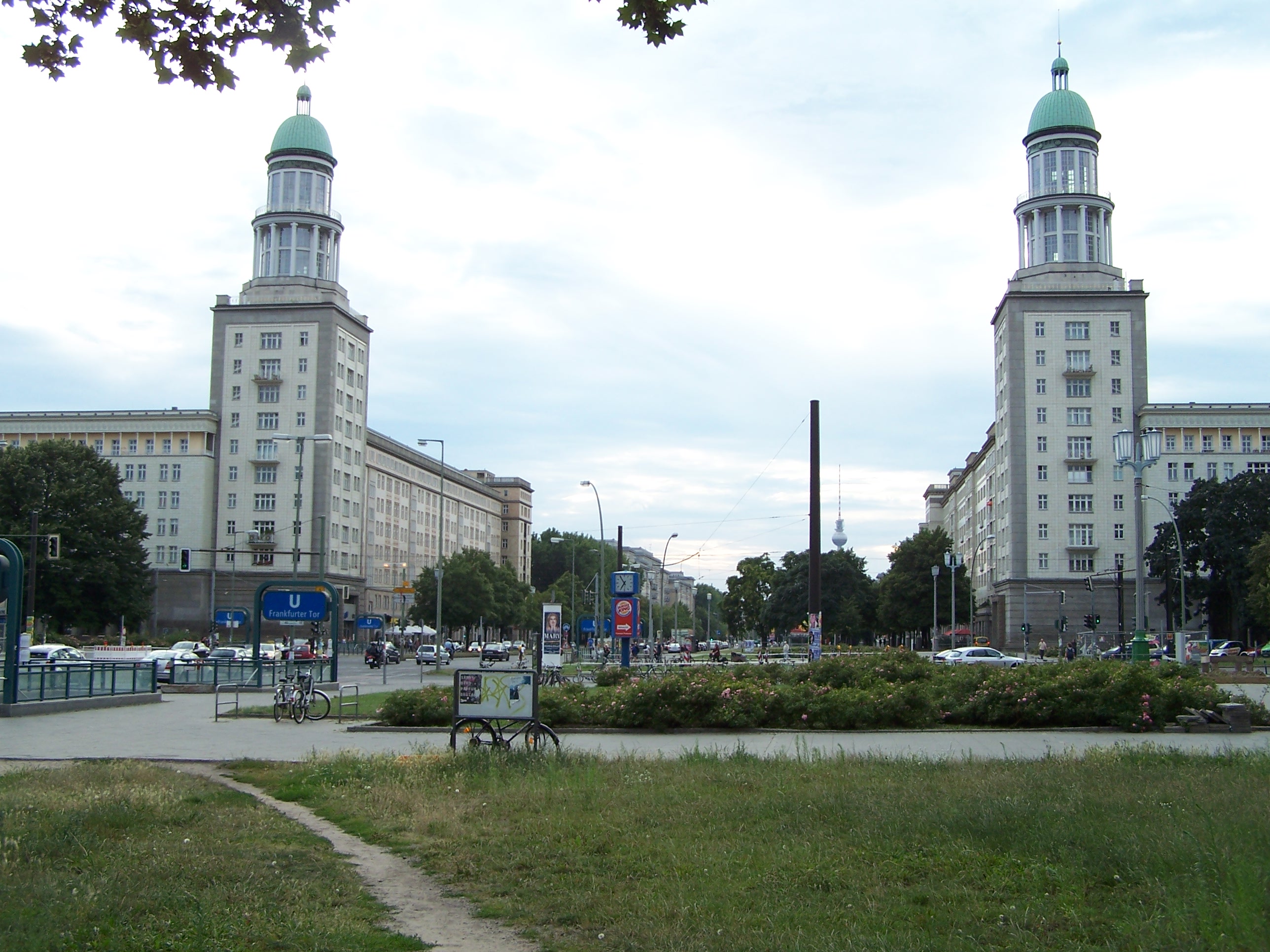
East Central is a trendy, bohemian, artsy area that consists of Kreuzberg, Friedrichshain, Prenzlauer Berg (sometimes called Prenzlberg), Wedding and Gesundbrunnen. The western district Kreuzberg was merged with the eastern district Friedrichshain in 2001. They skew towards a young and alternative, often politically left-oriented crowd. Both districts feature a very heterogeneous architecture, from whole quarters of 19th century apartment houses to functional and not very pleasant 1960s and 70s residential building blocks. You also notice the differences as the districts were separated by the wall. The remaining part of the wall between Friedrichshain and Kreuzberg is the longest part still existing in Berlin. Prenzlauer Berg is to the northeast of Friedrichshain and has changed considerably since reunification. It has gentrified similarly to Brooklyn/Williamsburg from deserted apartment houses into a lively area for students, artists and young people – if they or their parents can afford it. Rents have risen sharply in the last few years, and many empty apartments in this area are no longer rented out but sold, refurbished into luxurious lofts or hostel rooms. Wedding and Gesundbrunnen formed the Bezirk of Wedding prior to 2001 when the boundaries were redrawn. Wedding has a long tradition of being home to the working class and accordingly voted "red" for most of the Kaiserrei
Friedrichshain-Kreuzberg travel guide
Understand
The former districts of Kreuzberg and Friedrichshain had few things in common (one thing is nowadays for sure the attraction to students; politically left and young creative people), due to their history on either side of the wall. Since the political decision to merge, these two districts work together politically. The name was made by flipping a coin to decide which name would appear first. The Oberbaumbrücke which was a border crossing point during the era of German partition now serves as the main connection between Friedrichshain and Kreuzberg as well as a symbol of reunification. Once a year it is the site of a humorous "vegetable battle" (Gemüseschlacht) between the two former districts. Kreuzberg is one of Berlin's most eclectic districts, home to an unusual mix of left-wing punks, anarchists, gays, creative artists and Turkish immigrants, the last of which make up a third of the population and have earned the area its occasional nickname Little Istanbul. The district has become gentrified, with dot-coms, marketing agencies, designers, German and international kids from wealthy backgrounds moving into renovated lofts and spacy apartments, but there are still plenty of kebab joints, funky nightclubs, and pictures of Abdullah Öcalan gazing down from Communist Party of Kurdistan propaganda posters. Kreuzberg itself used to be covered by two post codes (back in the four digit era; post codes would contain two digits for the city and two for the city district; sometimes expressed as "1000 Berlin; Kreuzberg 36" or the likes; but shortened to "1036 Berlin") being 36 for the Southeastern part (hence "SO 36") and 61 for the Southwestern part (SW 61 or more commonly Kreuzberg 61). The two areas had and to some extent still have distinctive characters, in part because SO 36 was surrounded by the wall on three sides and was therefore much more of a center for Berlin's leftist scene than the more bourgeois 61. While the post codes were changed upon reunification, you wi
Getting there
By urban rail
The main entry point for Kreuzberg 36 is 1 Kottbusser Tor U1 U8. The U-Bahn line U1 is the backbone crossing the borough from east to west. The main entry point for Kreuzberg 61 is 2 Mehringdamm U6 U7. The main gateways for Friedrichshain are the S-Bahn stations 3 Ostkreuz and 4 Warschauer Straße. There are frequent U- and S-Bahn to the main tourist central in Friedrichshain, e.g. the Berlin Wall East Side Gallery close to the "Warschauer Straße" station. Being a borough of the former East, several tram and metro - tram lines also serve Friedrichshain with some slowly but surely expanding westward in what can only be called tram - reconquista. Wedding is also served by tram lines, particularly M10 which also connects to Hauptbahnhof which are slowly but surely inching ever more westward. The best and fastest way to get into Prenzlauer Berg is either through 5 Eberswalder Straße U2 or through 6 Schönhauser Allee S41 S42 S8 U2.
7 Leopoldplatz U6 U9. the main entry point for Wedding 8 Osloer Straße U8 U9. An entry point for the North of Gesundbrunnen and exchange between lines U8 and U9
By long distance train 1 Berlin-Gesundbrunnen (in the district Gesundbrunnen). The station would be "Nordkreuz" if it were named with the same logic as Ostkreuz, Westkreuz and Südkreuz. It is served by numerous long distance trains as well as regional trains. 2 Ostbahnhof. This station has a turbulent history and many name changes. From 1987 (750th "birthday" of Berlin) to 1998 it was even called "Hauptbahnhof" (main station). However, the opening of the new Hauptbahnhof in Moabit in 2006 has relegated this station to a somewhat less prominent role, though unlike its western cousin Bahnhof Zoo, it still sees some ICE service albeit less than Gesundbrunnen or Hauptbahnhof
See
There are several monuments and museums in this district as it is a result of merging across the former border of East and West Berlin, something that was done in Mitte, as well but in no other district.
Kreuzberg
1 Checkpoint Charlie. It was the only border crossing between East and West Berlin that permitted foreigners passage. Residents of East and West Berlin were not allowed to use it. This contributed to Checkpoint Charlie's mythological status as a meeting place for spies and other shady individuals. Checkpoint Charlie gained its name from the phonetic alphabet; checkpoints "Alpha" and "Bravo" were at the autobahn checkpoints Helmstedt and Dreilinden respectively. Checkpoint Charlie's atmosphere was not improved at all on 27 Oct 1961 when the two Cold War superpowers chose to face each other down for a day. Soviet and American tanks stood approximately 200 m apart, making an already tense situation worse. Now the remains of the Berlin Wall have been moved to permit building, including construction of the American Business Center and other institutions.At the intersection of Zimmerstraße and Friedrichstraße (U-Bahn Kochstraße U6) is the famous "You Are Leaving the American Sector" sign. The actual guardhouse from Checkpoint Charlie is now housed at the Allied Museum on Clayallee. For a more interesting exhibit go to the Haus am Checkpoint Charlie. This is a private museum with kitschy memorabilia from the Wall and the devices GDR residents used to escape the East (including a tiny submarine!). There are also people who set up booths here offering to stamp your passport with souvenir stamps in exchange for a small fee. You are highly advised not to put these stamps in your passport, as these are not official stamps and could invalidate it. Instead, bring along an expired passport or a small booklet to put the stamps in. 2 Oranienstraße (K36) (U1; U8 „Kottbusser Tor“ or U1 „Görlitzer Bahnhof“). A street full of shops, cafes and restaurants 3 Bergmannstraße
Do
Kreuzberg 1 English Theatre Berlin, Fidicinstraße 40 (U Platz der Luftbrücke or U Gneißenaustraße), ☏ +49 30 6911211 (box office). Theatre that features all plays/music theatre in English. 2 Kino Moviemento, Kottbusser Damm 22 (between Kreuzberg and Neukölln), ☏ +49 30 6924785. Cinema showing independent and older movies, some in English. It is the oldest cinema in Germany (1907). 3 Babylon Kreuzberg, Dresdener Straße 126 (U Kottbusser Tor), ☏ +49 30 61609693. Also non-mainstream movies in this small cinema built in the 1950s. 4 Badeschiff, Eichenstraße 4. An old cargo ship hull converted to a fresh-water swimming pool, anchored permanently on the river Spree. Provides a nice opportunity to swim on the Spree, without actually swimming in the river itself, which is far too polluted. A bar with disco DJ music is situated just next to the pool. In winter time, the pool is covered against the weather. entrance €8, requires pre-booked time slot, charges for drinks. (updated Jun 2023)
Friedrichshain 5 East Side Gallery (The Wall) (Warschauer Straße U-/S-Bahn). The longest stretch of the Berlin Wall that is still standing. It has been painted by street artis
Overview adapted from Wikipedia, travel guide fromWikivoyage (CC BY-SA). Photography via Wikimedia Commons.