
Euboea
Greece · Europe
About Euboea
Evvia (Greek: Εύβοια), also called Euboea, is a large, windy island in Central Greece. It's so large and so close to the mainland that it has more of a mainland atmosphere than an island one.
Its main attractions for the visitor are the landscape, thermal springs in the north and traditional villages across the island and wind power farms at most mountain ranges.
Euboea travel guide
Understand
Evvia is Greece's second biggest island along with Skyros, it has an area of 3,684 km2 and in 2011 had a population of 191,000. After it was connected to the mainland by bridge, it lost its island feeling, especially around the area of Chalkis, the capital. Do not expect to see the most picturesque places of the island before reaching the northern and southern tips, where you will definitely see much more of what it has to offer. International tourist and offerings specifically for them are not much developed (you will notice lower presence of English language).
Geography and nature divide the island into three distinct parts: the fertile and forested north (which suffered major damage in the August 2021 forest fires); the forested mountainous centre, with agriculture limited to the coastal valleys; and the barren south with strong continious winds and wind farms.
Getting there
By plane The closest airport is Athens airport.
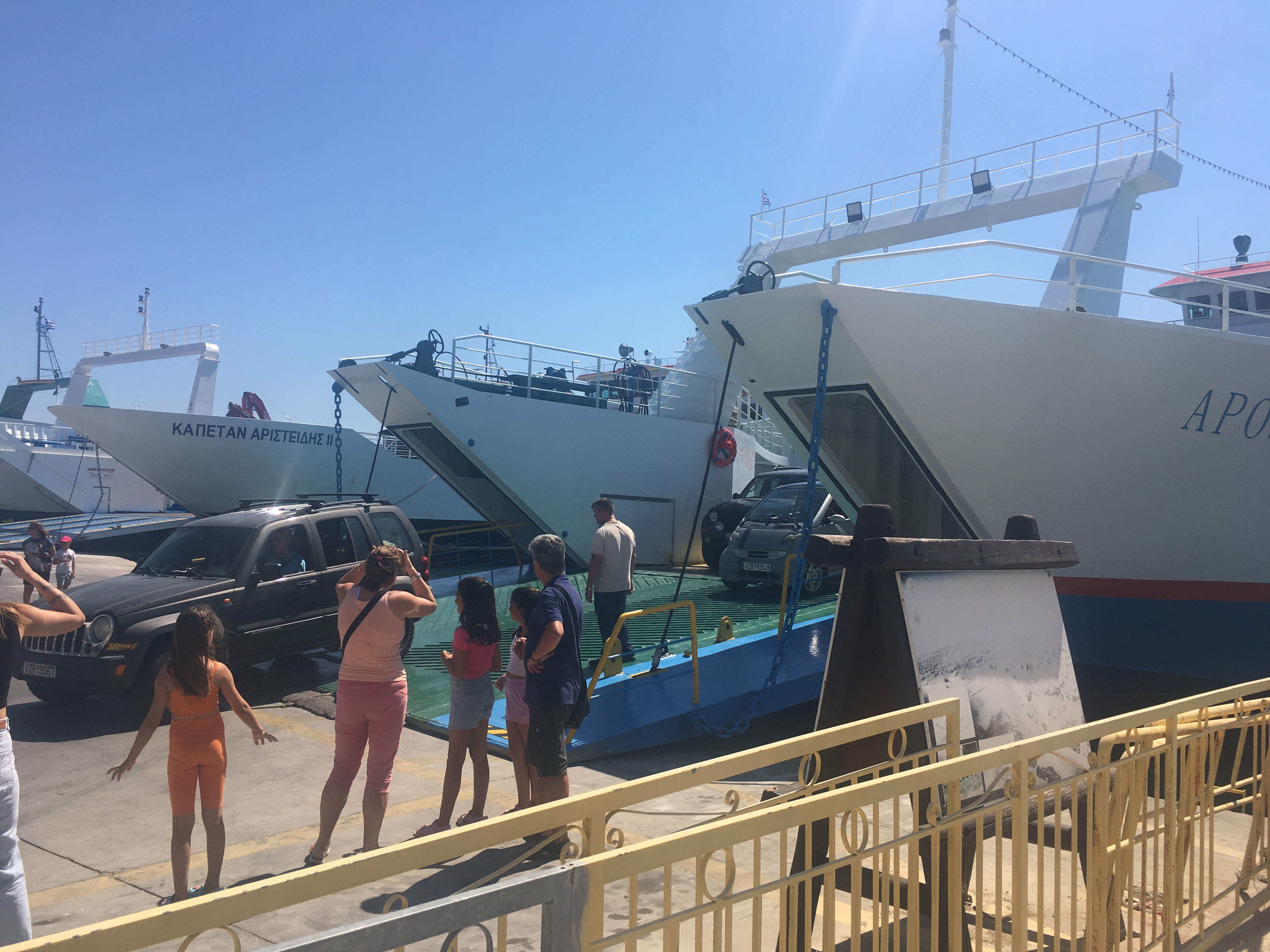
By car Evvia is linked to the mainland by one suspension bridge and one old lifting bridge. This connection is next to the main Evvia town of Chalkis. You can also get there by a number of ferry connections between the mainland and the island. From Thessaloniki–Athens highway, past Volos, exit near Glifa. Every 30 min ferry to Agiokambos (last about 20:00), 30 min ride. If you are getting there from Athens, ferries from Arkitsa to Loutra Edipsou.
By regional coach Generally, intercity coaches ("KTEL" buses) are by far the most convenient way to travel around Greece, as well as for intra-regional travelling. This is doubly true for travelling to Chalcis from Athens There is frequent bus service from Athens to Chalcis
By train Trains (OSE) connect Chalcis to other cities in Greece. Line 3 of Proastatikos Athens (the suburban rail system) connects the city to Athens and other destinations in Attica.
By ferry
Ferries connecting North Evvia with Sterea Ellada:
From Glyfa to Agiokampos From Arkitsa to Loutra Edipsou Ferries connecting Southern Evvia with Attica if you want to get there from Athens:
From Rafina to Marmari From Agia Marina to Nea Styra (fairly frequent but only very few connect well with public transport) Ferries connecting Evia with islands
From Skyros to Kymi From Skiathos, Skopelos and Alonnisos to Mantoudi.
Getting around
Though local public transport is very limited (usually one a day), the taxi services are fairly cheap and if booked in advance available across the island.
See
Aside from antique ruins, historic churches and other sights that are common in Greek landscapes, there is an abundance of dynamic local rural eco projects that are worth visiting.
Eat
Fish and other seafood, sheep and goat cheese and yogurt are traditional in this region. Pork sausage with orange seasoning is a local specialty.
Drink & nightlife
Most local restaurants/tavernas will offer as basis regional beer and house rose wine for lunch/dinner and other options will vary.
Sleep
Hotel accommodation on the west coast was strongly developed in 70s and 80s, but less so after and in higher class. The number of private accommodations has been increasing in the early 2020s. They are available most of the year, unlike seasonal hotels (which close on east side), more developed on north and west (due to hot springs also) and less so on west and south which is less developed than the rest. Wild camping and trailer vans are tolerated across the island and tourists who come to camp with motorbikes are present in relatively high numbers even beyond summer season.
Go next
Get the ferry to Skyros from Kymi, one of the Sporades islands and the closest one to the island of Evvia.
Overview adapted from Wikipedia, travel guide fromWikivoyage (CC BY-SA). Photography via Wikimedia Commons.